
Dental Nation
Symptom guide

Cracked Corners of the Mouth

Cracked mouth corners are usually red, fissured or moist and may feel dry, itchy, sore, irritated or burning.

[1][2]

The short answer

Angular cheilitis affects the corners of the mouth, where lesions may be red, fissured or macerated. Discomfort is often described as dryness, itch, soreness, irritation or burning, and mouth opening can make it worse.

[1][2]
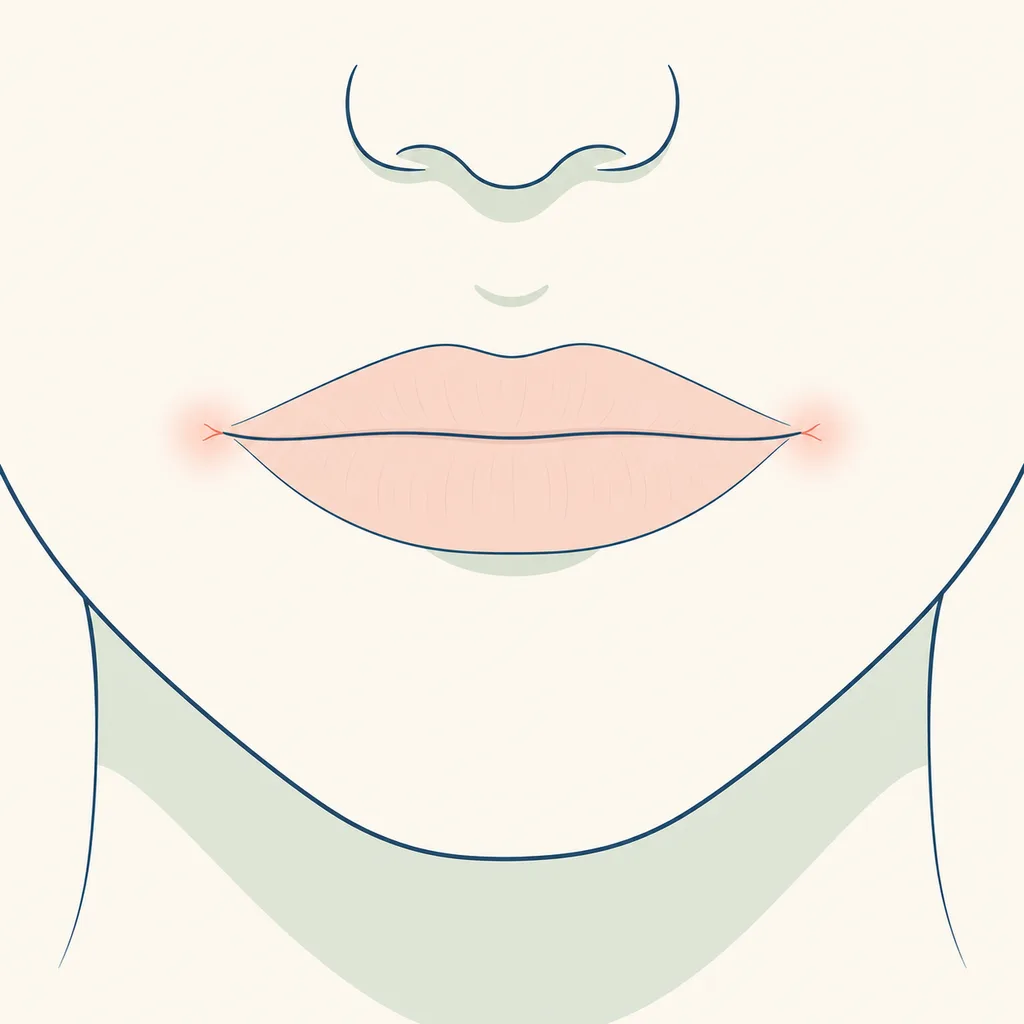
Cracked Corners of the Mouth dental educational illustration

What do cracked corners feel like?

Common changes at the mouth corners
ChangePatient experience
FissureThe skin may split at the corner.[1][2]
MacerationThe area may look softened or moist.[1][2]

[1][2]

What causes cracks at the mouth corners?

Causes include infection, mechanical irritation, allergy, nutrition and systemic disease. Candida albicans and Staphylococcus aureus are named common pathogens; dry mouth, ill-fitting dentures and immune compromise can increase risk.

[1][2]
Factors linked with angular cheilitis
FactorHow it can contribute
Dry mouthReduced moisture balance can make the corners more vulnerable.[1][2]
Denture fitIll-fitting dentures are a named predisposing factor.[1][2]

[1][2]

What relief is safe tonight?

Reduce repeated licking and other behaviours that keep saliva on the corners. Dry heat, cold, drooling and over-licking can macerate or irritate the area.

[1][2]

How is it checked?

Assessment starts with the appearance and a detailed history, including dentures and dental procedures. A patch test can help distinguish irritant from allergic contact dermatitis, while laboratory confirmation may help identify infection.

[1][2]

How are cracked corners treated?

Treatment depends on whether infection, allergy, irritation, denture mechanics or a nutritional or systemic factor is involved. Removing the trigger and treating the identified cause are the central steps.

[1][2]

How can recurrence be reduced?

Clean dentures thoroughly, address denture reservoirs and rinse after inhaled corticosteroids. Avoiding allergens is important in allergic cases, and reducing saliva exposure helps protect the corners.

[1][2]

When should persistent cracks be checked?

A persistent one-sided lesion, recurrent infection or systemic symptoms needs further investigation. These red flags are especially important when the corner does not heal or repeatedly breaks down.

[1][2]

Frequently asked questions

Why do the cracks sting when I open my mouth?

Angular cheilitis is localised at the corners, and its discomfort commonly worsens with mouth opening.

[1][2]
Can dentures contribute to cracked mouth corners?

Yes. Ill-fitting dentures are a named factor that can predispose a person to angular cheilitis.

[1][2]

Keep reading