
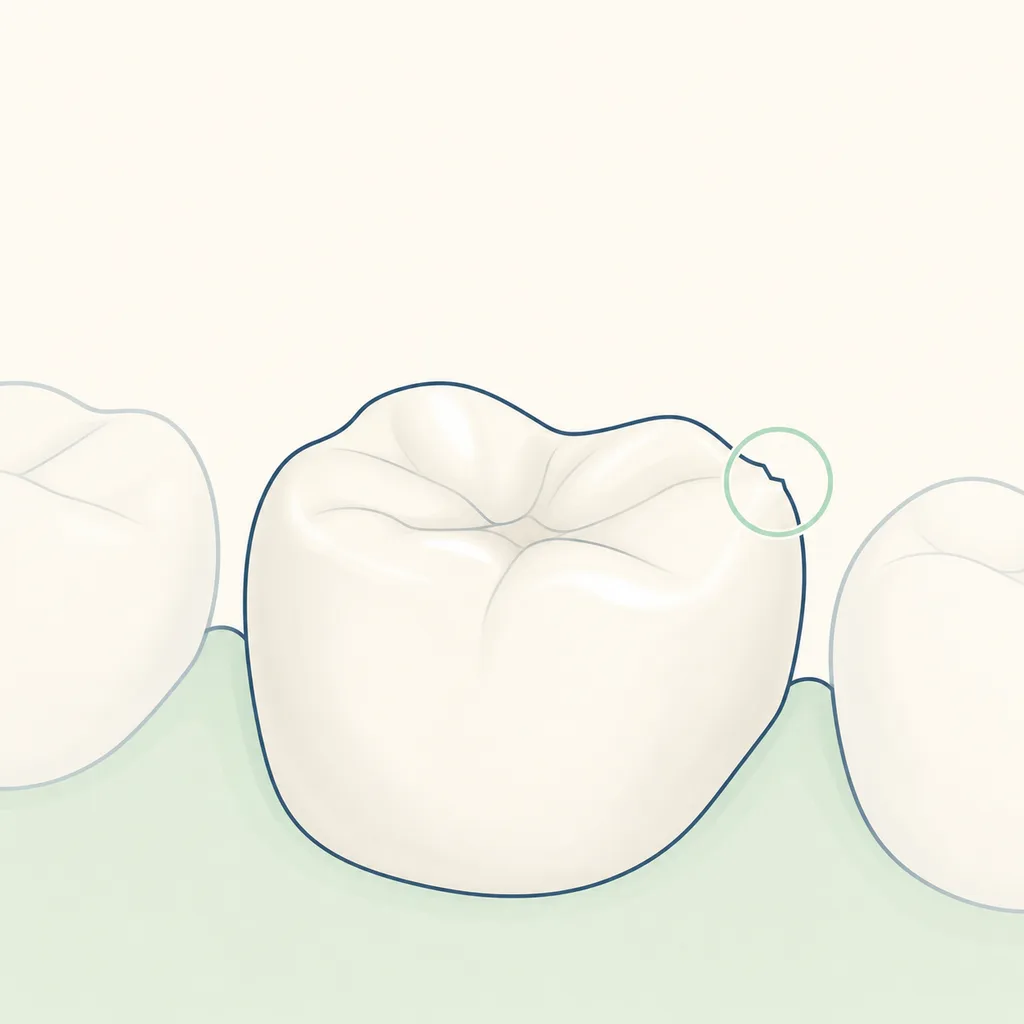
What does a sharp edge feel like?
What can cause a sharp edge?
What relief is safe tonight?
Avoid testing, picking at, or trying to smooth the tooth yourself. Keep the area clean and arrange dental advice after trauma. Seek urgent dental care when the injury needs prompt assessment.
[3]How is it checked?
A clinician examines the injured tooth and surrounding tissues to identify the fracture pattern. The history of the injury and the examination guide the assessment and any further care.
[1]What treatment may help?
How can further damage be reduced?
Preventing further injury includes protecting the tooth from another impact and following the care advice given after assessment. A clinician can explain prevention steps that fit the injury pattern.
[1]When should you seek dental access?
Arrange dental assessment after a tooth injury. Prompt advice is appropriate when pain, swelling, bleeding, or the injury itself needs urgent dental care.
[3]Frequently asked questions
Does this tooth change need assessment?
Sharp Tooth Edge needs dental assessment because a tooth injury can involve more than the visible change reveals.
[1]