
Red Patches in the Mouth
A red mouth patch can be painless or occur with pain, bleeding, or a lump, and a persistent patch needs prompt assessment.
[1]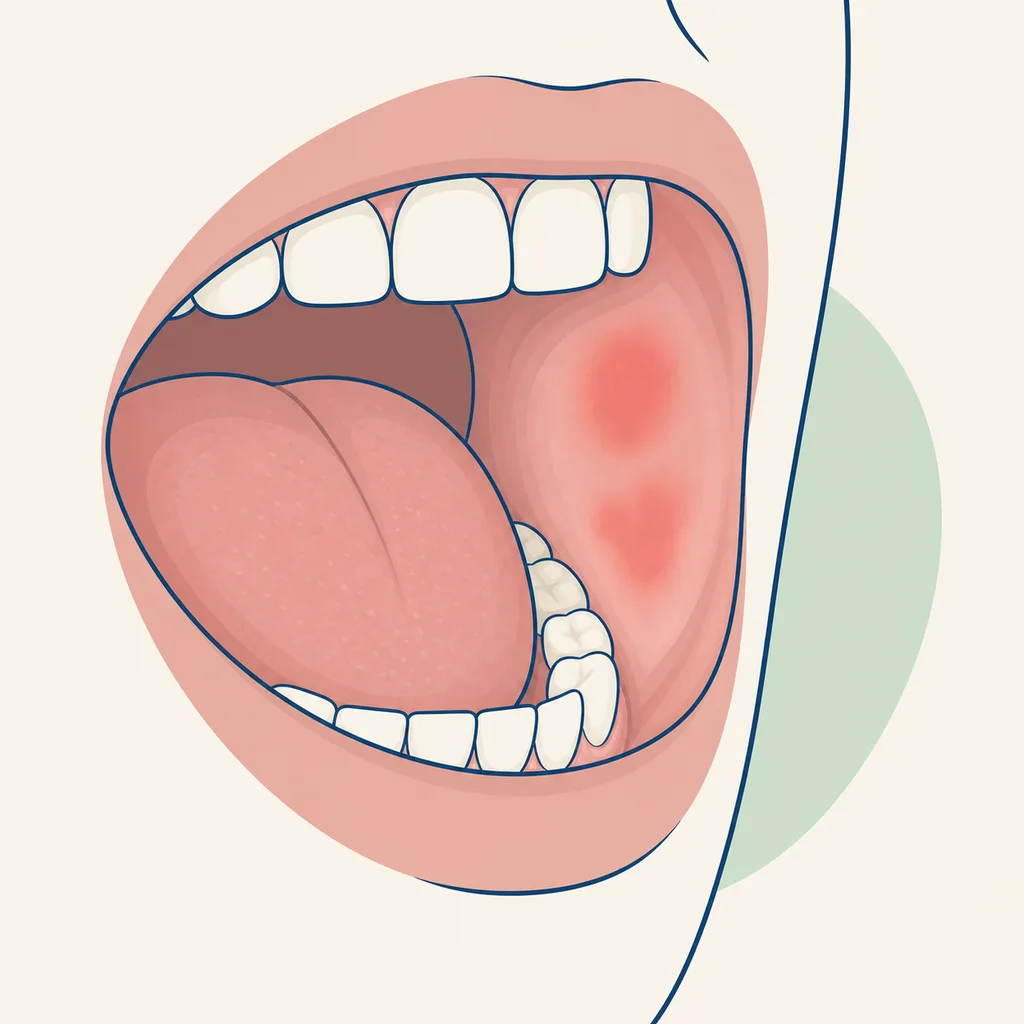
What It Feels Like
A red mouth patch can be painless or occur with pain, bleeding, or a lump, and a persistent patch needs prompt assessment.
[1]What can cause a red patch?
A red patch can be linked with irritation or other mouth conditions, but it can also be one sign of oral cancer. Sources describe oral cancer as affecting tissues of the mouth and throat and list visible changes among possible signs. A photograph cannot replace an examination.
[1]What relief is safe tonight?
Avoid picking, scraping, or deliberately irritating the patch. Keep mouth care gentle and record any change in size, colour, pain, bleeding, or swallowing. If the area persists or is accompanied by a lump or difficulty swallowing, arrange prompt clinical advice rather than relying on home treatment.
[2][3][4][1]How will a dentist check it?
The dentist examines the patch, checks the rest of the mouth and neck, and asks about its history and associated symptoms. Further tests may be needed to identify the nature of a lesion. Diagnosis comes from this clinical process, not from colour matching online.
[1]How is treatment chosen?
Treatment follows the finding. A non-cancerous cause may be managed by addressing the local problem, while oral cancer treatment depends on the site and extent of disease. The examining team explains which tests and treatments fit the diagnosis rather than treating every red patch alike.
[1]How can you reduce risk?
Avoiding tobacco and limiting alcohol reduce recognised oral cancer risks. Regular dental care helps changes get noticed, but prevention does not make a persistent patch safe to ignore. Report a new, changing, or non-healing area for assessment.
[1]When should you arrange an appointment?
Frequently asked questions
Does a red patch mean oral cancer?
No diagnosis can be made from colour alone. A persistent or changing patch needs examination so the cause can be identified.
[1]