
Mouth Ulcer Not Healing
A mouth ulcer that does not heal needs assessment because persistent mouth sores have causes that cannot be identified by appearance alone.
[1]The short answer
A mouth ulcer may be painful, tender, or irritated by eating and speaking. A sore that remains present instead of settling deserves a closer look. Record its location, size as it changes, pain, bleeding, and how long it has been there. Avoid trying to identify the cause from colour or shape alone. The most useful first distinction is whether it is healing, recurring, or continuously present.
[1]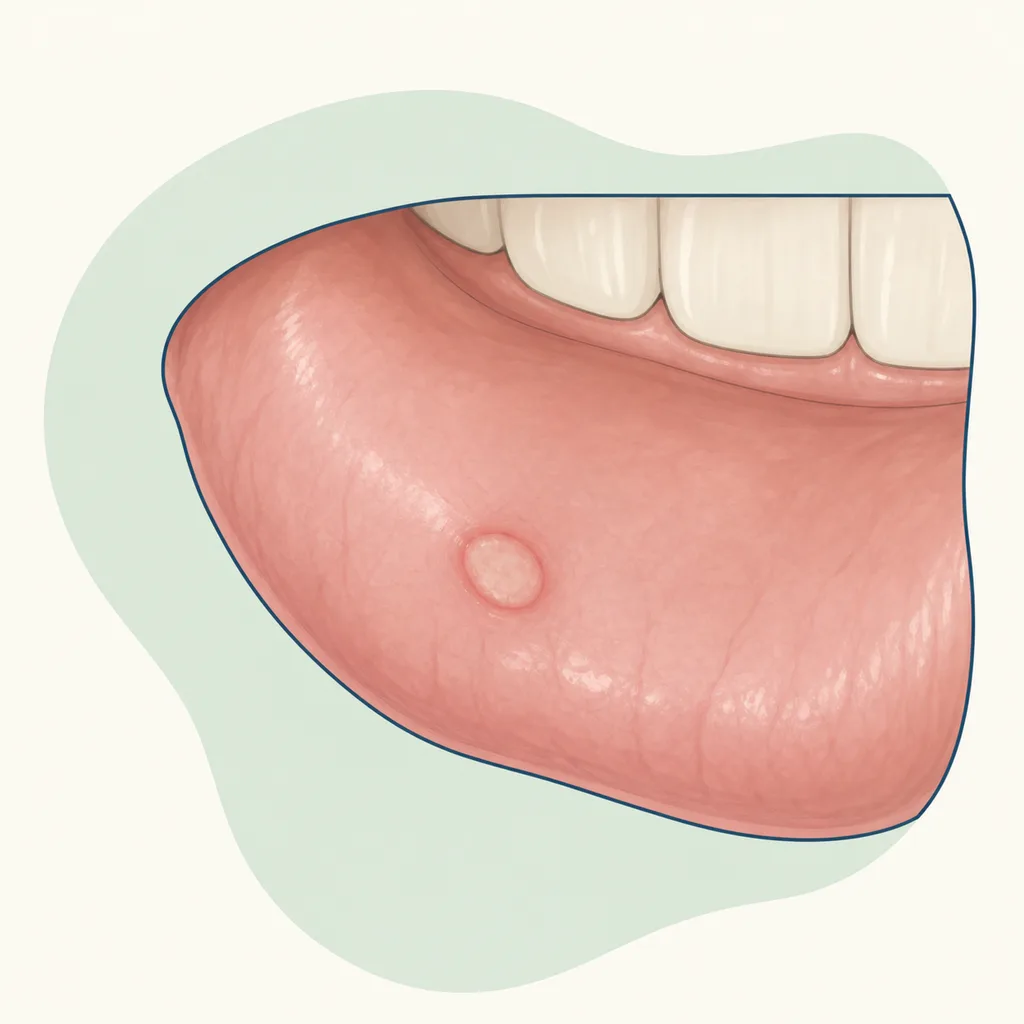
What does a mouth ulcer that is not healing feel like?
What can cause a mouth ulcer to persist?
Mouth ulcers can have different causes, including local irritation and health-related factors. A persistent sore can also be a sign of a condition that needs examination, so the cause should not be guessed from a photograph or a single symptom. Tell the clinician about repeated ulcers, tobacco or alcohol exposure if relevant, medicines, and any other mouth changes.
[1][2]What relief is safe tonight?
Choose soft foods and avoid items that clearly irritate the sore. Keep the area clean and follow advice from a pharmacist or clinician about suitable mouth-ulcer care. Do not use a persistent ulcer as a reason to delay assessment. If pain, bleeding, swelling, or swallowing difficulty is significant, seek prompt advice.
[1][2]How will a dentist assess it?
The clinician will ask how long the ulcer has been present, whether it has changed, and whether similar sores recur. The mouth and surrounding tissues can be examined for the sore and any other changes. If the appearance or history needs more investigation, the clinician decides the appropriate next step. A persistent ulcer cannot be diagnosed safely from duration alone.
[2]How is it treated when the cause is known?
Treatment depends on the finding. A clinician may address irritation, manage symptoms, or arrange further investigation when the sore requires it. The treatment choice should follow an examination rather than a self-diagnosis. Keep the appointment even if pain improves, because healing and the underlying reason are separate questions when a sore has persisted.
[1][2]How can you reduce repeat mouth ulcers?
Note triggers such as local irritation and tell a clinician when ulcers recur. Avoid habits or objects that repeatedly injure the area when you can identify them. Keep regular mouth care and seek advice for a sore that does not heal. Prevention depends on the cause, so repeated episodes should be described rather than treated as identical each time.
[1]When should you arrange an assessment?
Arrange a dental or medical assessment for an ulcer that does not heal, keeps returning, or changes. Seek prompt care when it comes with a lump, bleeding, numbness, swallowing difficulty, or another concerning mouth change. Most mouth symptoms have more than one possible explanation, and an examination is the safe way to decide what happens next.
[1][2]