
Lump in the Mouth
A mouth lump may be raised, thickened, firm, or swollen; changes in size, pain, bleeding, or eating need assessment.
[4]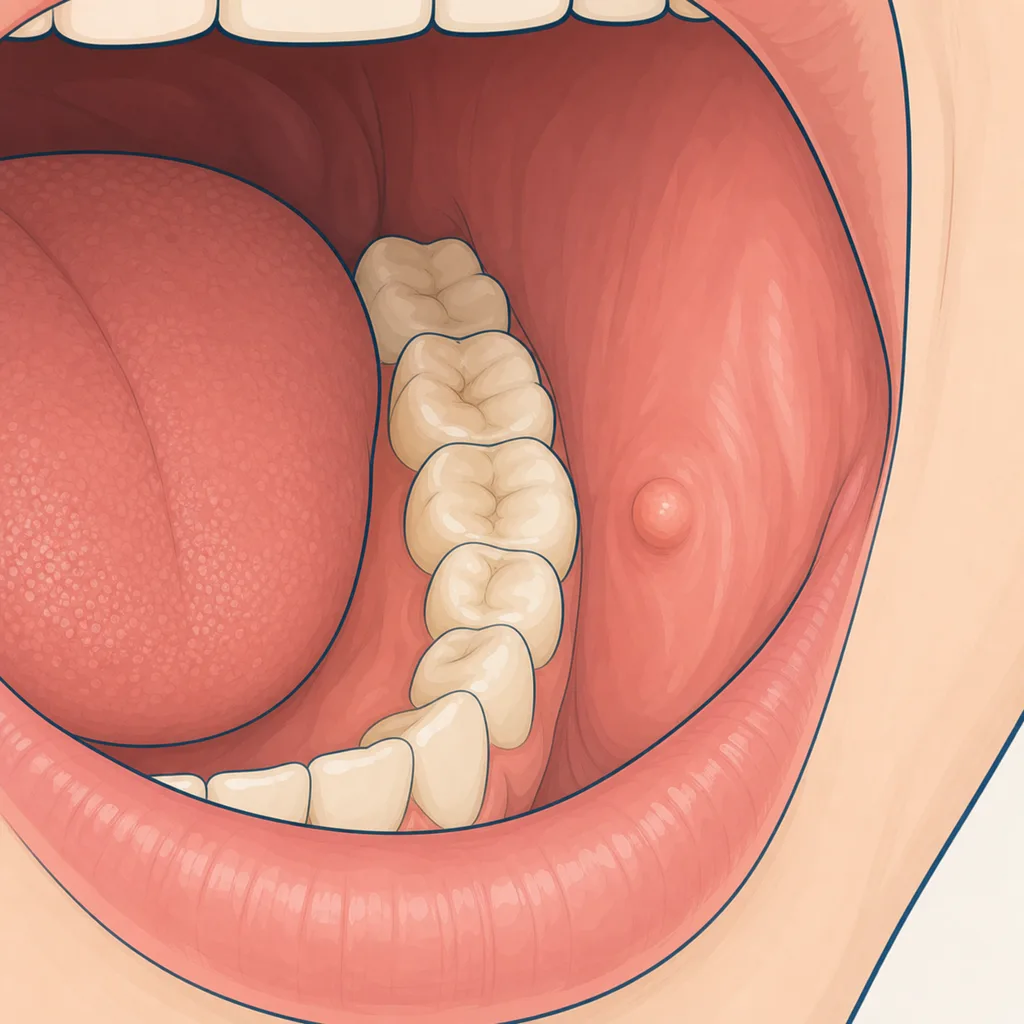
What It Feels Like
A mouth lump may be raised, thickened, firm, or swollen; changes in size, pain, bleeding, or eating need assessment.
[4]What can cause a lump?
Mouth lumps have several possible causes, including local changes and conditions affecting mouth tissues. Oral cancer is one possibility, but a lump is not a diagnosis. Its location, duration, surface, and accompanying symptoms must be assessed together.
[4]What relief is safe tonight?
How will a dentist check it?
The dentist examines the lump and the rest of the mouth, asks about its history, and checks related symptoms. Further tests may be needed when the appearance or examination does not explain it. This process identifies the next step without assuming the most serious cause.
[4]How is treatment chosen?
Treatment depends on the diagnosis. A local cause may need local care, while an oral cancer diagnosis has its own treatment plan based on the affected site and disease extent. The dentist explains the result of examination and any further testing before treatment is chosen.
[4]How can you reduce risk?
When should you arrange an appointment?
Frequently asked questions
Does every mouth lump mean cancer?
No. A lump has several possible causes, but a persistent or changing lump needs examination to identify the cause.
[4]