
Lost Filling
A lost filling is usually managed as a short course of reparative care, often in one appointment, unless urgent signs are present.
[1][2]The short answer
A lost filling leaves a gap where the repair used to be. The tooth may feel broken or sensitive, and the loose or displaced filling itself is classed among problems managed through unscheduled dental care.
[1][2]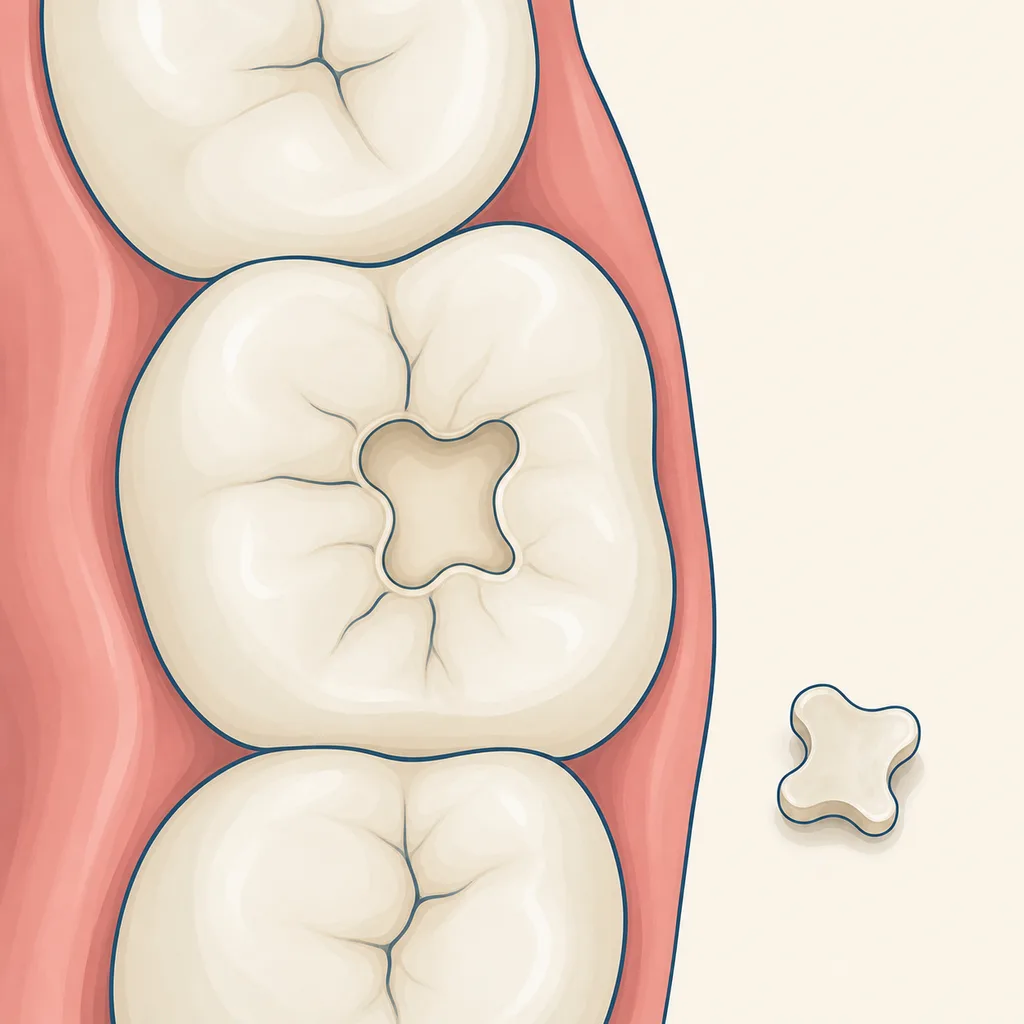
What does a lost filling feel like?
| Sign | How it is treated in urgent care |
|---|---|
| Broken or sensitive tooth | A local dental service can provide advice or treatment when open[1][2] |
| Loose or displaced filling | It may be managed as a discrete reparative course when there is no active disease or clear risk factor[1][2] |
What can cause a filling to come out?
What relief is safe tonight?
How is a lost filling checked?
Unscheduled care begins with clinical triage and focuses on the presenting acute complaint. A complete oral health assessment is not expected during that unscheduled appointment, so the initial visit can deal with the lost filling while remaining progressive disease is briefly identified.
[1]How is a lost filling treated?
A routine lost filling is commonly handled as one discrete reparative course, usually delivered in one appointment. If the tooth has an acute problem or infection, treatment addresses that presentation; antimicrobials are an adjunct where appropriate, never a substitute for clinical intervention.
[1][2]How can another dental problem be prevented?
Prevention during urgent care can include fluoride varnish, making cavities cleansable, removing plaque or calculus that interferes with self-care, and advice on toothbrushing, interdental aids, and modifiable risk factors. Further progressive disease may need separate courses of treatment.
[1]When does a lost filling need urgent help?
Call 999 or go to A&E for rapidly increasing swelling around the throat or eye, especially with difficulty swallowing or breathing, or for uncontrollable heavy bleeding after an extraction. Severe pain not controlled by painkillers, spreading infection, injury, or worsening mouth or face swelling needs out-of-hours dental advice through 111.
[1][2]