
Dental Nation
Symptom guide

Loose Dental Crown

A loose crown is usually handled as a short reparative episode, while severe pain, infection or worsening swelling needs urgent care.

[1][2]

The short answer

A loose crown may move when you bite or touch it, and the tooth beneath may feel broken or sensitive. Loose or displaced crowns that do not threaten the airway are listed as unscheduled dental presentations.

[1][2]
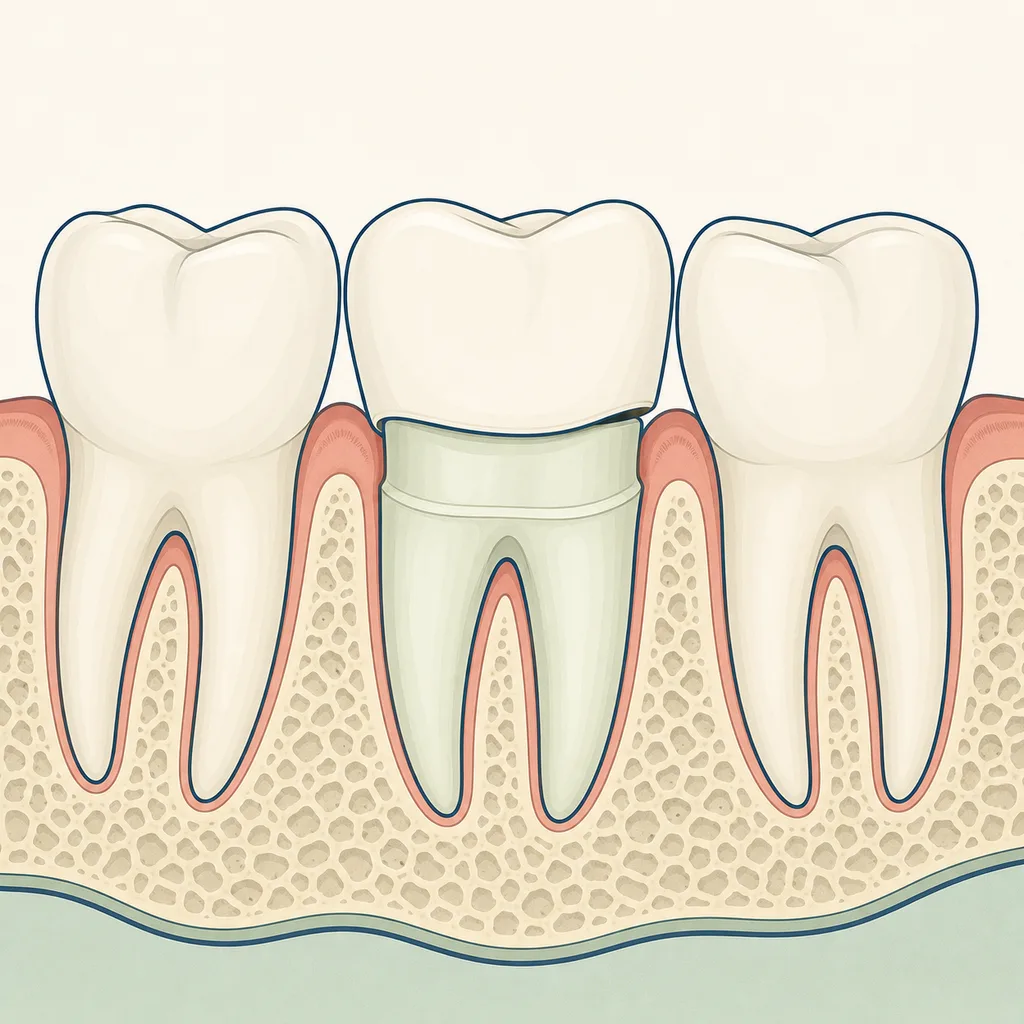
Loose Dental Crown dental educational illustration

What does a loose crown feel like?

Crown symptoms and their setting
FindingMeaning for urgent care
Loose or displaced crownA non-airway-risk presentation[1][2]
Broken or sensitive toothA minor problem suitable for pharmacy advice or dental care when open[1][2]

[1][2]

Why can a dental crown become loose?

The crown may be loose as an isolated reparative problem, or it may sit alongside active disease or other clear risk factors. The distinction matters because uncomplicated episodic repairs are usually separate from management of progressive disease.

[1][2]
Two clinical contexts
ContextExpected approach
No active disease or clear risk factorsUsually one discrete reparative course[1][2]
Progressive disease also presentAcute concerns first, then separate ongoing management[1][2]

[1][2]

What relief is safe tonight?

Dental access services provide pain relief when required for urgent treatment and run weekday evening advice clinics from Monday to Thursday, 5.30pm to 8pm. Urgent dental advice outside those hours is available through NHS 111.

[1][2]

How is a loose crown assessed?

Clinical triage identifies the nature of the problem and directs the patient to a service within a clinically appropriate timescale. Unscheduled care concentrates on the presenting complaint rather than a complete oral-health assessment.

[1]

What treatment can repair a loose crown?

A loose crown without an airway risk can be managed as a reparative course, often in one appointment. When infection or another acute presentation is involved, that problem is treated as part of the urgent episode; antibiotics, when appropriate, support treatment rather than replace it.

[1][2]

How do you reduce repeat dental problems?

Urgent care may start preventative actions such as fluoride varnish, removing plaque or calculus that blocks self-care, and advice on brushing, interdental aids and modifiable risks. Ongoing disease monitoring can require separate treatment courses.

[1]

When is a loose crown an emergency?

Rapidly increasing swelling around the throat or eye, particularly with trouble swallowing or breathing, requires 999 or A&E. Severe uncontrolled pain, infection, injury, bleeding that cannot be controlled, or worsening mouth or face swelling calls for urgent out-of-hours dental care through 111.

[1][2]

Frequently asked questions

Can I wait with a crown that has come loose?

A loose crown without airway risk is handled through unscheduled dental care, while a crown causing severe pain, infection or worsening swelling needs faster help.

[1][2]

Keep reading