
Dental Nation
Symptom guide

Loose Dental Bridge

A loose dental bridge is usually handled as reparative care, while airway danger, severe pain, infection or worsening swelling requires urgent help.

[1][2]

The short answer

A loose bridge may shift during eating or leave a tooth feeling broken or sensitive. Loose or displaced bridges that are not a risk to the airway are included in unscheduled dental care.

[1][2]
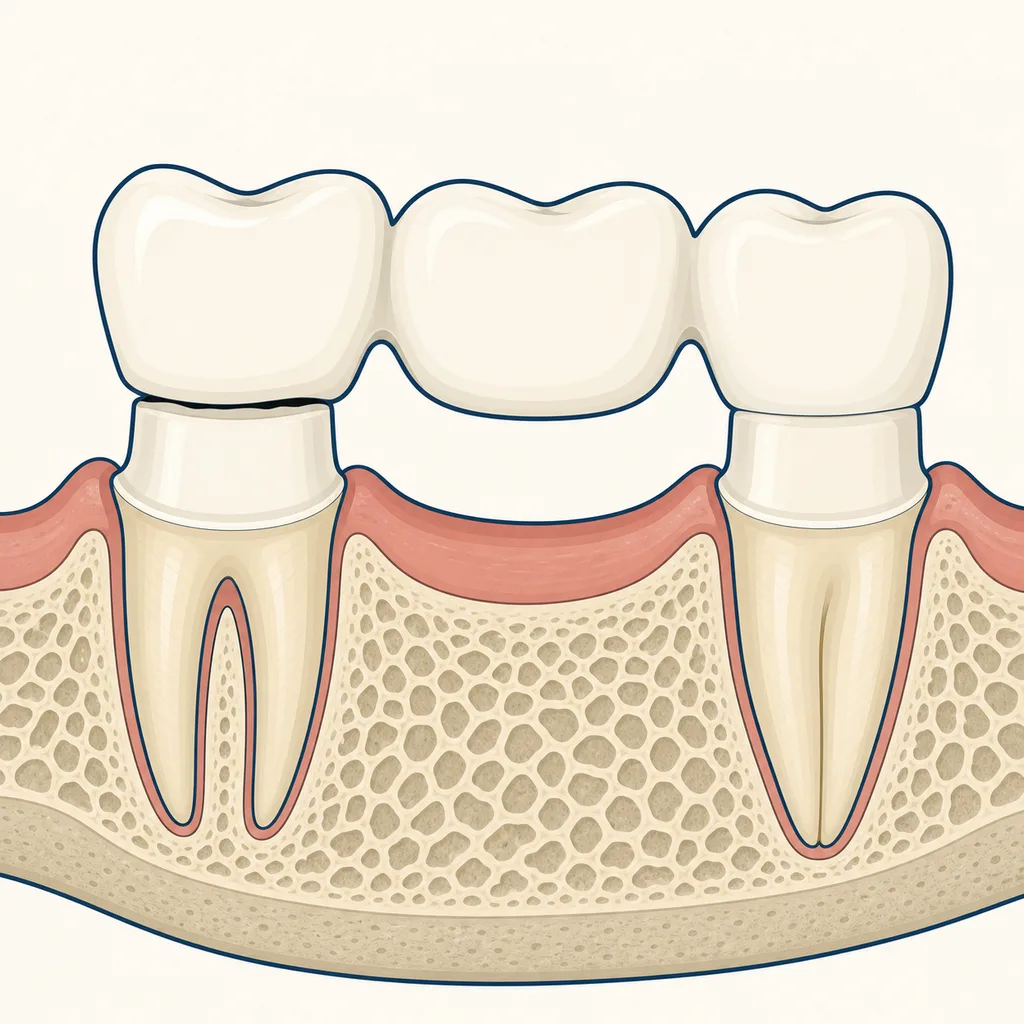
Loose Dental Bridge dental educational illustration

What does a loose bridge feel like?

Bridge findings
FindingCare meaning
Loose or displaced bridgeUnscheduled presentation without airway risk[1][2]
Broken or sensitive toothMinor symptom for pharmacy or dental advice when open[1][2]

[1][2]

Why can a dental bridge become loose?

A bridge may loosen as an isolated repair problem, or alongside active disease and other clear risk factors. Unscheduled guidance treats those situations differently, separating the acute repair from ongoing progressive-disease care.

[1][2]
Two contexts for a loose bridge
ContextCourse
No active diseaseUsually one discrete reparative appointment[1][2]
Unmanaged progressive diseaseAcute complaint first, with further care separately managed[1][2]

[1][2]

What relief is safe tonight?

Dental access centres provide pain relief when it is required for urgent treatment. Evening advice clinics run Monday to Thursday, 5.30pm to 8pm; NHS 111 provides the listed urgent advice route outside those hours.

[1][2]

How is a loose bridge checked?

Clinical triage identifies the problem and directs it to a service within a suitable timescale. An unscheduled appointment focuses on the acute complaint and does not substitute for a complete oral-health assessment.

[1]

How is a loose bridge treated?

A bridge that is loose without airway risk can be managed as a discrete reparative course, commonly in one appointment. Where infection or another acute presentation is present, clinical intervention treats that problem; antibiotics may be an adjunct when appropriate.

[1][2]

How can repeat problems be reduced?

Preventive urgent care can include fluoride varnish, removing plaque or calculus that interferes with cleaning, and guidance on toothbrushing, interdental aids and modifiable risk factors. Continuing disease may require separate monitored courses.

[1]

When does a loose bridge need urgent help?

Call 999 or attend A&E for rapidly increasing throat or eye swelling with swallowing or breathing difficulty, or for heavy bleeding that cannot be controlled. Severe pain, infection, injury or worsening facial swelling needs urgent out-of-hours dental advice through 111.

[1][2]

Frequently asked questions

What if my loose bridge is painful?

Severe pain that is not controlled by painkillers, infection, or worsening swelling moves the problem into urgent out-of-hours dental care rather than a minor repair pathway.

[1][2]