
Dental Nation
Symptom guide

Clicking or Popping Jaw

Painless jaw sounds are often common; painful clicking, locking, or limited movement can signal a temporomandibular disorder.

[2][3]

The short answer

A painless click or pop is often common, while painful sounds, jaw locking, or restricted movement can signal a temporomandibular disorder.

[2][3]
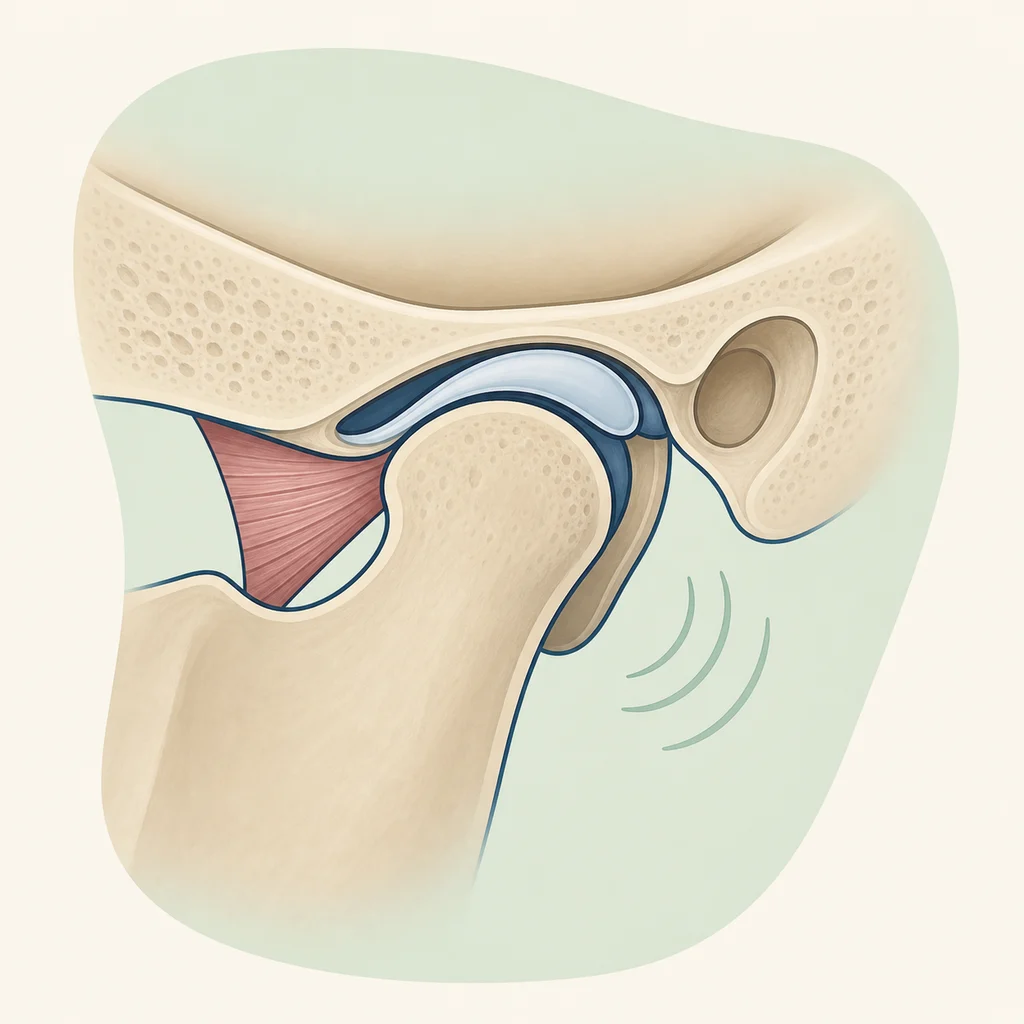
Clicking or Popping Jaw dental educational illustration

When is a jaw click a concern?

Jaw sounds and accompanying signs
What you noticeWhat makes it more concerning
Clicking or popping without painUsually does not need treatment[2][3]
Clicking, popping, or grating with painCan occur with a TMD symptom pattern[2][3]

[2][3]

What can cause jaw clicking?

Jaw or temporomandibular-joint injury can start some disorders, but many begin without an obvious reason. Genes, life stress, psychological stressors, and pain perception may all play a part.

[2][3]
Factors linked with temporomandibular symptoms
FactorHow it appears in the clinical picture
Jaw or joint injuryMay lead to some TMDs[2][3]
Stress and pain-related factorsMay affect whether symptoms start or last[2][3]

[2][3]

What relief is safe tonight?

Start with a soft diet, jaw rest, warm compresses over the painful area, and gentle passive stretching. Symptoms often settle without treatment, so avoid permanently changing the jaw joint unless the risks are understood.

[2][3]

How is a clicking jaw checked?

There is no single widely accepted standard test for TMD. Assessment includes the pain history, examination of the head, neck, face, and jaw, and sometimes an X-ray, MRI, or CT scan.

[2][3]

What treatment is used?

Conservative care is the first treatment approach and can reduce symptoms in many patients. Education, jaw rest, a soft diet, warm compresses, stretching, better sleep, and stress reduction are used before irreversible joint procedures.

[2][3]

Can you reduce jaw clicking?

Reducing stress, improving sleep hygiene, and addressing clenching habits can improve TMD symptoms. Research does not support a bad bite or orthodontic braces as causes of TMD.

[2][3]

When should you seek prompt help?

Painful clicking with restricted opening or locking needs assessment, especially when symptoms interfere with chewing or speaking. Jaw sounds without pain are commonly observed without treatment.

[1][2][3]

Frequently asked questions

Does every clicking jaw need treatment?

A click or pop without pain is often common and does not usually need treatment; pain, locking, or restricted movement changes the picture.

[2][3]