
Dental Nation
Symptom guide

Bleeding Around a Dental Implant

Bleeding around an implant can signal inflammation, with red or tender gums and bleeding when brushing among the warning signs.

[1]

The short answer

Bleeding around a dental implant can be a sign of inflammation in the gum tissues around it, especially when the gums are red or tender.

[1]
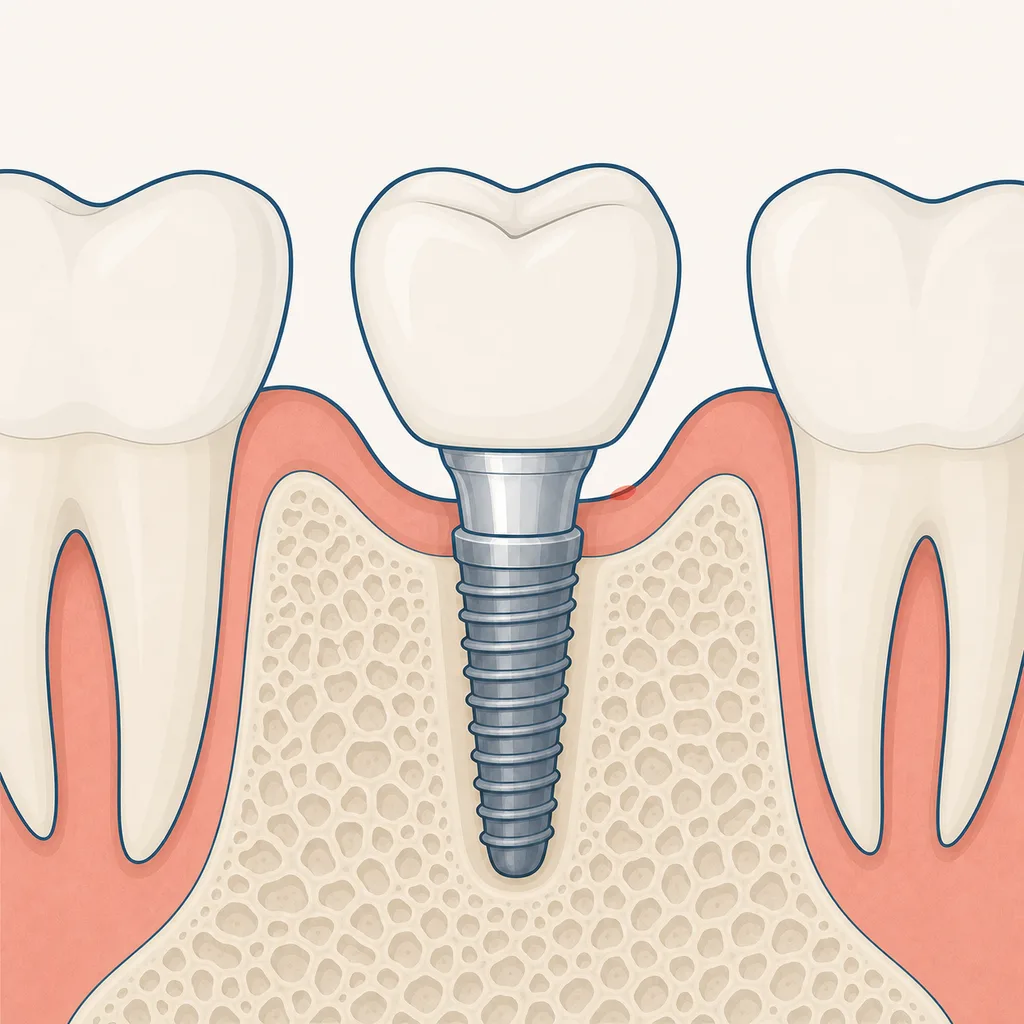
Bleeding Around a Dental Implant dental educational illustration

What it feels like

What it feels like
SituationWhat it suggestsWhat to do
Bleeding only during cleaningRecord when it happens and whether it repeatsAsk for cleaning guidance at review[1]
Bleeding with tenderness or swellingShare all accompanying changes with the dentistArrange an examination rather than guessing[1]

[1]

Common causes

Bacteria can collect below the gum line at the base of an implant. The resulting inflammation may stay in the soft tissue or damage the bone supporting the implant.

[1]
Common causes
SituationWhat it suggestsWhat to do
Occasional blood noticed while cleaningThe tissues need watching if the finding repeatsClean gently and arrange an assessment if it persists[1]
Repeated bleeding around the implantInflammation around the implant needs investigationBook dental care and describe the pattern[1]
Bleeding with swelling or a change in functionThe finding needs a more direct clinical reviewContact a dental service promptly[1]

[1]

What relief is safe tonight?

Brush and floss around the implant regularly, as you do around natural teeth. Regular check-ups help monitor the tissues around it.

[1][2]

How is it diagnosed?

An examination distinguishes inflammation limited to the soft tissues, called peri-implant mucositis, from peri-implantitis, where supporting bone has deteriorated.

[1]

How is bleeding around an implant treated?

Early peri-implant mucositis may be reversible. Peri-implantitis usually requires surgical treatment.

[1][2]

How can it be prevented?

Regular brushing, flossing, check-ups, and comprehensive periodontal evaluation help monitor an implant. Previous periodontal disease, poor plaque control, smoking, and diabetes increase risk.

[1][2]

Where can this lead?

Persistent bleeding needs assessment because untreated inflammation can damage the tissue and, over time, the bone beneath the implant.

[1][2]

Frequently asked questions

When should I seek dental advice?

Bleeding around an implant is a reason to arrange an assessment, particularly when it keeps happening or appears with swelling, pain, or a change in function.

[1][2]