
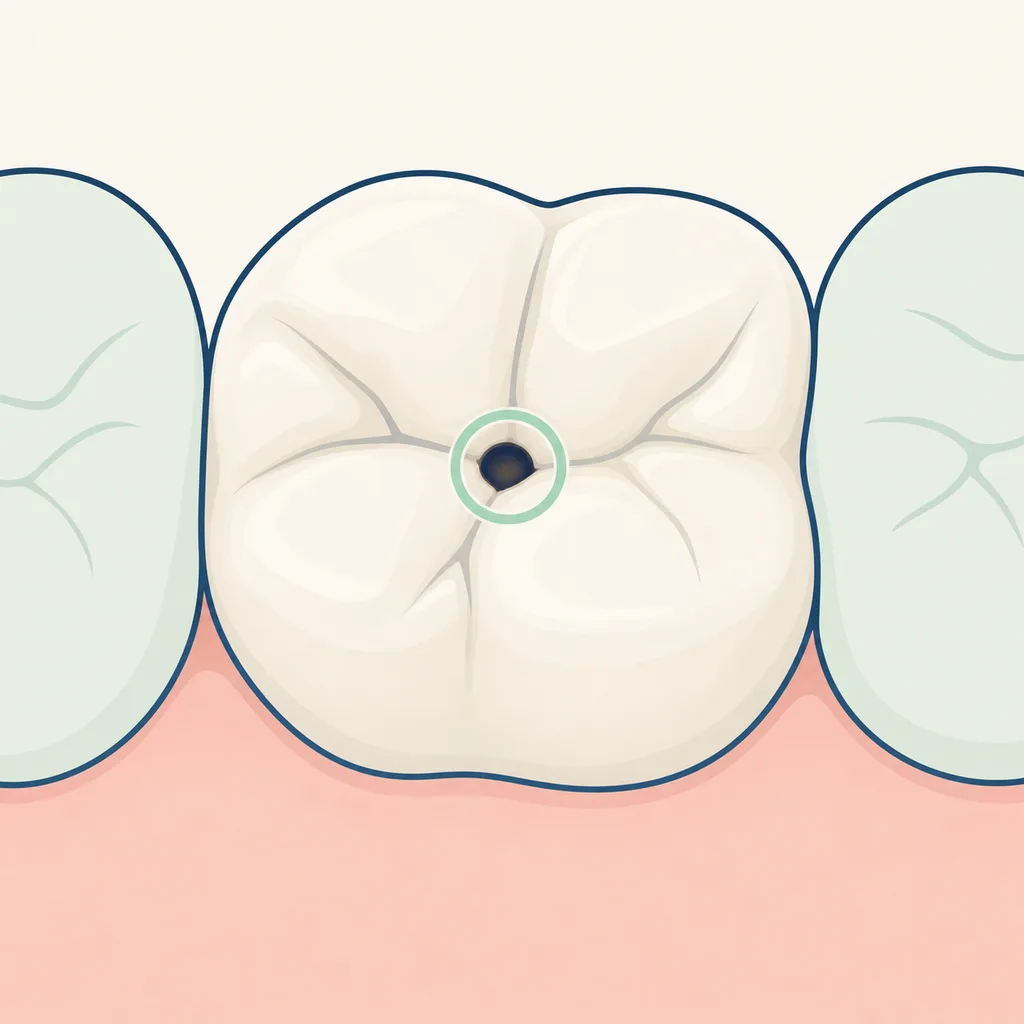
What does a hole in a tooth feel like?
What causes a hole in a tooth?
Mouth bacteria make acid when they meet sugars and starches. Frequent acid exposure strips minerals from enamel, weakens it, and eventually creates a cavity.
[2]What relief is safe tonight?
Keep the area clean with fluoride toothpaste and interdental cleaning, and avoid frequent sugary food and drinks. A cavity itself will not be rebuilt by brushing.
[2]How is a cavity found?
A check may identify a visible hole, white, brown, or black staining, or soft and sticky areas. An X-ray can show decay that cannot be seen directly.
[2]How is a hole in a tooth treated?
How can another cavity be prevented?
Use fluoride, brush twice daily, clean between teeth each day, limit sugary foods and drinks, avoid tobacco, and attend regular examinations and professional cleanings.
[1]What happens if a hole is ignored?
Untreated decay can cause worsening pain, infection, and tooth loss. Facial swelling or fever with dental pain points to an infection needing prompt attention.
[1]Frequently asked questions
Who wrote this page
This library is published by Dental Nation, a licensed dental group practising in the United Arab Emirates. Pages are written and overseen by the same clinical team that treats patients in our clinics, and are held to a fixed editorial standard for safety and accuracy.
This page is patient education, not medical advice, and cannot replace an examination. Anything urgent — facial swelling, trauma, uncontrolled bleeding or severe pain — needs a dentist or emergency care now.