
Gums Bleeding When Brushing
Bleeding while brushing commonly points to irritated or diseased gums and deserves an examination if it keeps happening.
[1]The short answer
Bleeding may appear as pink foam, red streaks on the brush, or a small amount of blood after brushing. Gum disease can begin with bleeding and may progress while causing little pain. The pattern matters: note whether the bleeding is limited to one area, follows brushing only, or comes with swollen, tender, or receding gums.
[1]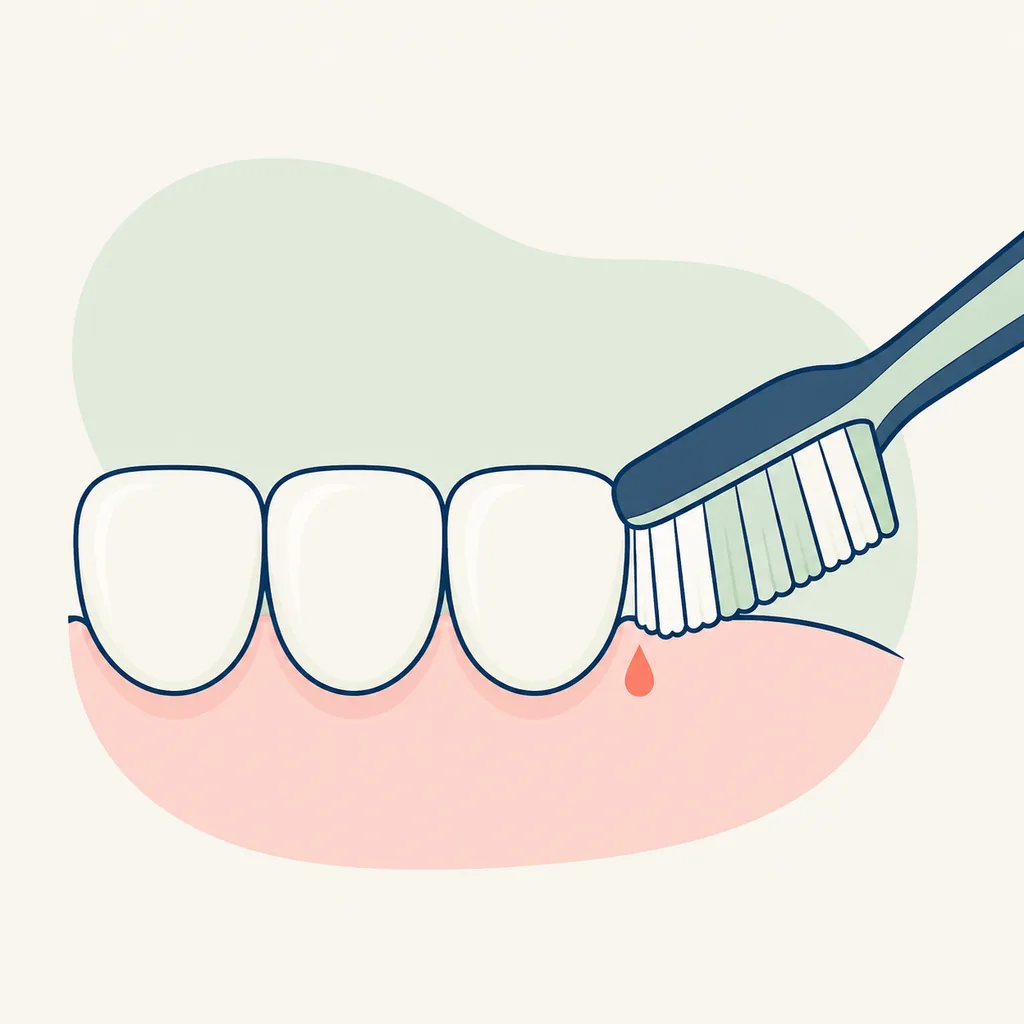
What it feels like
| What you may notice | What it can indicate | What to do next |
|---|---|---|
| Bleeding or change in one area | A local gum finding needs the area examined | Note the location and arrange advice if it persists[1] |
| Repeated or widespread change | More than one gum area may be involved | Book an assessment rather than relying on a home guess[1] |
Common causes
Plaque at the gumline is a common cause of gum inflammation. Other possible contributors include gum disease, local irritation, and factors that make cleaning difficult. A dentist needs to examine the gums rather than treating the blood alone as a diagnosis.
[1][2]| What you may notice | What it can indicate | What to do next |
|---|---|---|
| Local irritation | The gum may be reacting where cleaning is difficult | Have the area examined if it keeps recurring[1][2] |
| Gum inflammation or disease | The tissues around teeth may need dental assessment | Arrange a review to match care to the finding[1][2] |
What relief is safe tonight?
Use a soft toothbrush and clean the teeth and gumline gently. Do not stop cleaning the area because it bleeds. Arrange dental advice if the bleeding continues, becomes heavier, or appears with swelling or other gum changes.
[1]How a dentist checks it
A dental assessment looks at the gums and the areas that bleed. The clinician considers the appearance of the gum tissue, the pattern you describe, and whether other signs of gum disease are present. This examination helps separate local irritation from a broader gum problem.
[2]Treatment by cause
Treatment depends on the gum finding. A dentist may recommend professional cleaning and a more effective daily cleaning routine when plaque and inflammation are involved. More established gum disease needs an assessment-led plan rather than repeated home experiments.
[1]How to reduce the chance of it returning
Brush twice daily with a soft toothbrush and clean between the teeth. Regular cleaning of the gumline helps reduce plaque. Keep monitoring the bleeding pattern, especially if it returns after cleaning or comes with changes in gum colour, swelling, tenderness, or recession.
[1]Where this can lead
Untreated gum disease can progress from inflamed gums to deeper disease around the teeth. The earlier the cause is identified, the clearer the treatment choice becomes.
[1]Frequently asked questions
Can gums bleeding when brushing be diagnosed at home?
A home observation can describe the symptom, but a dental examination is needed to identify its cause when it persists or returns.
[2]