
Bleeding Between the Teeth
Bleeding between teeth can follow plaque build-up that irritates the gums and may occur with swelling or tenderness.
[1][2]The short answer
Bleeding between teeth can occur when plaque irritates the gum and may come with swelling, tenderness, or persistent bad breath.
[1][2]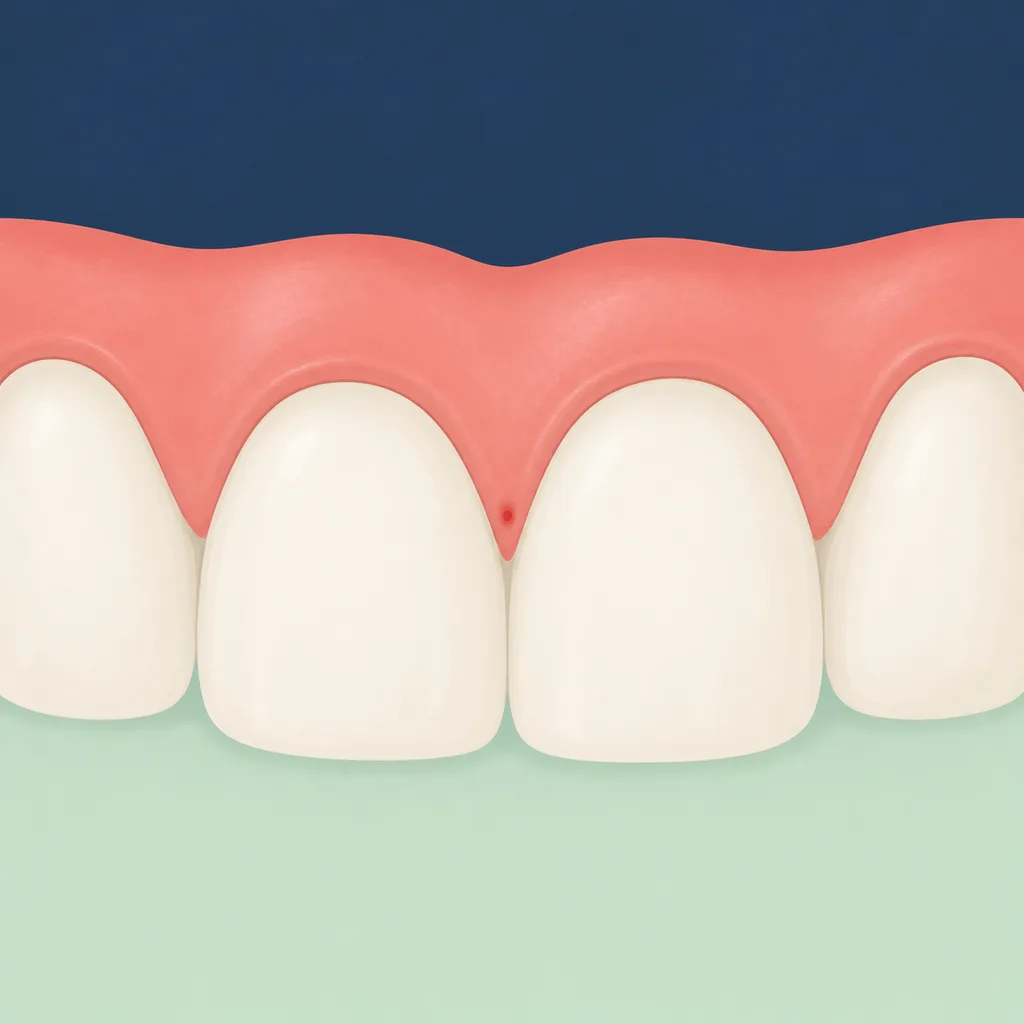
What it feels like
Common causes
What relief is safe tonight?
Remove plaque by brushing your teeth and cleaning between them regularly. Leaving plaque in place allows it to keep irritating the gums.
[1]How a dentist checks it
A gum examination looks for inflammation and measures the pockets around teeth with a small probe. Healthy pockets are usually 1 to 3 millimetres deep; deeper pockets can indicate periodontal disease. X-rays can show bone loss.
[2]Treatment by cause
Where plaque is the driver, daily brushing and cleaning between teeth address the build-up that irritates the gums. Tartar requires professional cleaning before the gum area can be kept clean again.
[1]How to reduce the chance of it returning
Brush twice a day with fluoride toothpaste and remove plaque between teeth regularly with floss, an interdental brush, a pick, or a water flosser recommended by a dental professional. Routine check-ups and professional cleaning also support gum health.
[1]Where this can lead
Very sore swollen gums, loose or falling teeth, mouth ulcers or red patches, or a lump in the mouth or on the lip are urgent signs alongside gum disease.
[1]