
Gray or Darkening Tooth
A gray or darkening tooth can follow staining, decay, or injury. Learn which signs need prompt care and why whitening may not be first.
[3][1]The short answer
A gray or darkening tooth may reflect staining, decay, or a previous injury. Colour alone cannot show which cause is present, so whitening should wait until the tooth's health has been checked.
[3][1]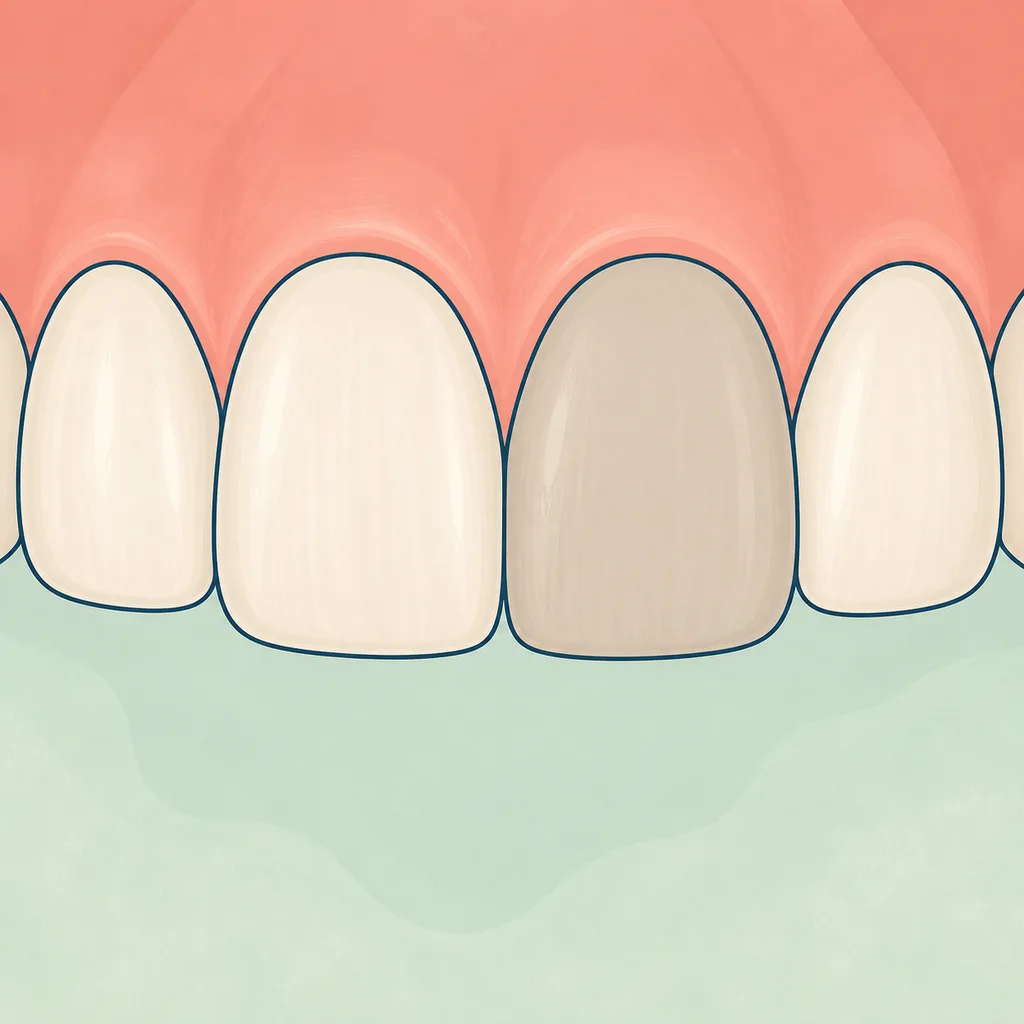
What it feels like
Common causes
Colour can change with surface staining, tooth decay, or changes inside the tooth after damage. Whitening is designed for some forms of discolouration, while decay needs dental treatment rather than cosmetic masking.
[3][2]| Situation | What it may indicate | Useful next step |
|---|---|---|
| Surface or shape change | The outside of the tooth has changed | Ask for an examination before choosing a cosmetic fix[3][2] |
| Deeper tooth problem | The symptoms or appearance suggest damage below the surface | Seek dental advice and avoid chewing on it[3][2] |
What relief is safe tonight?
How a dentist checks it
The dentist examines the tooth and asks about timing, symptoms, injury, and changes in oral care. The assessment separates a surface colour concern from a problem that needs restorative treatment.
[2]What treatment depends on
How to lower the chance of another problem
Brush with fluoride toothpaste, clean between teeth, and limit frequent sugary food and drinks. These habits help reduce decay risk, while dental review can catch a developing problem before the colour change becomes extensive.
[2]Where this can lead
A colour change is a sign to investigate, not a diagnosis. The safest next step is an examination that identifies whether the concern is on the surface or inside the tooth.
[1]Frequently asked questions
Can gray or darkening tooth be judged from appearance alone?
A gray or darkening tooth is a visible change in tooth colour. The change may relate to staining, decay, or a tooth that has been affected by an injury. Colour alone cannot identify the cause, so the tooth needs an assessment before whitening or repair is chosen.
[3][1]