
Dry Mouth
Dry mouth means there is too little saliva or a feeling of reduced moisture in the mouth.
[1]The short answer
The mouth may feel sticky, dry, or uncomfortable. You may need water while eating, find speaking harder, or notice a dry throat, altered taste, bad breath, or cracked lips. These sensations can vary through the day and may be stronger at night.
[1]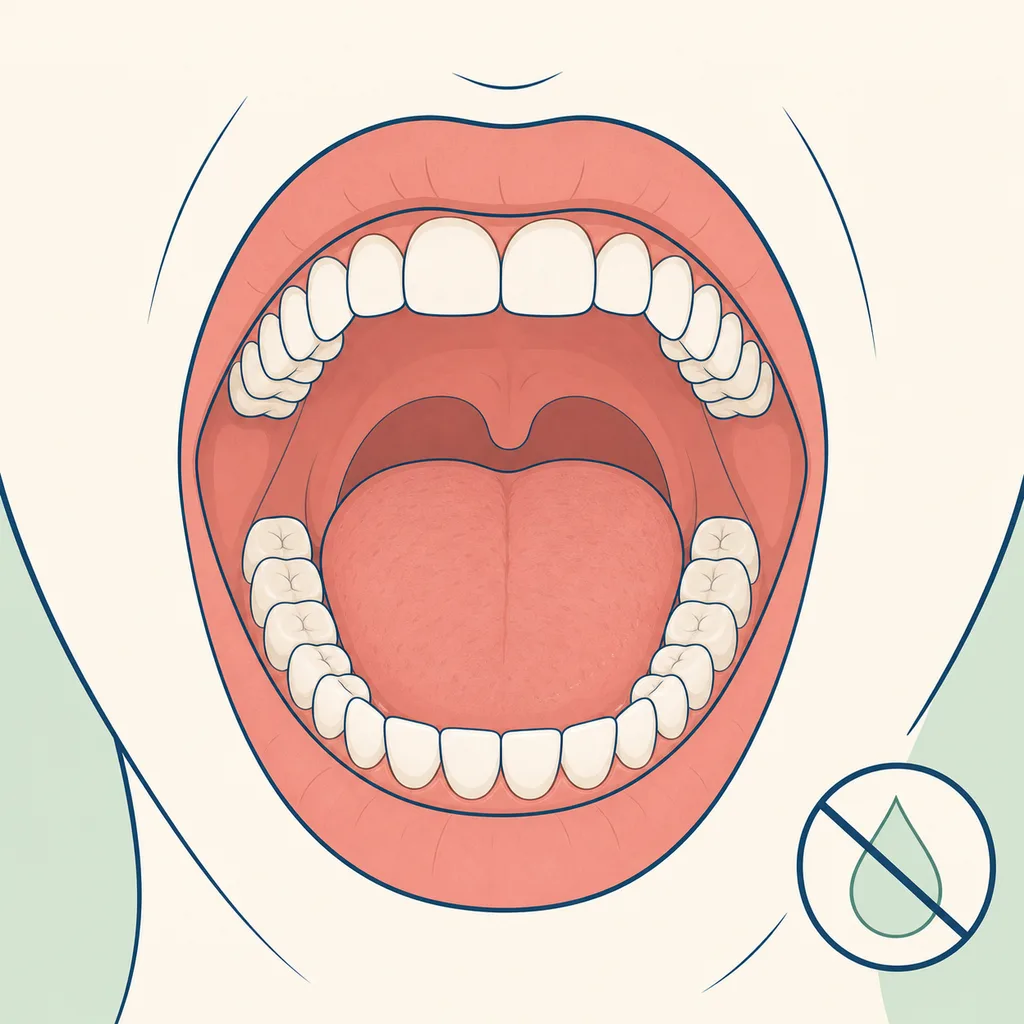
What does dry mouth feel like?
What commonly causes dry mouth?
Medicines are a common contributor. Dehydration, mouth breathing, illness, and conditions affecting saliva can also play a part. The cause may be temporary or ongoing, and the same symptom can have different explanations, so review of the history matters.
[1]What relief is safe tonight?
Sip water regularly and keep the mouth clean with gentle tooth and tongue care. Choose moist foods if eating is uncomfortable and avoid smoking. Do not stop a prescribed medicine on your own; ask the prescriber whether dry mouth could be a side effect and what to do.
[1]How is the cause checked?
A clinician asks when dryness began, reviews medicines and health conditions, and examines the mouth and teeth. They consider how much saliva is present and whether the symptom has caused other mouth problems. The history helps decide whether dental or medical follow-up is needed.
[1]How is dry mouth managed?
Management depends on the cause. A clinician may review medicines, suggest ways to keep the mouth moist, and advise products or habits that make eating and speaking easier. Dental care matters because persistent dryness can raise the need for prevention and monitoring.
[1]How can you protect your mouth?
Drink water, keep the teeth and spaces between them clean, and attend dental care when advised. Limit tobacco and follow advice about products that relieve dryness. These measures support the mouth while the underlying contributor is being addressed.
[1]When should you arrange an assessment?
Frequently asked questions
Should I stop a medicine that may cause dry mouth?
Do not stop a prescribed medicine without medical advice; ask the prescriber about the symptom and possible options.
[1]