
Dental Nation
Symptom guide

Difficulty Swallowing

Difficulty swallowing can feel like food or liquid is stuck in the throat and may bring coughing, choking, gurgling, or food coming back up.

[1][2]

The short answer

Difficulty swallowing can feel as though food or liquid is stuck in the throat and may cause coughing, choking, gurgling, or food coming back up.

[1][2]
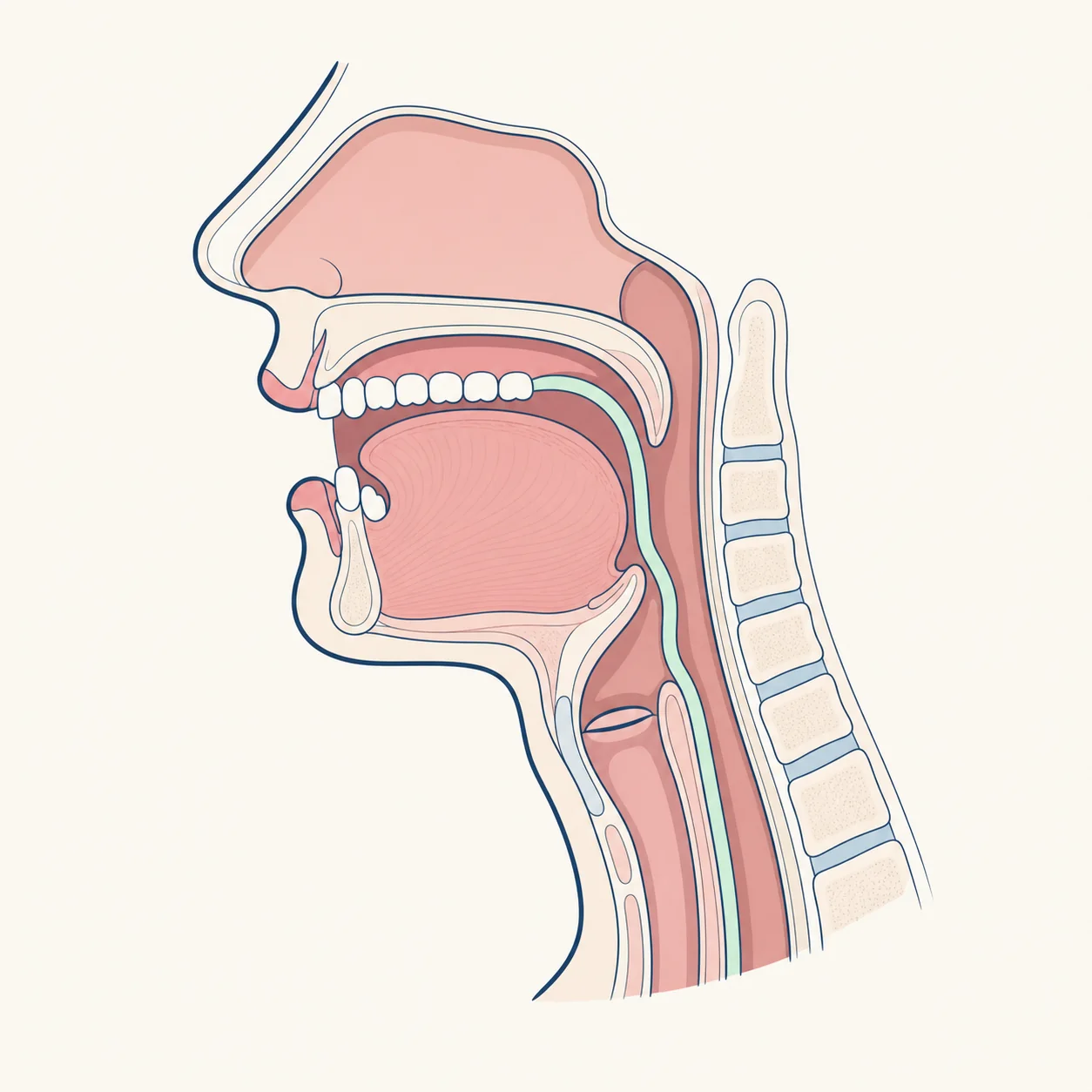
Difficulty Swallowing dental educational illustration

What does difficulty swallowing feel like?

Symptoms that can occur with swallowing difficulty
When it happensPossible sign
During or after eatingCoughing, choking, throat clearing, or gurgling sounds[1][2]
After a swallowFood coming back up, hiccups, or chest discomfort[1][2]
Over timeUnexplained weight loss or recurrent chest infections[2][3]

[1][2][3]

What can cause swallowing difficulty?

Dysphagia means impaired swallowing with delayed movement of liquid or solid material from the mouth to the stomach. It can be acute or chronic, intermittent or persistent, and may involve the throat, oesophagus, or both.

[2][3]
Cause groups for dysphagia
GroupExamples
Mechanical or movementMechanical obstruction or a motility disorder[2][3]
Body systemsAnatomical, neuromuscular, infectious, or inflammatory disease[2][3]
LocationOropharyngeal, oesophageal, or mixed swallowing problems[2][3]

[2][3]

What relief is safe tonight?

Eat slowly and note whether liquids, semisolids, or solids are harder to swallow. Coughing or choking during or after meals, throat clearing, and weight loss are symptoms that can occur.

[1][2]

How is dysphagia diagnosed?

History and physical examination help identify the cause. Further assessment can include bedside testing, barium swallow, endoscopy, and tests that distinguish throat-phase from oesophageal swallowing problems.

[2][3]

What treatment is used?

Treatment depends on the cause and associated conditions. Management may use compensatory and rehabilitative strategies to improve quality of life and regain physiologic swallowing.

[2][3]

How can swallowing be made safer?

Head tilt, chin-tuck, head rotation, and supraglottic manoeuvres have shown some benefit in minimising or preventing aspiration, although evidence for these techniques is contradictory.

[2][3]

When is swallowing difficulty urgent?

Swallowing difficulty with coughing or choking while eating or drinking, breathlessness after meals, food returning through the nose, or repeated chest infections needs urgent attention. A wet, gurgly voice after eating or drinking and the feeling that something remains in the throat are also listed signs.

[2][3]

Frequently asked questions

Can dysphagia cause a wet voice after drinking?

Yes. A wet, gurgly voice after eating or drinking is one of the signs that can occur with swallowing difficulty.

[2][3]