
Dark Spots on Teeth
Dark spots may be tooth decay, especially when they occur with sensitivity, pain, or a developing cavity.
[1]The short answer
A dark spot may cause no symptoms at first. With worsening decay, a tooth may ache or give a sharp response to hot, cold, or sweet food and drink.
[2]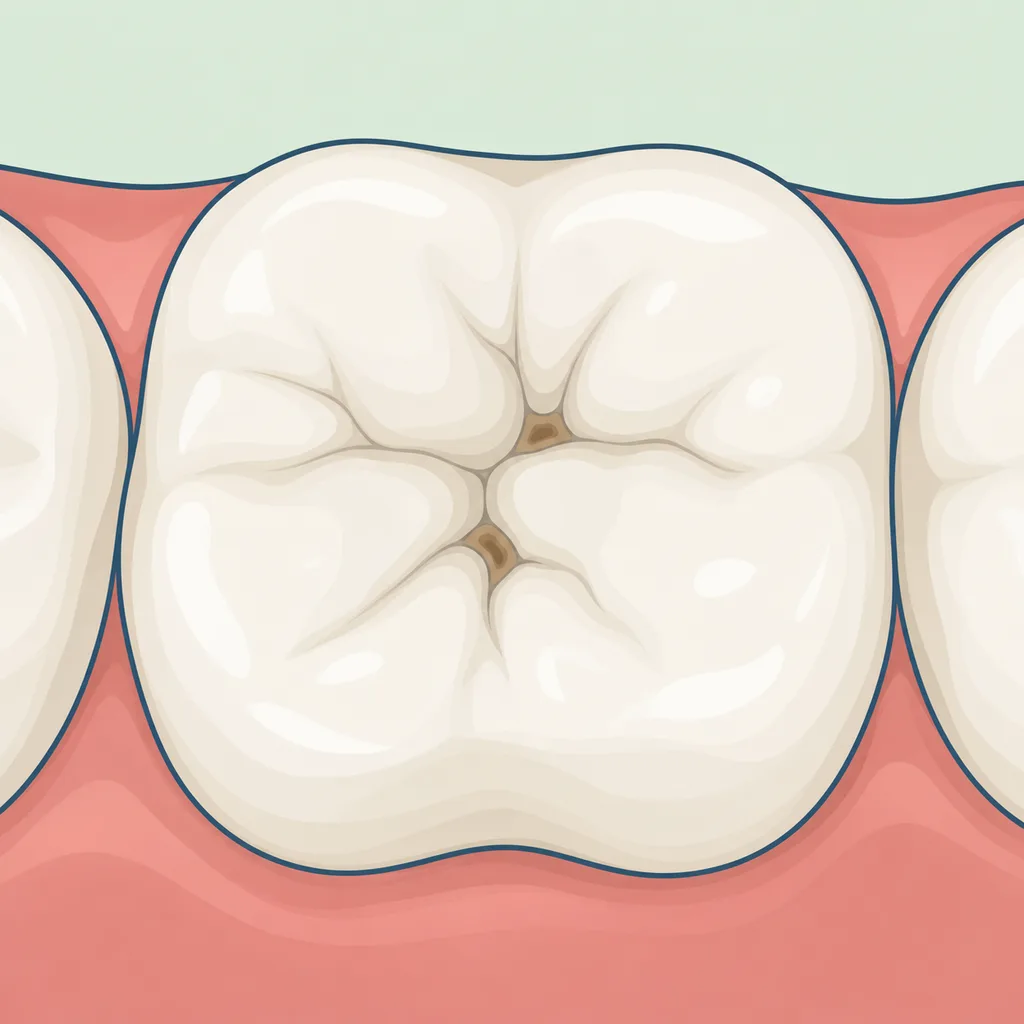
What can dark spots feel like?
Why do dark spots appear?
Tooth decay develops when bacteria turn sugars and starches into acid. Repeated acid attacks remove minerals from enamel until the surface weakens and breaks down.
[2]What relief is safe tonight?
Brush with fluoride toothpaste, clean between your teeth, and limit sugary foods and drinks. These steps reduce the conditions that drive further decay.
[2]How is a dark spot diagnosed?
A dental examination can identify staining, a cavity, or soft and sticky tooth areas. An X-ray may reveal decay hidden from view.
[2]What treatment removes the problem?
Early decay can be treated with fluoride before a hole forms. A cavity is treated by removing decayed tissue and placing a filling; deeper decay may require root canal treatment or extraction.
[1]How can dark spots be prevented?
Fluoride toothpaste, daily cleaning between teeth, fewer sugary snacks and drinks, no tobacco, and regular examinations and professional cleanings all help prevent decay.
[2]What can happen if it worsens?
Decay can progress from a spot to a cavity, then to pain, infection, and possible tooth loss. Facial swelling and fever can signal an infected tooth.
[1]Frequently asked questions
Does every dark spot mean a cavity?
A dark spot can be a sign of decay, and an examination can check for a cavity, soft areas, or decay hidden on an X-ray.
[2]