
Symptom guide
Facial Swelling in a Child
A child’s facial swelling can be caused by a dental abscess; fever, swallowing difficulty, or breathing difficulty makes it urgent.
[2][1]The short answer
Facial swelling in a child can be caused by a dental abscess and needs prompt assessment, especially with fever or swallowing difficulty.
[2][1]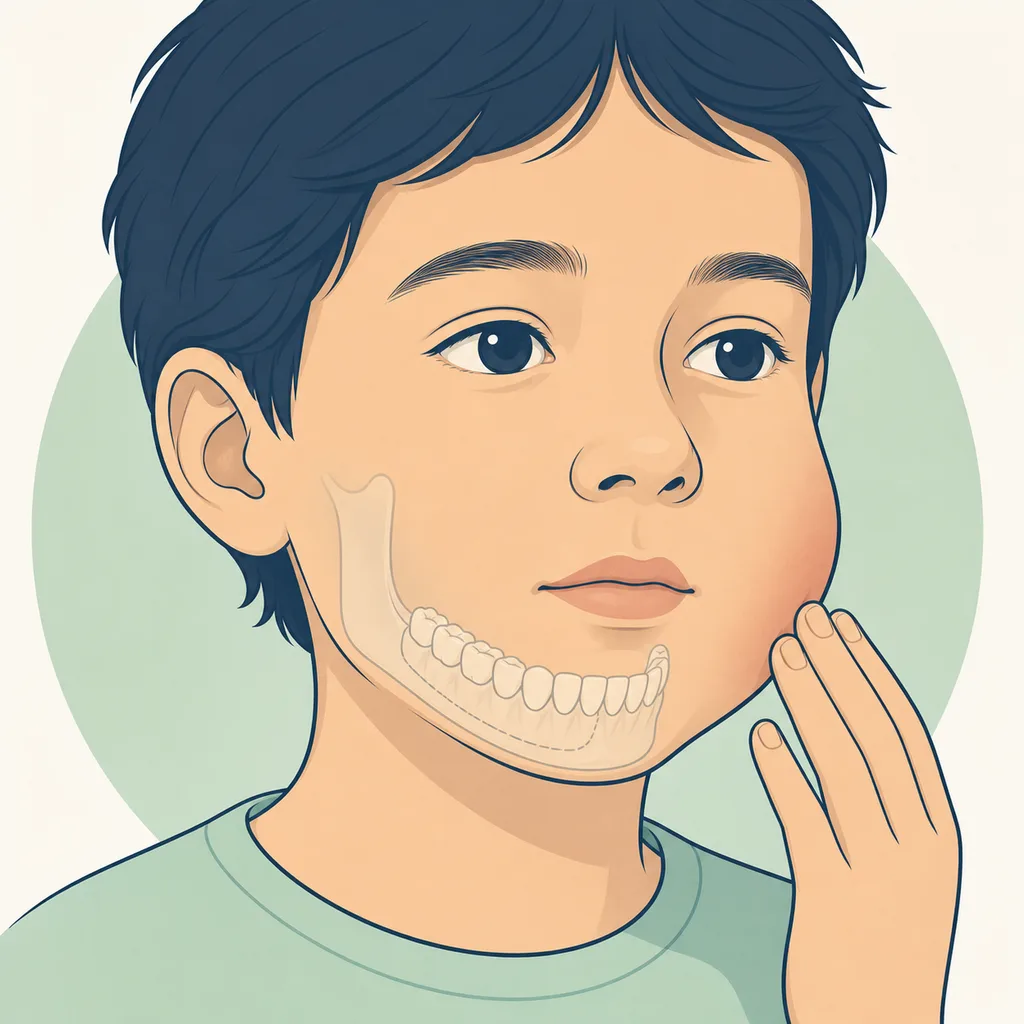
What it feels like
Common causes
A dental abscess is a build-up of pus caused by infection in a tooth or gum. An impacted tooth, tooth decay, gum disease, or an injury to the mouth can contribute.
[2][1]| Situation | What it suggests | What to do |
|---|---|---|
| Swelling with toothache | A dental source needs prompt examination | Contact a dental service[2][1] |
| Swelling with fever or reduced eating | The child may need urgent clinical advice | Seek prompt professional care[2][1] |
| Swelling with breathing or swallowing difficulty | The situation may be an emergency | Get urgent medical help[2][1] |
What relief is safe tonight?
Do not puncture or drain facial swelling at home. Seek urgent dental help, and treat difficulty breathing or swallowing as an emergency.
[1]How is it diagnosed?
How is facial swelling from a tooth treated?
How can it be prevented?
Brush with fluoride toothpaste at least twice daily, spit without rinsing, clean between the teeth daily, and replace the toothbrush every two to three months.
[1]