
Blister on the Lip
A lip blister is commonly a fluid-filled sore on or around the lip.
[1]The short answer
A cold sore can begin with tingling, itching or burning before a blister appears on or around the lip. The blister may be painful, then break and form a crust. A sore inside the mouth can look different from one on the lip, so the exact position matters when you describe it to a clinician.
[1]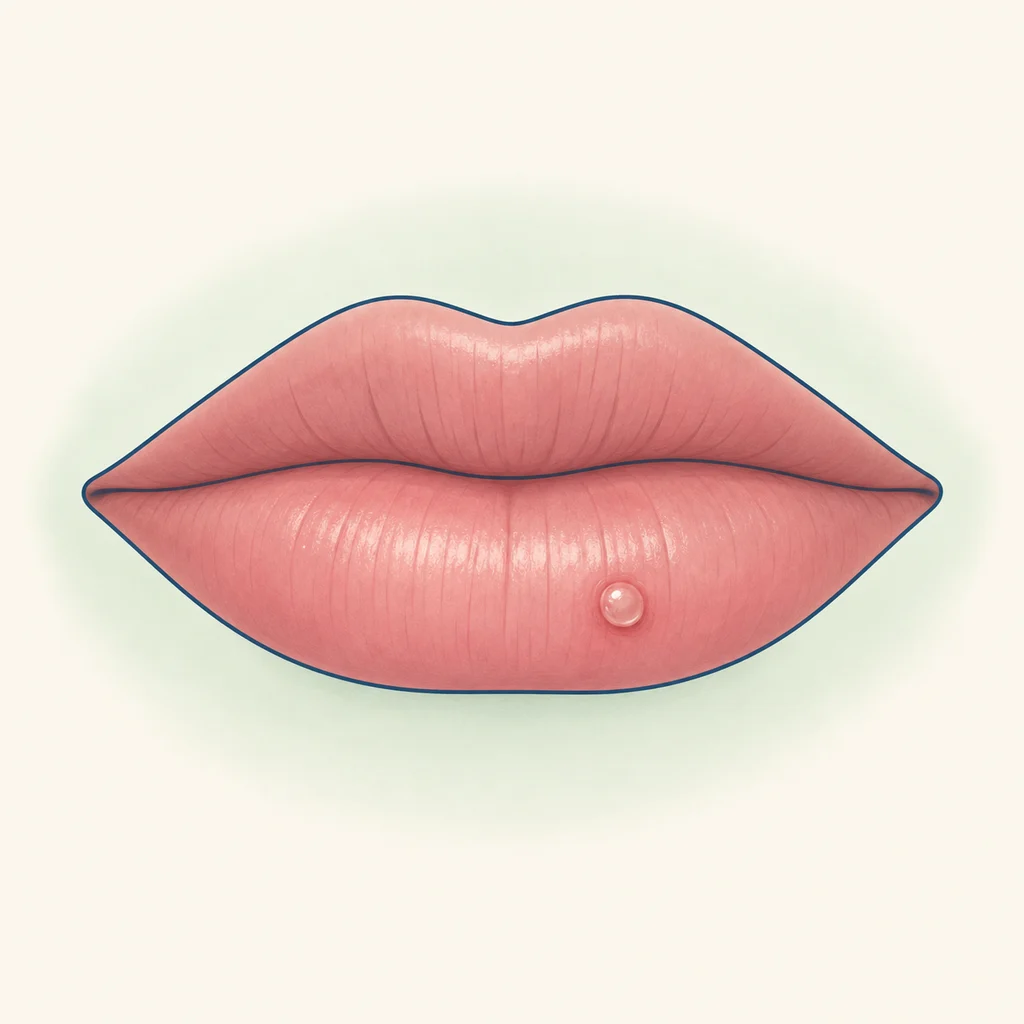
What does a blister on the lip feel like?
What can cause a blister on the lip?
Cold sores and canker sores are separate conditions. Cold sores usually affect the lips or nearby skin, while canker sores occur inside the mouth. Other mouth changes can resemble a blister, which is why a photograph, timeline and examination can be more useful than guessing from a single symptom.
[1]What relief is safe tonight?
Keep the area clean and avoid picking or irritating the blister. Choose foods and drinks that do not aggravate the sore, and ask a pharmacist or clinician which treatment is suitable for you. If the sore affects eating, drinking or your general health, seek advice rather than relying on home treatment alone.
[1]How is the cause checked?
A clinician can usually assess a cold sore by looking at it and asking when the tingling, blister or crust began. Tell them whether the change is on the lip or inside the mouth, whether it has happened before, and whether you have other symptoms. That history helps separate a cold sore from another mouth sore.
[1]How is a lip blister treated?
Treatment depends on the cause and how troublesome the sore is. Cold sores may be managed with advice from a pharmacist or clinician, including antiviral treatment in situations where it is appropriate. Canker sores have different care. Do not share medicines or assume that a treatment for one type of sore will treat another.
[1]How can another blister be prevented?
If a clinician identifies a cold sore, reduce spread by avoiding direct contact with the sore and by not sharing items that touch the mouth while it is present. Wash your hands after touching the area. Repeated episodes can be discussed with a clinician, especially when they interfere with eating or daily life.
[1]When should you arrange an assessment?
Arrange clinical advice when the sore is severe, keeps returning, does not settle, or makes eating and drinking difficult. Seek advice sooner if you are concerned about your general health or the change does not resemble previous sores. A clinician can decide whether the lip change needs treatment or another evaluation.
[2][1]Frequently asked questions
Is every lip blister a cold sore?
No. Cold sores and canker sores differ, and other mouth changes can resemble them, so the location and appearance should be assessed when the diagnosis is unclear.
[1]