
Blister on the Gum
A blister-like bump on the gum can have several explanations.
[2]The short answer
A gum blister may feel like a tender raised spot, a sore area, or a change that catches when you brush. Record whether it is beside one tooth or spread across the gum, whether the gum bleeds, and whether the surface is open. These details are useful because a sore inside the mouth and gum disease can present differently.
[2]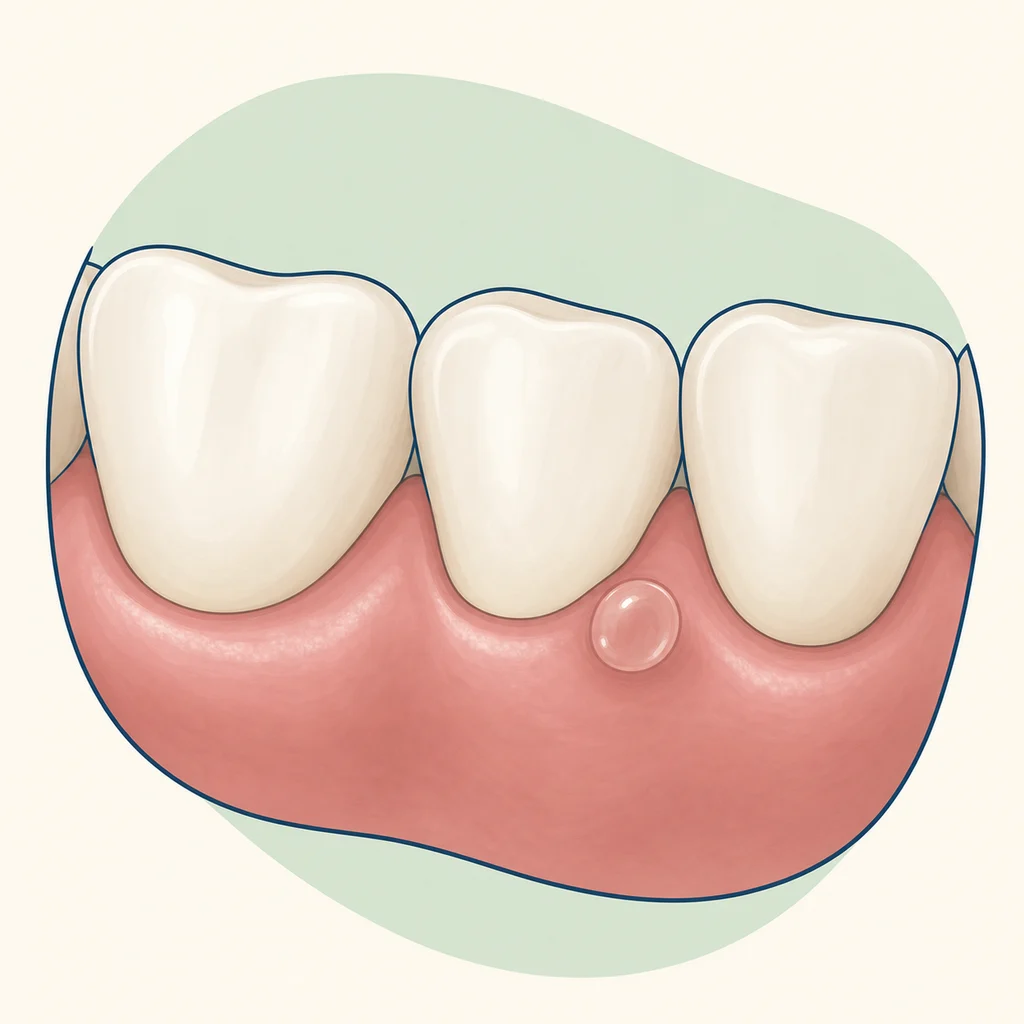
What does a blister on the gum feel like?
What can cause a blister on the gum?
A mouth sore can occur on oral tissue, while gum disease affects the tissues around teeth and may cause inflammation, bleeding or tenderness. A blister-like appearance alone cannot identify the cause. Note recent irritation, the duration of the change and any gum bleeding so an examination can focus on the relevant area.
[2][3]What relief is safe tonight?
Brush gently around the area and avoid picking, squeezing or repeatedly rubbing the bump. Choose food and drink that do not aggravate the sore. If brushing causes bleeding or pain, arrange dental advice rather than stopping oral care altogether, because the cause still needs to be identified.
[2]How is the cause checked?
A clinician examines the sore and the surrounding gum, asks how long it has been present, and checks for bleeding, tenderness or other mouth changes. They may also ask about previous sores and whether the change is beside a tooth. The examination distinguishes a local sore from a wider gum problem.
[1][2]How is a gum blister treated?
Care depends on what the examination finds. A mouth sore may need local symptom care, while gum disease needs attention to the gums and oral hygiene. Follow the treatment chosen for the identified problem, and return for review if the spot persists or the surrounding gum becomes more painful or swollen.
[2]How can gum problems be reduced?
Regular brushing, cleaning between teeth and dental review help keep gum changes under observation. Avoid irritating a sore and report bleeding, swelling or tenderness that continues. Prevention advice should match the cause found at examination, so a recurring bump deserves a clear explanation rather than repeated self-treatment.
[3]When should you arrange an assessment?
Arrange an assessment when a gum blister-like change persists, returns, bleeds, becomes painful, or is accompanied by swollen or tender gums. Seek advice sooner when it affects eating or when the surrounding gum is changing quickly. A clinician can examine the spot and explain whether the issue is local or part of a wider gum condition.
[2]