
Bad Breath After Brushing
Bad breath that remains after brushing can come from the mouth, including the tongue or gums, and needs assessment when it persists.
[1]The short answer
The smell may return soon after brushing, or another person may notice it even when you do not. Persistent odour is different from a brief taste after a meal. Notice whether you also have a coated tongue, dry mouth, bleeding gums, pain, or an unpleasant taste.
[1]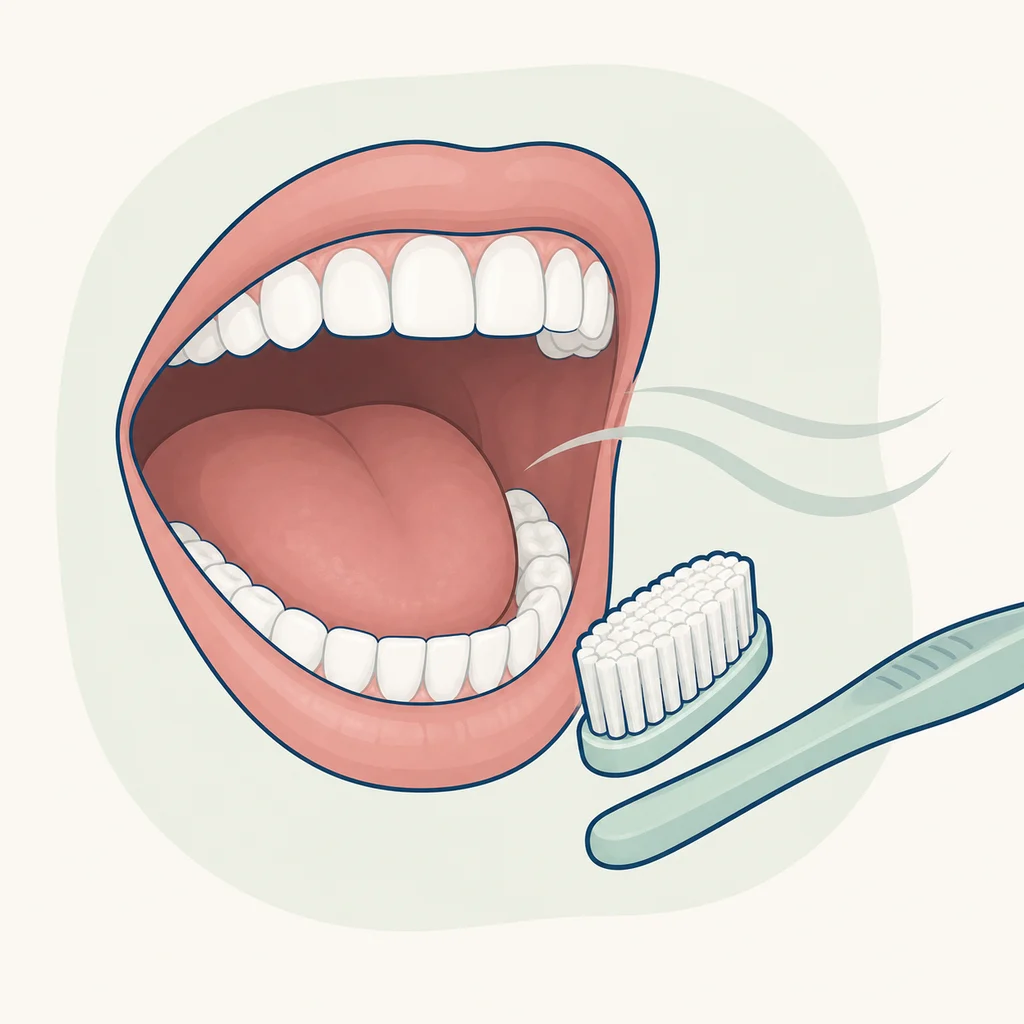
What it feels like
| What you may notice | What it can indicate | What to do next |
|---|---|---|
| Bleeding or change in one area | A local gum finding needs the area examined | Note the location and arrange advice if it persists[1] |
| Repeated or widespread change | More than one gum area may be involved | Book an assessment rather than relying on a home guess[1] |
Common causes
Bad breath can have oral causes, including bacteria on the tongue, gum disease, or another dental problem. Causes outside the mouth are also possible. The pattern after brushing does not identify one cause, so stronger mouthwash may only mask it.
[1][2]| What you may notice | What it can indicate | What to do next |
|---|---|---|
| Local irritation | The gum may be reacting where cleaning is difficult | Have the area examined if it keeps recurring[1][2] |
| Gum inflammation or disease | The tissues around teeth may need dental assessment | Arrange a review to match care to the finding[1][2] |
What relief is safe tonight?
Brush the teeth and tongue gently and clean between the teeth. Keep a note of when the odour returns and whether your mouth feels dry. Do not mask persistent breath odour indefinitely with products; arrange a dental assessment if it continues.
[1]How a dentist checks it
A dentist asks when the odour occurs and examines the teeth, gums, tongue, and mouth. Persistent bad breath that does not improve with self-care needs assessment. Your description of timing after brushing helps direct the examination.
[1]Treatment by cause
Treatment depends on the source. Dental treatment may be needed when gum disease or another oral problem is present. If the mouth is not the source, a clinician can advise on the next assessment. Mouthwash alone does not replace finding the cause.
[1]How to reduce the chance of it returning
Clean the tongue, teeth, and spaces between teeth regularly. Oral hygiene is part of managing breath odour, while persistent symptoms still need their source identified.
[1]Where this can lead
Persistent odour may continue until its source is treated. A dental review is a practical first step when the problem remains after careful oral cleaning.
[1]Frequently asked questions
Can bad breath after brushing be diagnosed at home?
A home observation can describe the symptom, but a dental examination is needed to identify its cause when it persists or returns.
[1]