
What are inlays and onlays?
Repair a damaged back tooth with a custom restoration when a simple filling is insufficient and a full crown is not needed
[1]The short answer
An inlay is a custom restoration for the chewing-surface area inside a back tooth's cusps An onlay is also custom made, but it covers one or more cusps as well Both are fabricated outside the mouth and bonded at a later appointment when the damage needs more repair than a simple filling but does not require a full crown
[1]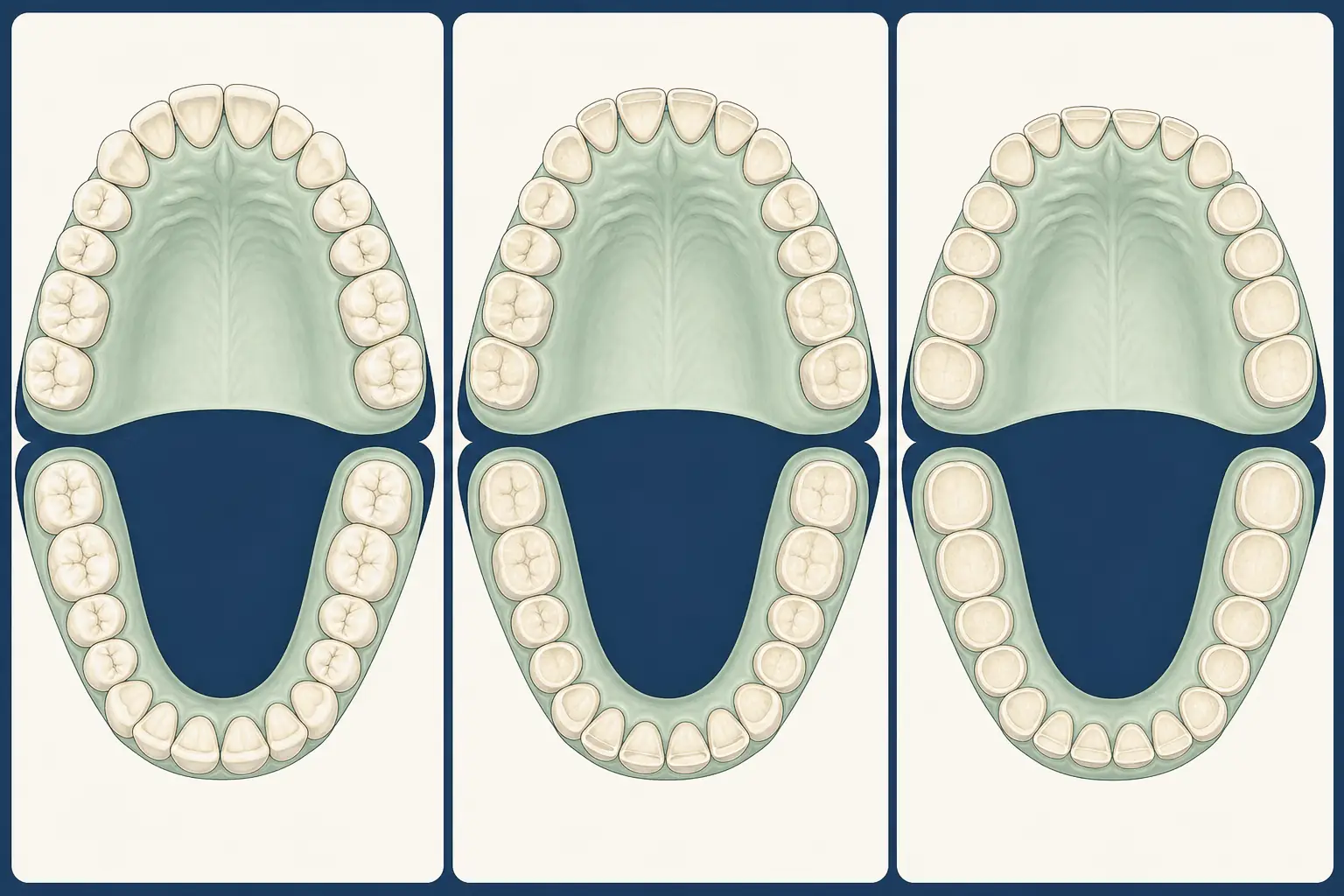
The cusp boundary separates an inlay from an onlay
Cusps are the deciding feature in the names The inlay restores the portion of the chewing surface between those cusps The onlay reaches beyond that central area and includes at least one cusp This difference describes the extent of each restoration on the tooth
[1]A repair that sits between a filling and a full crown
These restorations are used on back teeth with damage that calls for more repair than a simple filling can provide The same damage does not have to be severe enough for a full crown An inlay or onlay therefore repairs a damaged tooth while leaving a full crown for situations where it is justified
[1]The shared purpose is repair of a damaged back tooth The choice between the two follows the damaged area: restoration between the cusps points to an inlay, while repair that also covers one or more cusps points to an onlay Both remain custom restorations rather than simple fillings
[1]Made outside the mouth, then bonded at a second visit
Inlays and onlays are indirect restorations: they are made outside the mouth rather than formed directly on the tooth Their placement includes a later appointment, when the finished restoration is bonded into place That sequence applies to both the between-cusp inlay and the cusp-covering onlay
[1]How does this answer connect to the decision?
The second appointment is part of the shared placement method The restoration has already been made outside the mouth before it is bonded to the damaged back tooth The distinction between an inlay and an onlay concerns which part of the chewing surface the finished restoration repairs
[1]Frequently asked questions
Which restoration covers a cusp,?
An onlay covers one or more cusps An inlay stays in the region between the cusps on the chewing surface Both are custom restorations for a damaged back tooth when a simple filling is not enough and a full crown is not justified
[1]Why are inlays and onlays called indirect restorations,?
They are made outside the mouth and then bonded into place at a second appointment This placement method is shared by both forms of restoration, whether the repair stays between cusps or extends over one or more of them
[1]When might a damaged back tooth use an inlay or onlay,?
An inlay or onlay may be used when damage is too extensive for a simple filling but does not justify a full crown The area needing repair distinguishes the two: an inlay restores between cusps, and an onlay also covers one or more cusps
[1]Who wrote this page
This library is published by Dental Nation, a licensed dental group practising in the United Arab Emirates. Pages are written and overseen by the same clinical team that treats patients in our clinics, and are held to a fixed editorial standard for safety and accuracy.
This page is patient education, not medical advice, and cannot replace an examination. Anything urgent — facial swelling, trauma, uncontrolled bleeding or severe pain — needs a dentist or emergency care now.