
Laser teeth straightening
Laser teeth straightening is not a standard method for moving teeth; lasers may assist selected gum or soft-tissue procedures, while orthodontic movemen...
The short answer
Laser teeth straightening is not a standard method for moving teeth; lasers may assist selected gum or soft-tissue procedures, while orthodontic movement uses aligners, braces, or other appliances. The right option depends on tooth position, bite, roots, and supporting bone.
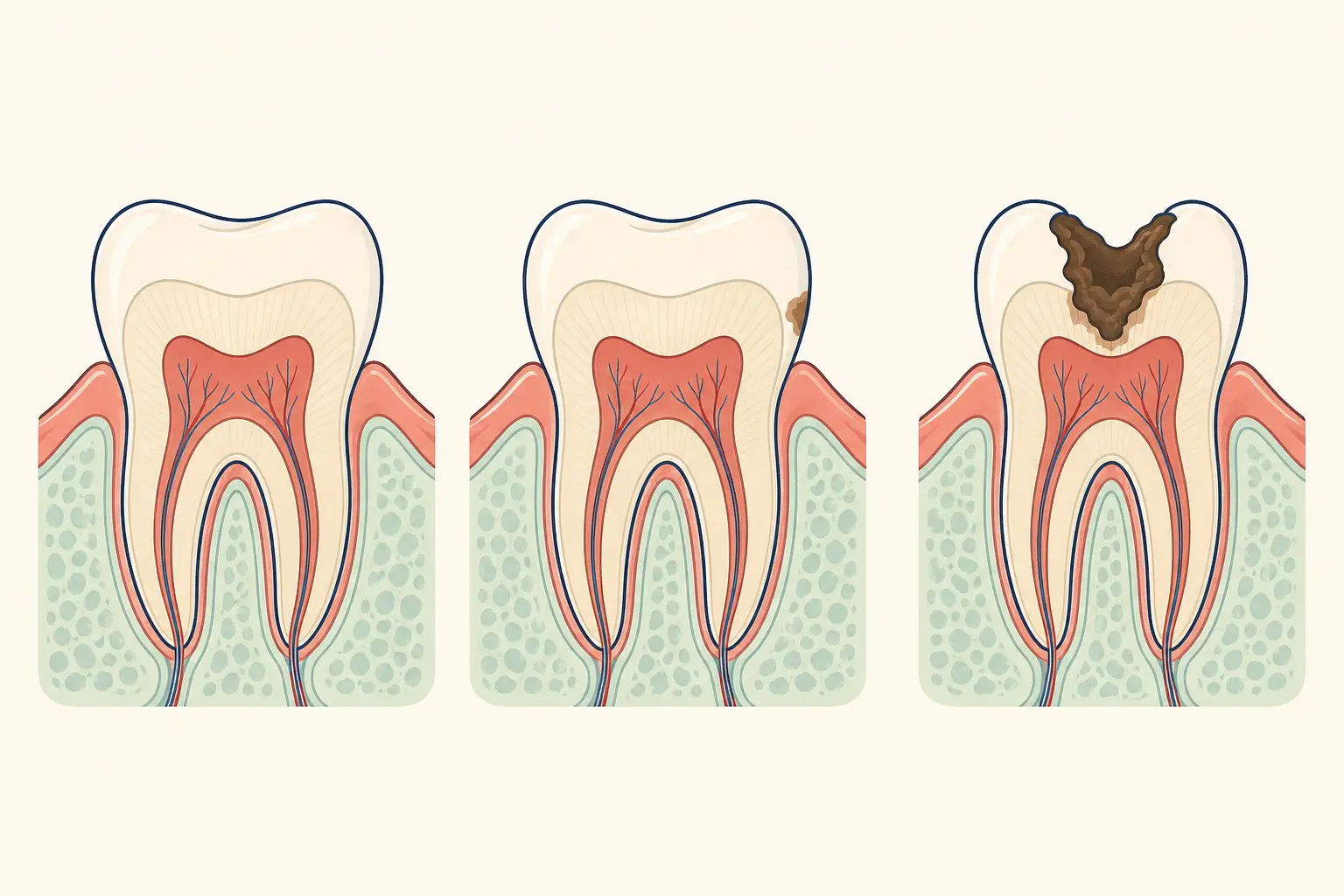
How do orthodontic forces move teeth through supporting bone?
Orthodontic force acts through the periodontal ligament and causes controlled bone remodeling around a tooth. A laser cannot replace that force, although a dental laser may reshape gum tissue or support a separate procedure in selected cases.
What happens during an assessment for straighter teeth?
A dentist or orthodontist examines the bite, photographs the teeth, and may use radiographs or digital scans before discussing aligners, fixed braces, or limited gum contouring. Treatment then follows a staged plan with retention afterward.
When should crowded or rotated teeth be assessed?
Seek an assessment if teeth are crowded, rotated, spaced, difficult to clean, or affecting chewing. Prompt care is important when movement is associated with trauma, swelling, or a loose tooth.
Do you need orthodontic movement, gum reshaping, or both?
Ask whether you need orthodontic movement, gum reshaping, or both, what imaging is required, and how the proposed appliance will control roots as well as visible crowns.
Frequently asked questions
Could this problem have more than one cause?
Orthodontic force acts through the periodontal ligament and causes controlled bone remodeling around a tooth. A laser cannot replace that force, although a dental laser may reshape gum tissue or support a separate procedure in selected cases.
What is the first step before choosing an alignment option?
A dentist or orthodontist examines the bite, photographs the teeth, and may use radiographs or digital scans before discussing aligners, fixed braces, or limited gum contouring. Treatment then follows a staged plan with retention afterward.
Who wrote this page
This library is published by Dental Nation, a licensed dental group practising in the United Arab Emirates. Pages are written and overseen by the same clinical team that treats patients in our clinics, and are held to a fixed editorial standard for safety and accuracy.
This page is patient education, not medical advice, and cannot replace an examination. Anything urgent — facial swelling, trauma, uncontrolled bleeding or severe pain — needs a dentist or emergency care now.