
How does a bridge stay in place?
Expect a fixed bridge to remain attached through closely fitted supporting crowns that are bonded to prepared teeth beside the space
[1]The short answer
A fixed bridge is held by supporting crowns placed over teeth next to the gap, or by implants in designs that use implant support The crowns fit over prepared supporting teeth and are bonded with dental cement, joining the replacement tooth and its supports as one unit
[1]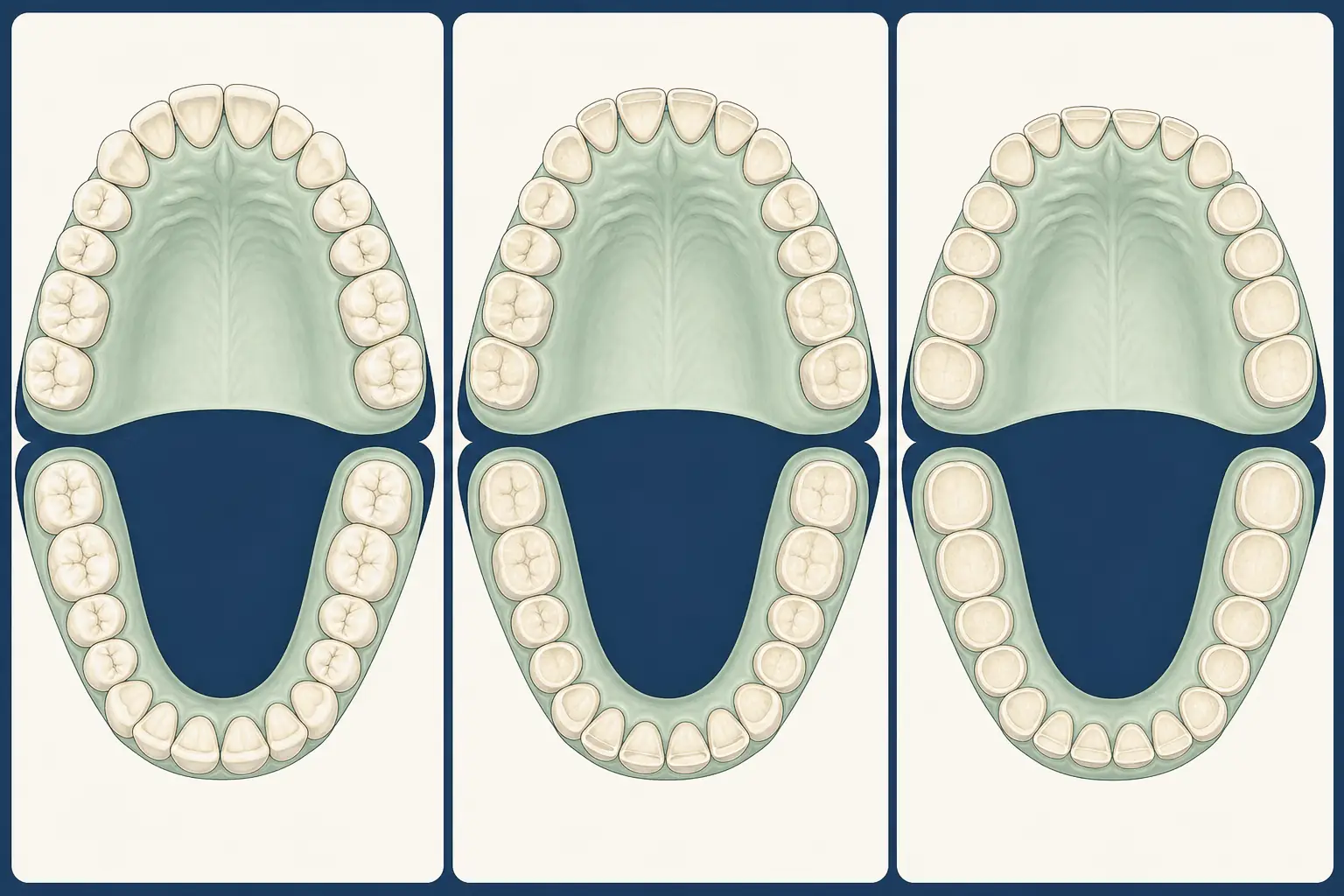
Supporting crowns carry the replacement tooth
The teeth on either side of the space are the usual supports for this kind of bridge They are shaped to receive crowns, so the bridge does not rest on the missing-tooth space by itself Some bridge designs use implants as the supports instead of neighbouring teeth
[1]| Answer part | What the research shows |
|---|---|
| Direct answer | A fixed bridge is held by supporting crowns placed over teeth next to the gap, or by implants in designs that use implant support.[1] |
| What changes it | Before the supporting crowns are fitted, the abutment teeth are shaped so each crown can sit tightly over its tooth.[1] |
Close crown fit and cement keep the bridge attached
Before the supporting crowns are fitted, the abutment teeth are shaped so each crown can sit tightly over its tooth Dental cement bonds the crowns in place That bond is what gives the restoration its fixed attachment rather than a removable fit
[1]The cemented attachment applies to the supporting crowns, not only to the replacement tooth between them Once the crowns are bonded to their prepared supports, they anchor the bridge across the gap A close crown fit and the cement bond work together in that arrangement
[1]The bridge functions as one connected restoration
A bridge includes the replacement tooth, called the pontic, and the supporting crowns These parts are connected as a single restoration The crowns provide the anchorage, while the pontic occupies the gap between them
[1]Because the parts are connected and cemented to the supports, this restoration is described as fixed It is not intended to be taken out at home The bridge remains attached through its support crowns or, for an implant-supported design, through its implant support
[1]| Stage | Source-backed step |
|---|---|
| When to get help | A bridge includes the replacement tooth, called the pontic, and the supporting crowns. These parts are connected as a single restoration. The crowns provide the anchorage, while the pontic occupies the gap between them.[1] |
| Decision step | A cemented bridge is a fixed restoration rather than one a person removes and replaces at home.[1] |
A fixed bridge is not designed for home removal
A cemented bridge is a fixed restoration rather than one a person removes and replaces at home Its attachment comes from the crowns bonded over the shaped supporting teeth This distinguishes it from a removable restoration without adding a separate component to the bridge itself
[1]Frequently asked questions
Which teeth support a conventional bridge,?
A conventional bridge is supported by crowns on the teeth flanking the gap Those supporting teeth are shaped so the crowns can fit closely over them, then the crowns are bonded with dental cement
[1]Can a bridge be supported by implants,?
Yes Some bridge designs rely on implants for support rather than prepared neighbouring teeth In either arrangement, the bridge is a fixed restoration supported by its anchoring components
[1]Can I take a fixed bridge out at home,?
No A bridge cemented to supporting crowns is not intended for home removal The bridge, crowns, and pontic are connected as one fixed unit
[1]Who wrote this page
This library is published by Dental Nation, a licensed dental group practising in the United Arab Emirates. Pages are written and overseen by the same clinical team that treats patients in our clinics, and are held to a fixed editorial standard for safety and accuracy.
This page is patient education, not medical advice, and cannot replace an examination. Anything urgent — facial swelling, trauma, uncontrolled bleeding or severe pain — needs a dentist or emergency care now.