
Healthy upper gums
Healthy upper gums usually fit closely around the teeth, look coral pink or naturally pigmented, and do not bleed with gentle cleaning.
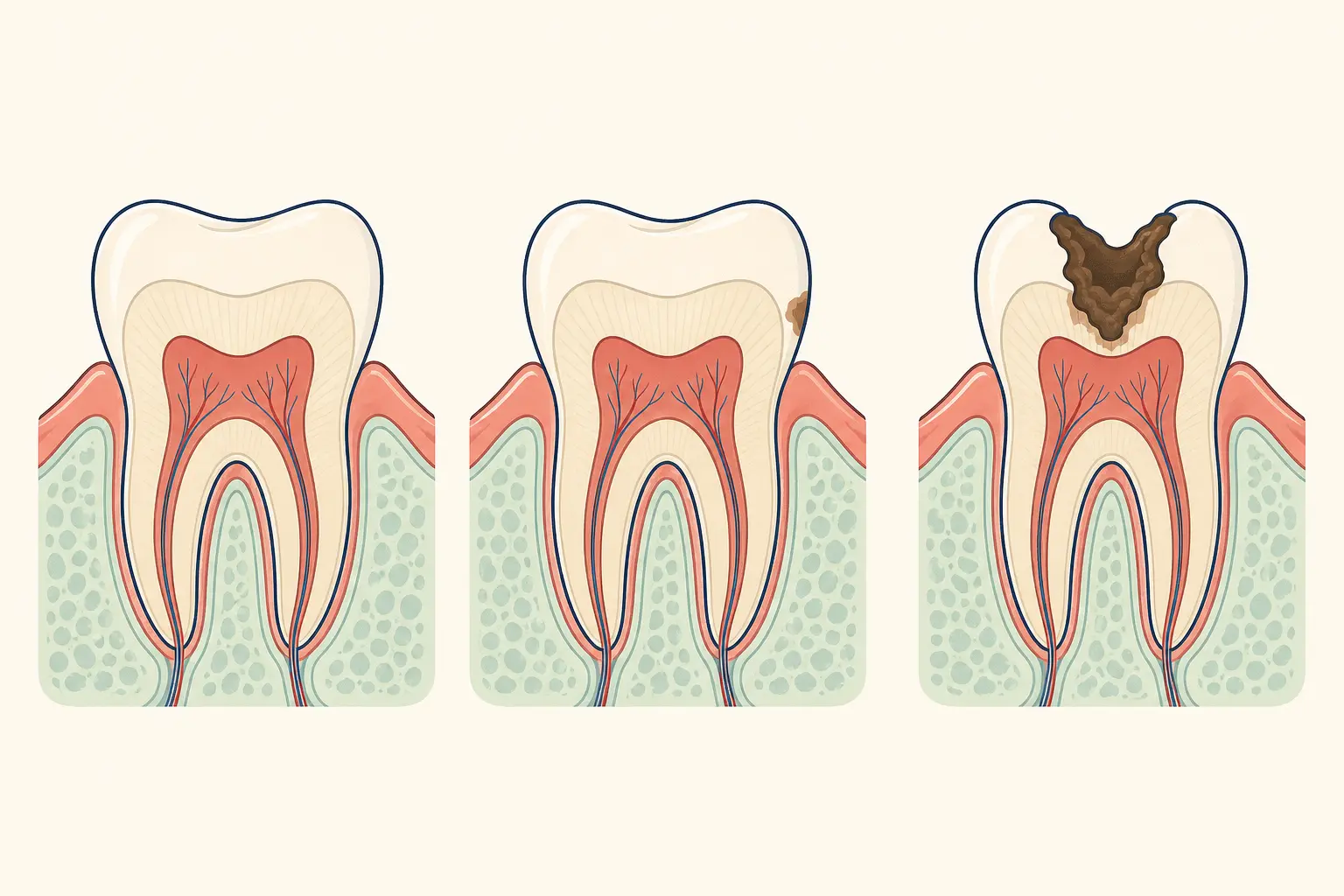
What should healthy upper gums normally look like?
Healthy upper gums usually fit closely around the teeth, look coral pink or naturally pigmented, and do not bleed with gentle cleaning.
What are the different parts of the upper gums?
The upper gingiva includes firm attached gum and movable lining nearer the lip and cheek. Healthy tissue is generally firm, lightly textured, and closely seals each tooth.
How can you keep your upper gums healthy each day?
Brush along the gumline with a soft brush and clean between teeth daily. An examination can measure pockets, inspect tissue, remove calculus, and find hidden changes.
Which upper gum changes need dental assessment?
Seek care for continuing bleeding, swelling, recession, pus, soreness, ulcers, colour change, or loose teeth. A rapidly enlarging lump needs prompt assessment.
What should your dentist check about your upper gums?
Ask whether the gum margin, pocket depths, and bone support are healthy, and whether the finding is inflammation, trauma, pigmentation, or another lesion.
Frequently asked questions
Can a symptom identify the exact cause?
A symptom narrows the possibilities, but an examination may be needed to identify the tooth, gum, appliance, or oral tissue involved.
What should I bring to an appointment?
Bring the start date, triggers, visible changes, medicines, relevant medical conditions, and details of any injury or dental treatment.
Who wrote this page
This library is published by Dental Nation, a licensed dental group practising in the United Arab Emirates. Pages are written and overseen by the same clinical team that treats patients in our clinics, and are held to a fixed editorial standard for safety and accuracy.
This page is patient education, not medical advice, and cannot replace an examination. Anything urgent — facial swelling, trauma, uncontrolled bleeding or severe pain — needs a dentist or emergency care now.