
Inflammation teeth symptoms
Inflammation around a tooth may cause pain, sensitivity, gum redness, swelling, bleeding, tenderness, or pain when biting.
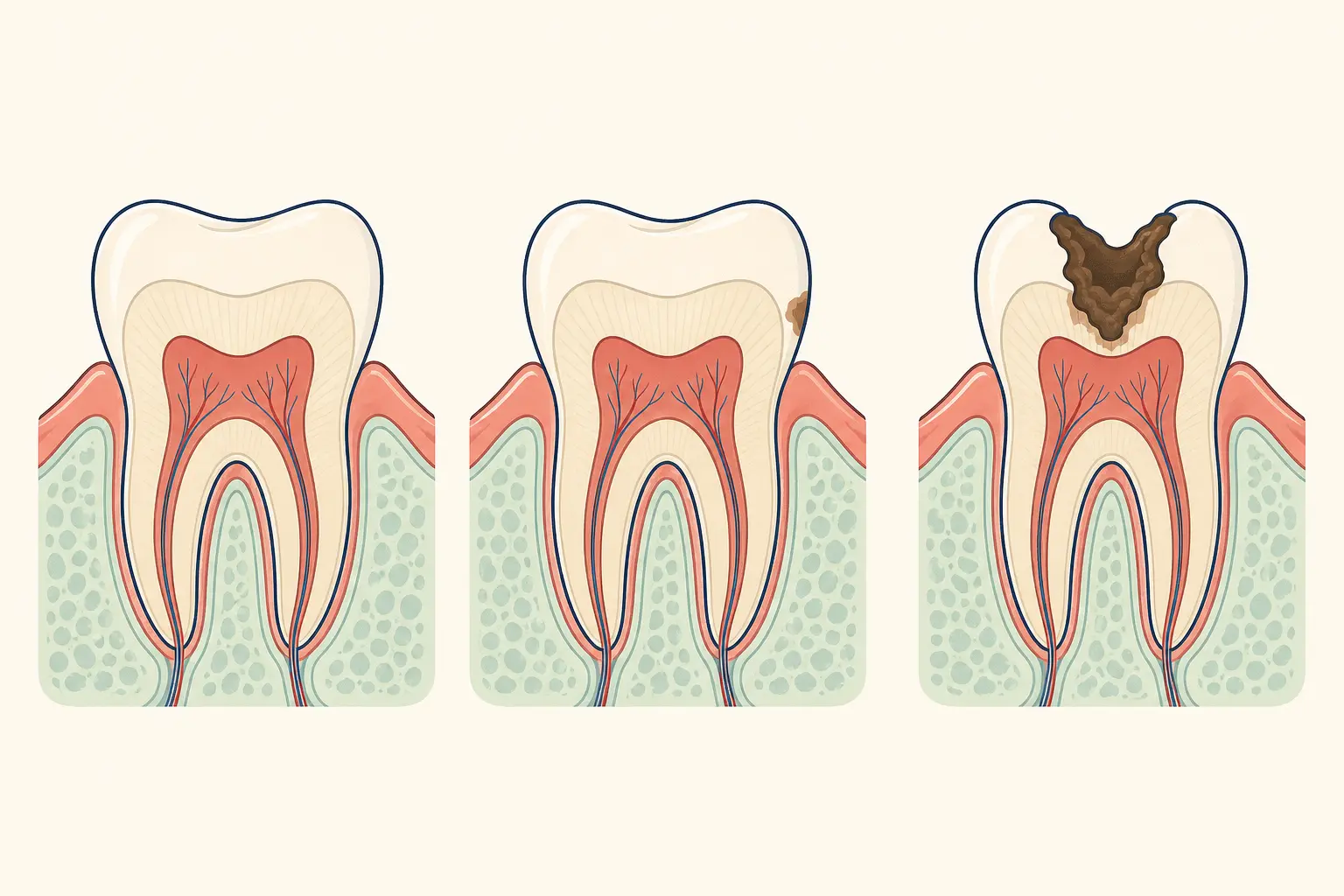
What symptoms can inflammation around a tooth cause?
Inflammation around a tooth may cause pain, sensitivity, gum redness, swelling, bleeding, tenderness, or pain when biting.
Which tissues may be inflamed around a tooth?
Inflammation can affect the gingiva, periodontal ligament, or dental pulp. Plaque, decay, a leaking restoration, trauma, a crack, or bacteria entering the pulp can activate inflammatory signals.
What can you do to avoid aggravating a painful tooth?
Clean gently with a soft brush and avoid repeatedly testing a painful tooth with very hot, cold, or hard foods. The dentist may compare neighboring teeth, test pulp responses, check the bite and gums, and use imaging.
Which tooth-inflammation symptoms need prompt care?
Seek prompt care for persistent pain, pain on biting, swelling, fever, pus, or a bad taste. Emergency care is needed for breathing or swallowing difficulty or swelling spreading into the face or neck.
What test results determine the appropriate tooth treatment?
Ask which tissue is inflamed, whether the pulp can heal, and what test results support a filling, periodontal care, root canal treatment, adjustment, or extraction.
Frequently asked questions
Can tooth inflammation heal without treatment?
Mild gum inflammation can improve with plaque control, but pulp or root inflammation needs diagnosis.
Does inflammation always cause toothache?
No. It can cause bleeding, swelling, sensitivity, tenderness, or few symptoms at first.
Who wrote this page
This library is published by Dental Nation, a licensed dental group practising in the United Arab Emirates. Pages are written and overseen by the same clinical team that treats patients in our clinics, and are held to a fixed editorial standard for safety and accuracy.
This page is patient education, not medical advice, and cannot replace an examination. Anything urgent — facial swelling, trauma, uncontrolled bleeding or severe pain — needs a dentist or emergency care now.