
How long does it take for teeth to get white
Teeth may look lighter after one professional whitening visit, while home trays change shade gradually and restorations do not whiten.
The short answer
Professional whitening can lighten natural tooth enamel during a treatment visit, while dentist-made home trays produce a gradual change over repeated use; fillings, crowns, and veneers do not whiten. The starting shade, stain type, peroxide formulation, and sensitivity affect the plan.
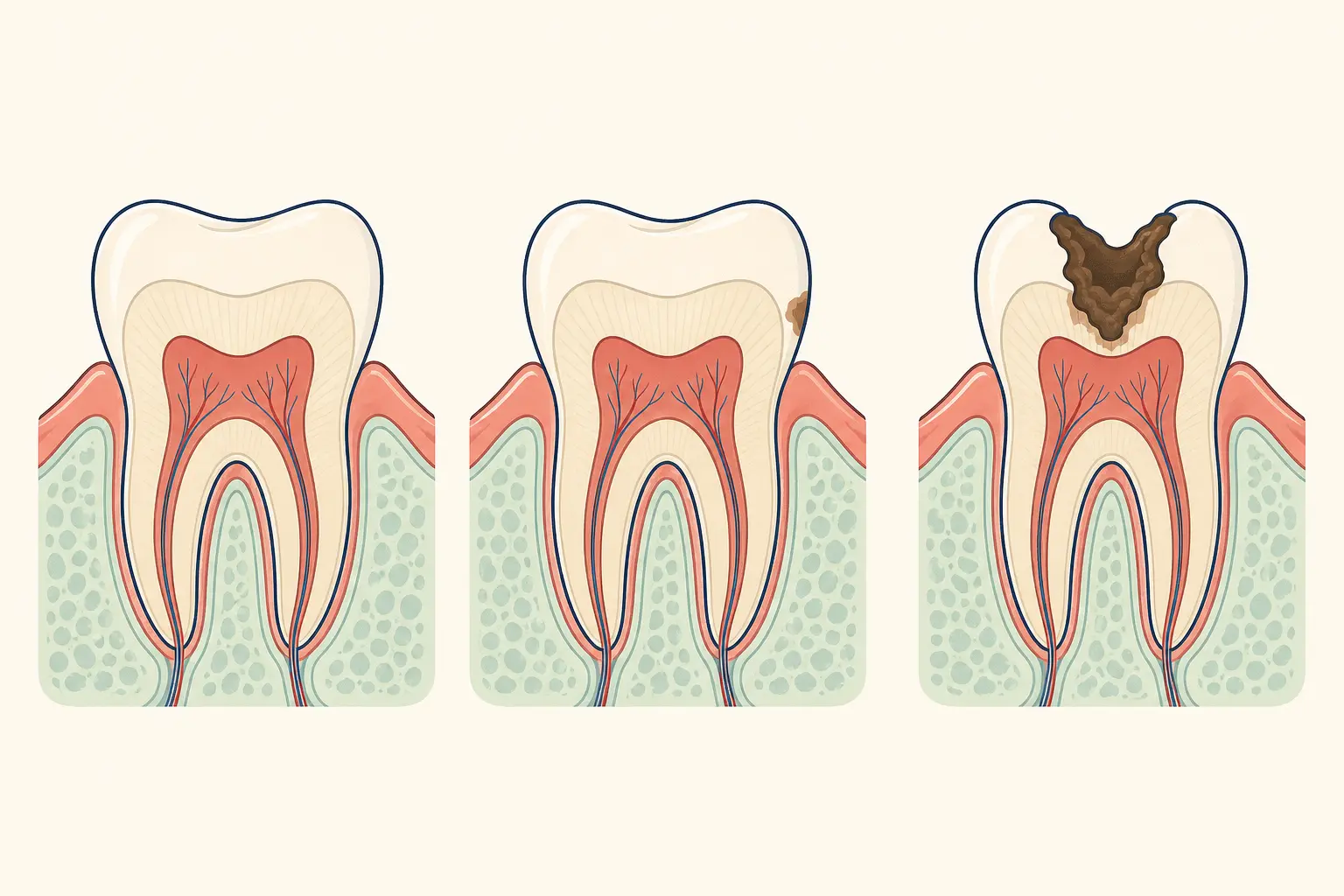
How does peroxide act within enamel and dentine?
Whitening uses peroxide chemistry to break down colour molecules within enamel and dentine. Surface stains from food or tobacco may respond to cleaning, while intrinsic stains, developmental changes, and restorations need a different discussion.
Which dental problems should be checked before whitening?
Have decay, cracked teeth, leaking fillings, and gum problems checked before whitening. A clinician can record the shade, protect the gums, select a peroxide system, and provide either in-office treatment or fitted home trays.
When should tooth colour changes be assessed by a dentist?
Seek dental advice before whitening if teeth hurt, gums bleed, or a single tooth has changed colour. Stop and contact the practice if severe sensitivity, gum irritation, or uneven colour develops.
Could existing restorations look different after whitening?
Ask what type of stain you have, whether existing restorations will mismatch, and which method suits your enamel and gums. Ask how sensitivity will be managed and how to maintain the shade.
Frequently asked questions
Will one visit whiten crowns?
No. Crowns are made from restorative materials and do not respond to peroxide whitening.
Why is whitening uneven?
Different enamel thicknesses, stain types, restorations, and pre-existing shade variation can produce an uneven result.
Who wrote this page
This library is published by Dental Nation, a licensed dental group practising in the United Arab Emirates. Pages are written and overseen by the same clinical team that treats patients in our clinics, and are held to a fixed editorial standard for safety and accuracy.
This page is patient education, not medical advice, and cannot replace an examination. Anything urgent — facial swelling, trauma, uncontrolled bleeding or severe pain — needs a dentist or emergency care now.