
How to apply baking soda on teeth
Baking soda can help lift surface deposits when used gently, but fluoride toothpaste remains the main daily cleaner for teeth.
The short answer
If you use baking soda on teeth, use a small amount gently with water and a soft brush, and keep fluoride toothpaste as your main daily cleaner.
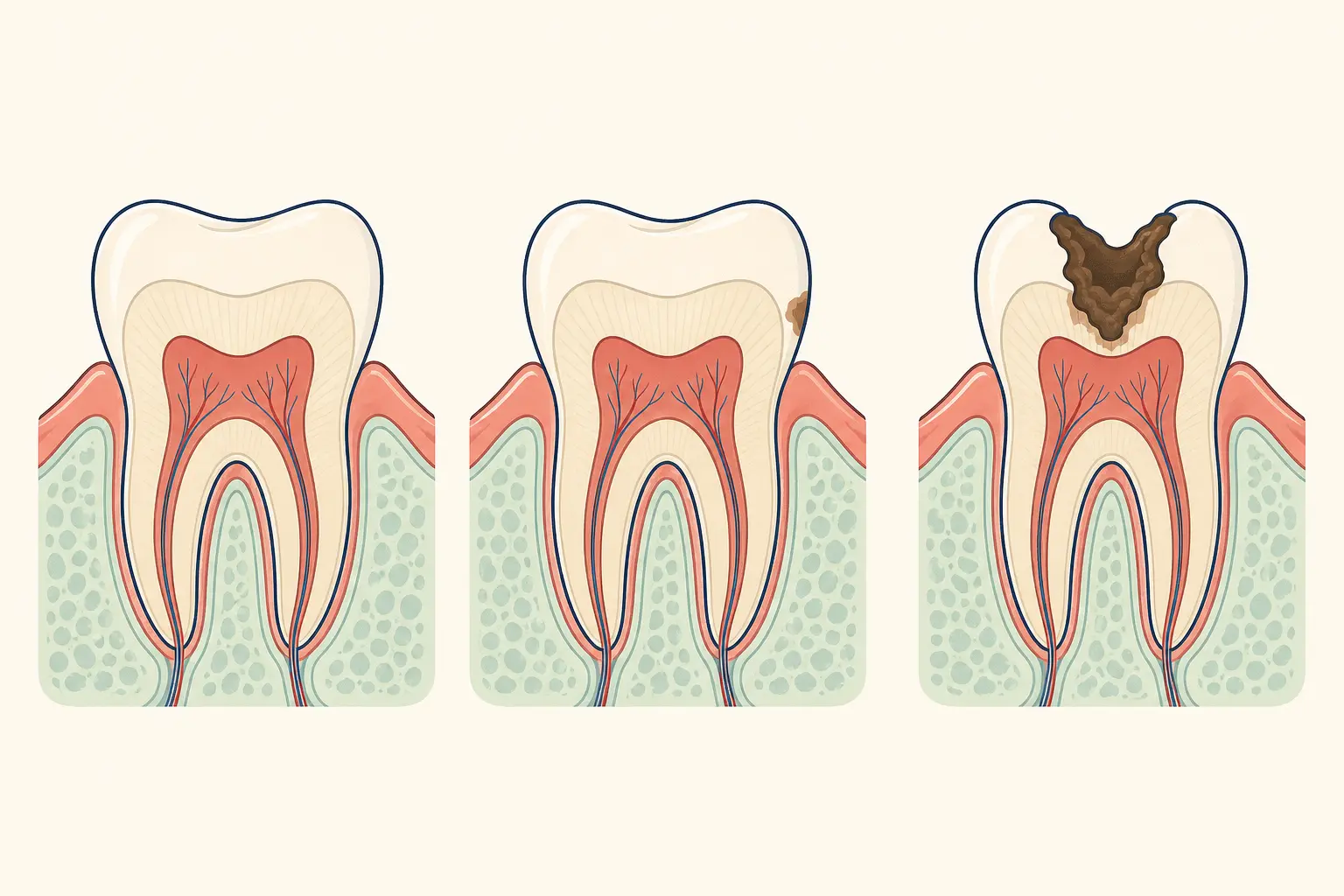
Why can repeated abrasive scrubbing harm teeth and gums?
Abrasive force, repeated scrubbing, acidic mixtures, and rough application can wear exposed dentine or enamel and irritate gums. The risk depends on pressure, frequency, tooth surfaces, and existing erosion or sensitivity.
What steps make occasional baking soda use gentler?
Wet a soft toothbrush, use a small amount of baking soda mixed with water, brush lightly for about two minutes, spit, and rinse. Do not mix it with lemon or other acids, and use fluoride toothpaste for routine cavity prevention unless your dental team has given different instructions.
When should you stop and arrange a dental examination?
Stop if sensitivity, gum soreness, or surface changes develop, and arrange an examination if stains do not lift or teeth feel rough. Professional cleaning is needed for calculus, while whitening requires an assessment of the cause and tooth condition.
What could be causing the tooth discolouration?
Ask whether your discolouration is surface stain, decay, erosion, or an internal colour change, and whether baking soda is appropriate for your enamel and gum condition.
Frequently asked questions
Will baking soda whiten teeth?
It may help remove some surface stain, but it does not change the internal colour of the tooth.
Can it remove tartar?
No. Hardened calculus needs professional instruments rather than home scrubbing.
Who wrote this page
This library is published by Dental Nation, a licensed dental group practising in the United Arab Emirates. Pages are written and overseen by the same clinical team that treats patients in our clinics, and are held to a fixed editorial standard for safety and accuracy.
This page is patient education, not medical advice, and cannot replace an examination. Anything urgent — facial swelling, trauma, uncontrolled bleeding or severe pain — needs a dentist or emergency care now.