
PTFE Barrier Membrane
A PTFE barrier is a nonresorbable membrane that preserves the space needed for bone regeneration over a defect.
[1]The short answer
A PTFE barrier membrane is a nonresorbable barrier used in guided bone regeneration to keep unwanted tissue out of a bone defect. Its purpose is to maintain a protected space for osteogenic cells rather than to act as a replacement tooth or implant.
[1]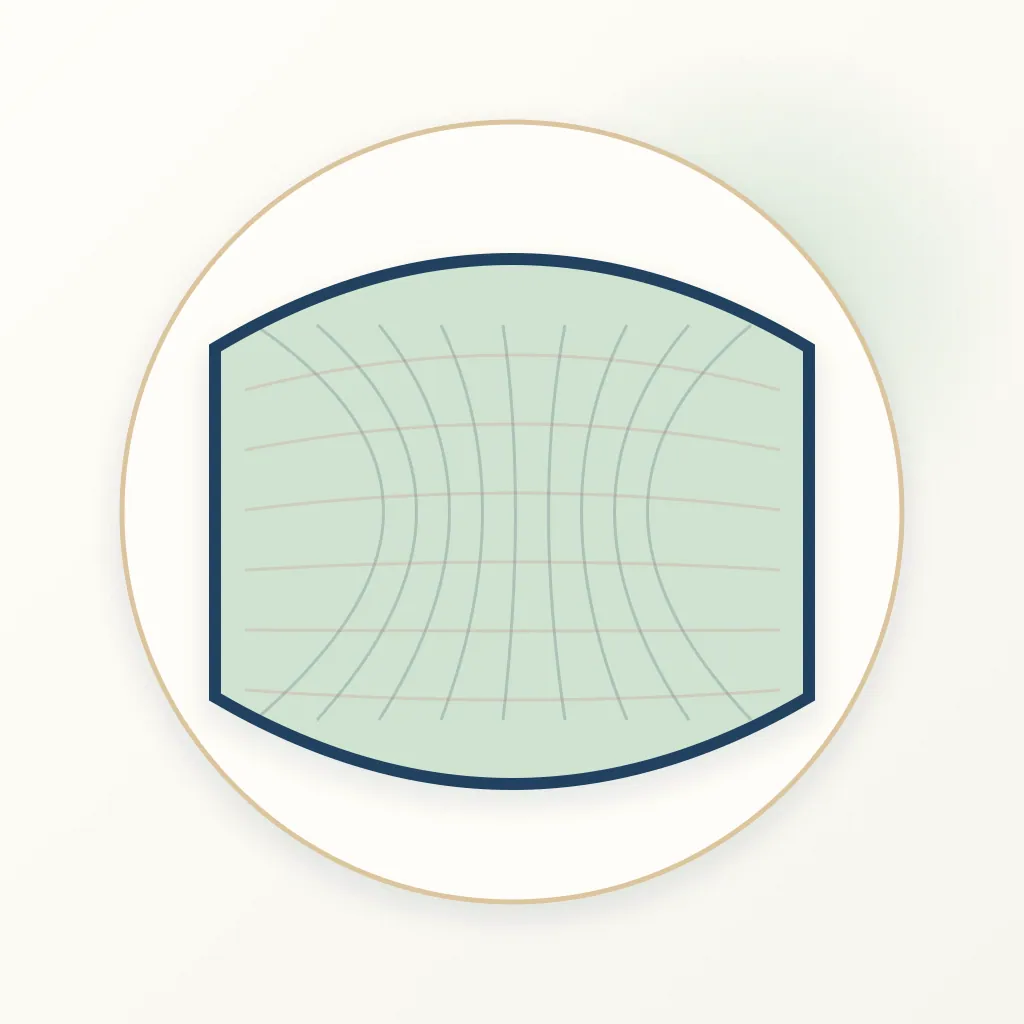
What is a PTFE barrier membrane?
What properties matter?
PTFE used for guided bone regeneration includes dense PTFE and expanded PTFE. Titanium mesh and titanium-reinforced PTFE are other nonresorbable barrier options.
[1]Where might it be used?
The barrier is used over a bone defect in guided bone regeneration. It excludes epithelial and connective tissue cells and preserves the space into which osteogenic cells can migrate.
[1]What alternatives may be discussed?
A resorbable collagen membrane is the main contrasting category. Resorbable membranes use materials such as collagen or aliphatic polyesters, while PTFE remains in the nonresorbable group.
[1]What should a patient ask?
PTFE is a component of guided bone regeneration, which may be staged or performed with simultaneous implant placement. The barrier's purpose is to protect the space needed for regeneration. That space allows osteogenic cells to migrate while epithelial and connective tissue cells are kept away from the wound area.
[1]What complications should be discussed?
Failures and complications have been compared for PTFE and collagen membranes, including bone formation, success, and complication outcomes. Exposure and membrane management are part of the safety discussion. The comparison is about a barrier used in a regeneration procedure, so the defect and the planned surgical stage remain part of the result.
[2]Frequently asked questions
Is PTFE the only membrane used for guided bone regeneration?
No. Resorbable and nonresorbable membranes are different categories considered according to the procedure and their limitations.
[1]