
Dental Nation
Condition guide

Underbite

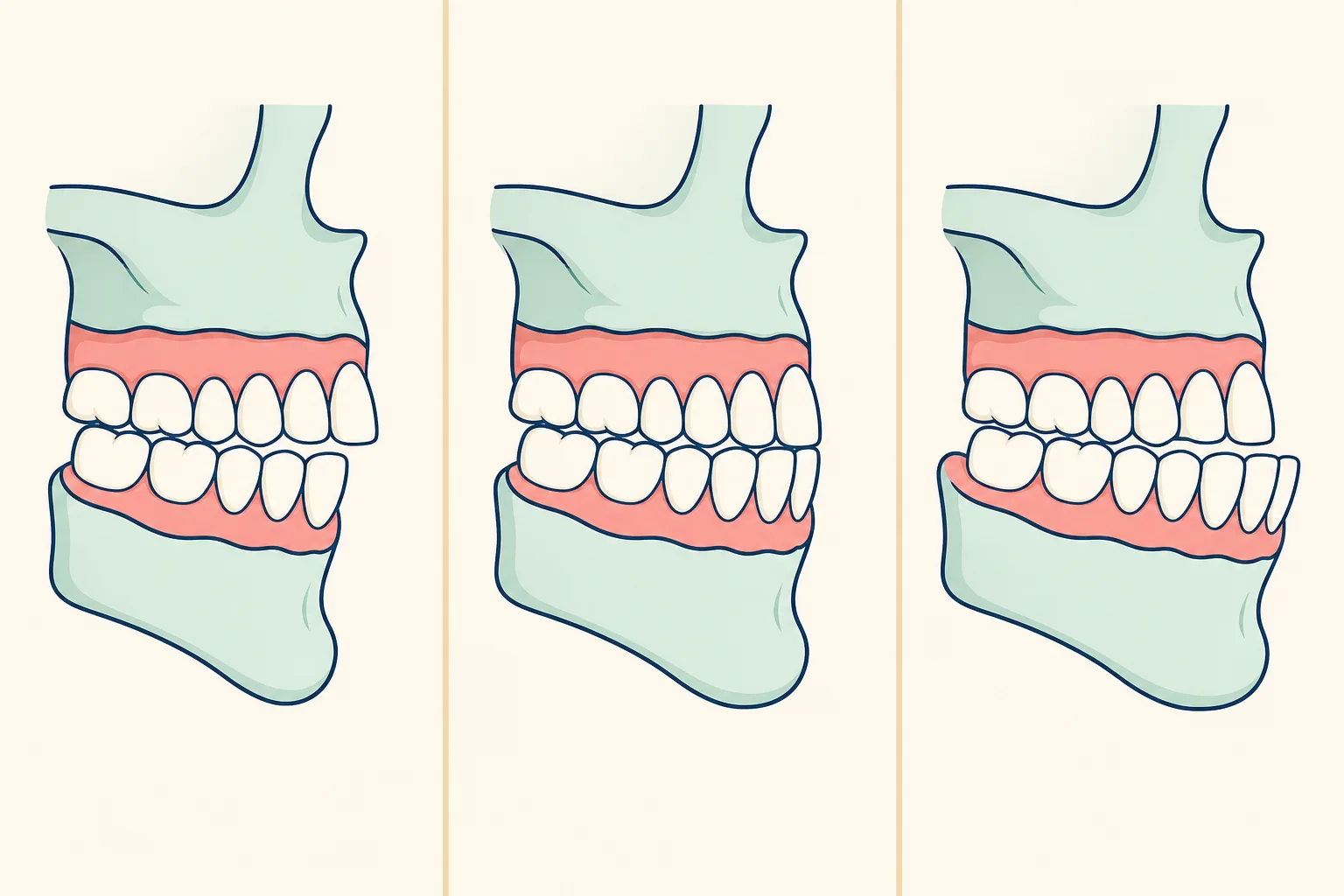
The lower jaw and teeth sit in front of the upper teeth in an underbite, which can affect chewing, speech, and tooth wear.

[1]

The short answer

An underbite occurs when the lower jaw projects forward so the lower teeth overlap the upper teeth.

[1]
Underbite dental educational illustration

What the change looks like
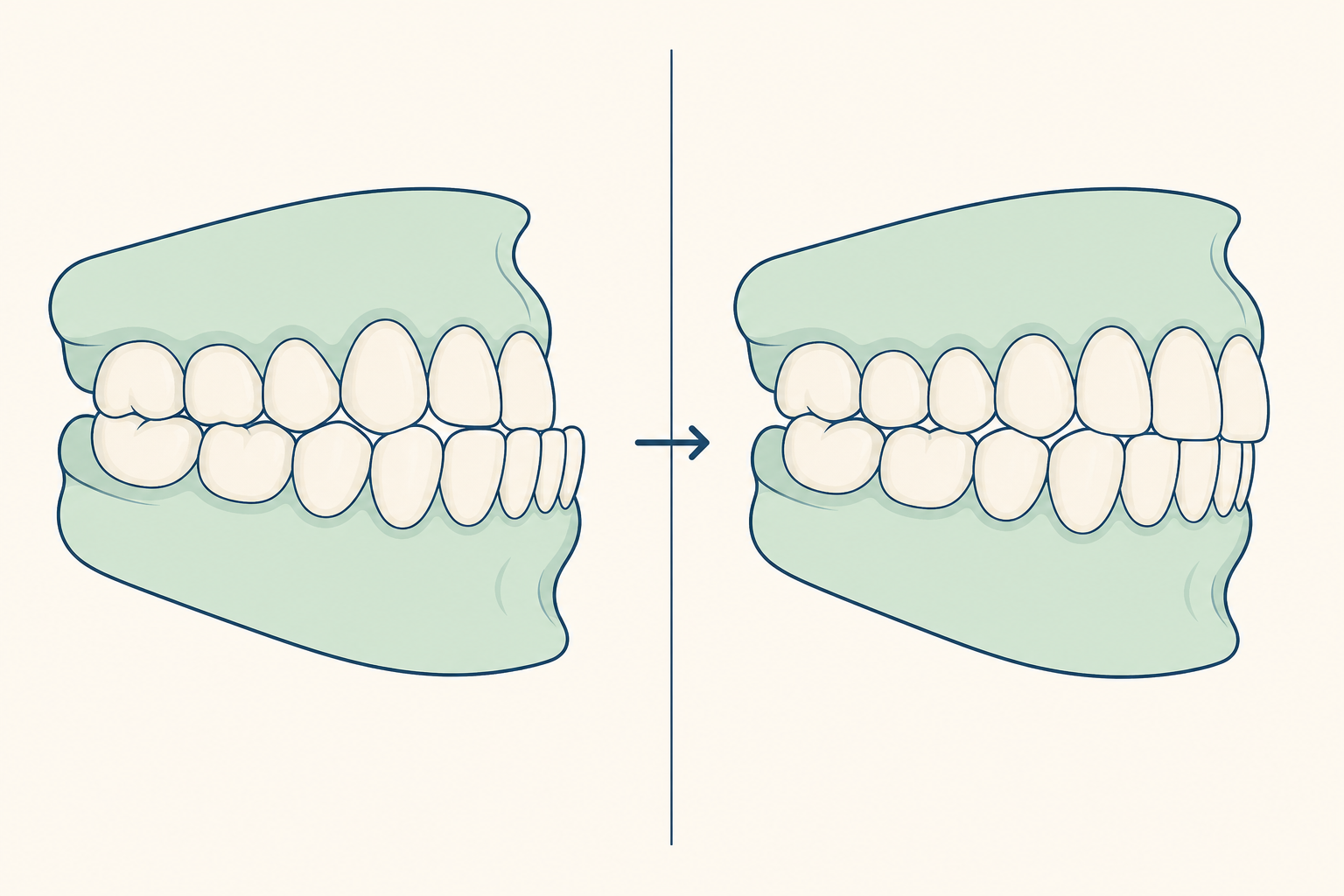
Illustrative diagram: Underbite
Illustration — a representative diagram, not a patient photo.
The DN First Look799 AED
Book The DN First Look

What does an underbite look or feel like?

A misaligned bite can make biting or chewing uncomfortable, alter facial appearance, and sometimes affect speech. The lower teeth may meet the upper teeth in an unusual position rather than fitting into the opposing molar grooves.

[1]
Changes linked with a misaligned bite
ChangeWhat it can mean
Lower teeth close ahead of upper teethThis is the Class 3 bite pattern called an underbite.[1]
Biting, chewing, or speech is difficultThese can occur with malocclusion.[1]

[1]

Why does an underbite happen?

Underbites are often inherited. A difference between upper and lower jaw size, or between jaw and tooth size, can produce the forward lower-jaw relationship.

[1][2]

Thumb sucking, tongue thrusting, prolonged bottle use, extra or impacted teeth, early tooth loss, and some birth differences can also contribute to abnormal bite patterns.

[1][2]

When can an underbite be noticed?

Bite relationships can be assessed through primary, mixed, adolescent, and adult dentitions. Changes in eruption, arch length, and jaw growth matter when a developing underbite is followed over time.

[1][2]
What changes during dental development
StageRelevant finding
Developing dentitionEruption and tooth position are examined as the bite develops.[1][2]
Adult dentitionOrthodontic correction can still work, though braces or appliances may be needed longer.[1][2]

[1][2]

What can make the bite pattern more likely?

Family tendency, jaw-size differences, cleft lip or palate, tooth crowding, and habits that push the tongue forward are recognised contributors to malocclusion.

[1][2]

How is an underbite assessed?

The assessment checks how the back teeth come together and how the upper and lower jaws relate. Dental, head, skull, or facial X-rays and models of the teeth may be used to diagnose a bite problem.

[1][2]

How can an underbite be treated?

Braces, fixed appliances, or clear aligners can move teeth. Crowding may require removal of teeth, and rare jaw-size problems may need surgical reshaping that is stabilised with wires, plates, or screws.

[1][2]
Treatment approaches recorded for malocclusion
ApproachPurpose
Braces or alignersWires, springs, or clear aligners apply force to move teeth.[1][2]
Jaw surgeryRarely, reshaping lengthens or shortens the jaw.[1][2]

[1][2]

What affects the cost of correcting an underbite?

Correcting an underbite can involve braces or aligners, tooth removal, repair of irregular teeth, or rarely jaw surgery. The treatment method and amount of correction shape the work involved.

[1][2]

What problems can an underbite cause?

Moderate or severe malocclusion can strain teeth, jaws, and muscles. It can also make cleaning harder, increasing the risk of tooth decay and gum disease; orthodontic appliances can irritate gums and make chewing or speaking difficult during treatment.

[1]

Can an underbite be prevented?

Many underbites cannot be prevented, particularly when jaw growth is inherited. Controlling thumb sucking or tongue thrusting and addressing bite changes early can make correction quicker and more successful.

[1][2]

Frequently asked questions

Can braces correct an underbite?

Braces and other appliances can correct tooth position; clear aligners may be used for some people. Rare jaw-size problems may need surgery as well.

[1][2]