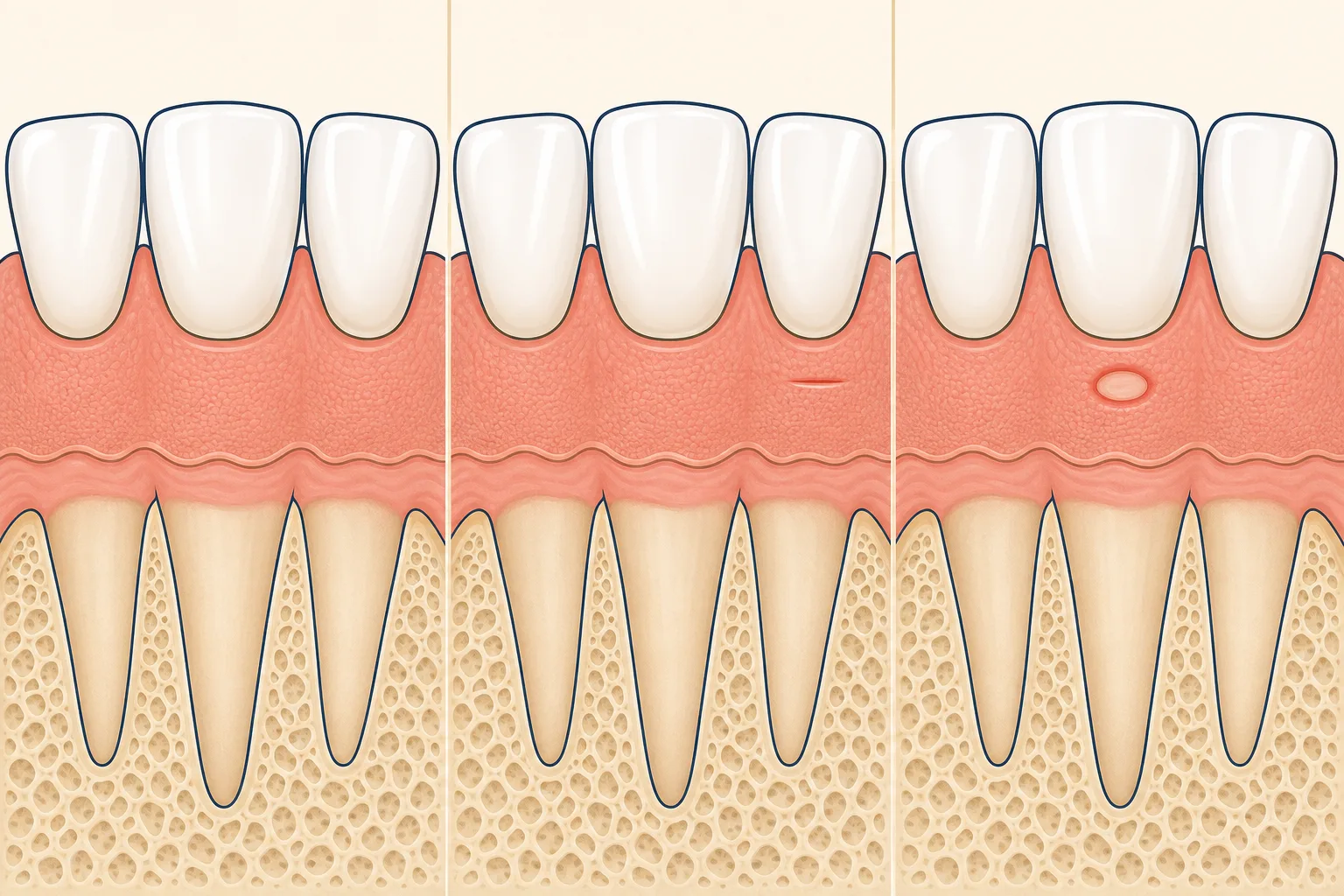
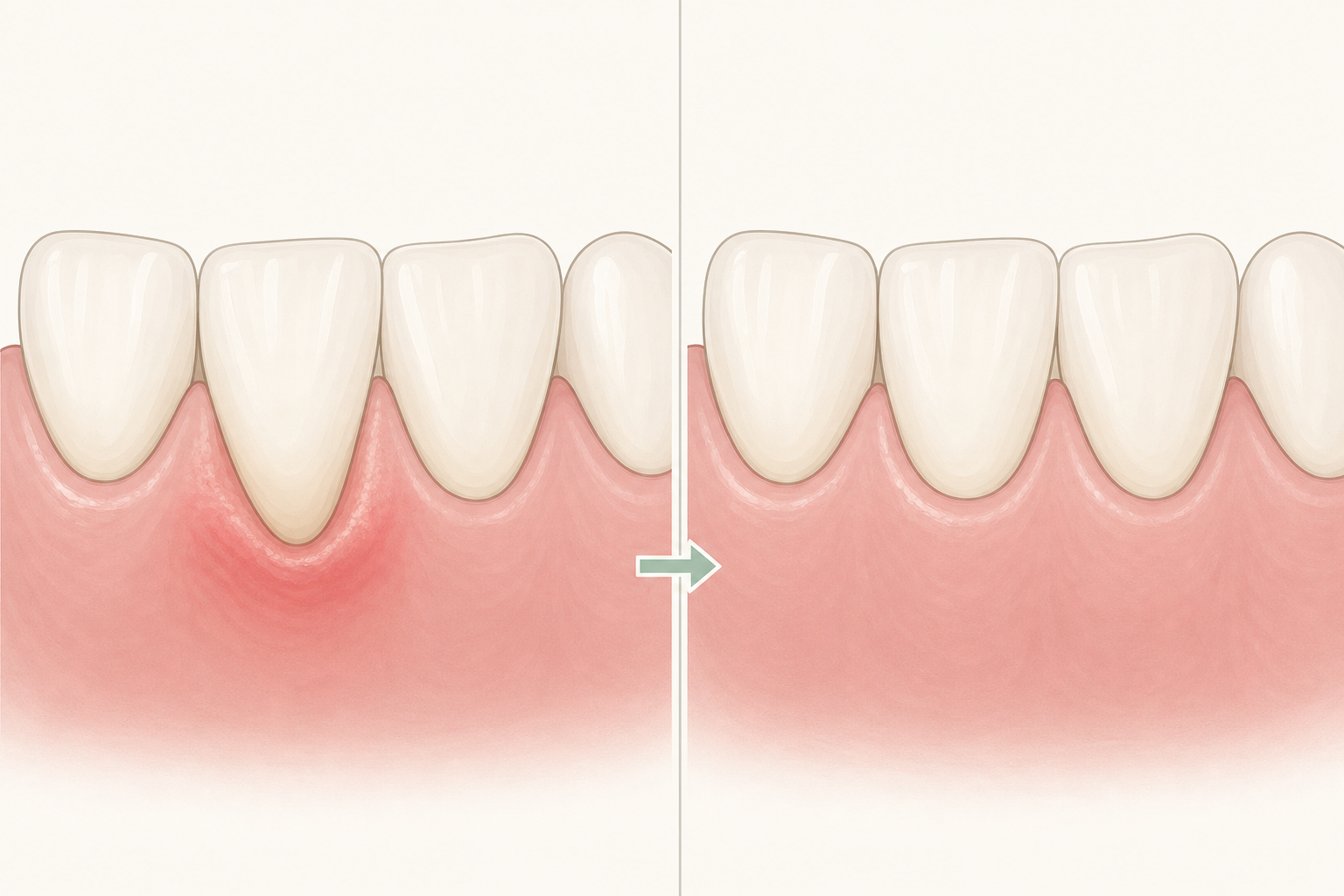
HomeconditionsCondition guideTraumatic Gingival LesionA traumatic gingival lesion is gum injury that may cause pain, bleeding or swelling and needs assessment when symptoms persist.[1][2]The short answerA traumatic gingival lesion is a gum injury that can cause pain, bleeding or swelling.[1][2]What the change looks likeBefore — Affected by traumatic gingival lesionAfter — Healthy after treatmentIllustration — a representative diagram, not a patient photo.The DN First Look799 AEDBook The DN First LookWhat does a traumatic gum injury feel like?Common warning signsSignWhat it tells youPainThe injured gum is irritated or damaged[2][1]Bleeding or swellingThe soft tissue needs attention if the problem persists[1][2][2][1]What can cause the injury?A traumatic lesion follows injury to the gum. The important distinction is whether the problem settles or continues with pain, bleeding or swelling.[2][1]How does it usually progress?The practical progression is from a fresh injury to either improvement or persistent symptoms that require dental assessment.[2][1]What to watch after injuryCourseMeaningSettling symptomsThe injury is becoming less troublesome[2][1]Persistent symptomsThe lesion needs clinical assessment[2][1][2][1]When is the injury more concerning?Persistent pain, bleeding or swelling makes the injury more concerning than a brief episode immediately after trauma.[2][1]How is a gum injury checked?Assessment focuses on the injured gum and the symptoms that followed the trauma, including pain, bleeding and swelling.[2][1]What treatment may be needed?Treatment is guided by the injury and its symptoms. Persistent or emergency dental problems need timely assessment rather than being ignored.[2][1]Response to the clinical courseSituationResponseMinor injury settlingMonitor the symptoms as they improve[2][1]Pain, bleeding or swelling persistsArrange dental assessment[2][1][2][1]What can affect the cost?The cost depends on the assessment and treatment needed for the injury, especially when persistent symptoms require more than observation.[2][1]What if it is ignored?Ignoring continuing pain, bleeding or swelling can leave a dental emergency unassessed while the underlying injury remains unresolved.[2][1]How can further gum injury be reduced?Prompt attention to dental trauma reduces the chance that persistent symptoms are left without assessment.[2][1]Frequently asked questionsShould persistent bleeding after gum trauma be ignored?No. Persistent bleeding after an injury needs dental assessment, especially when pain or swelling is also present.[2][1]Keep readingcompareWhen a filling stops being enoughsymptomBleeding Gums