
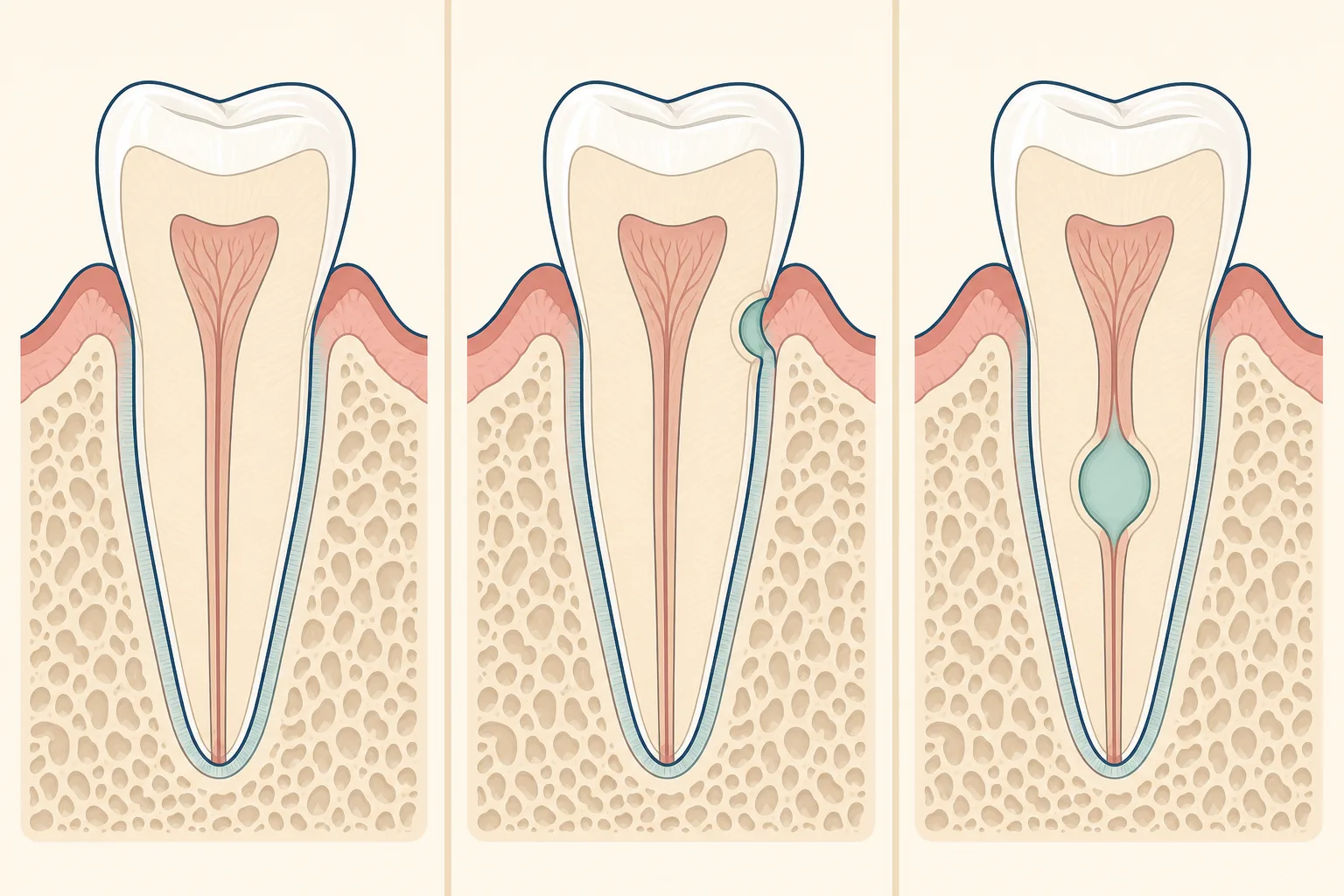
What the change looks like
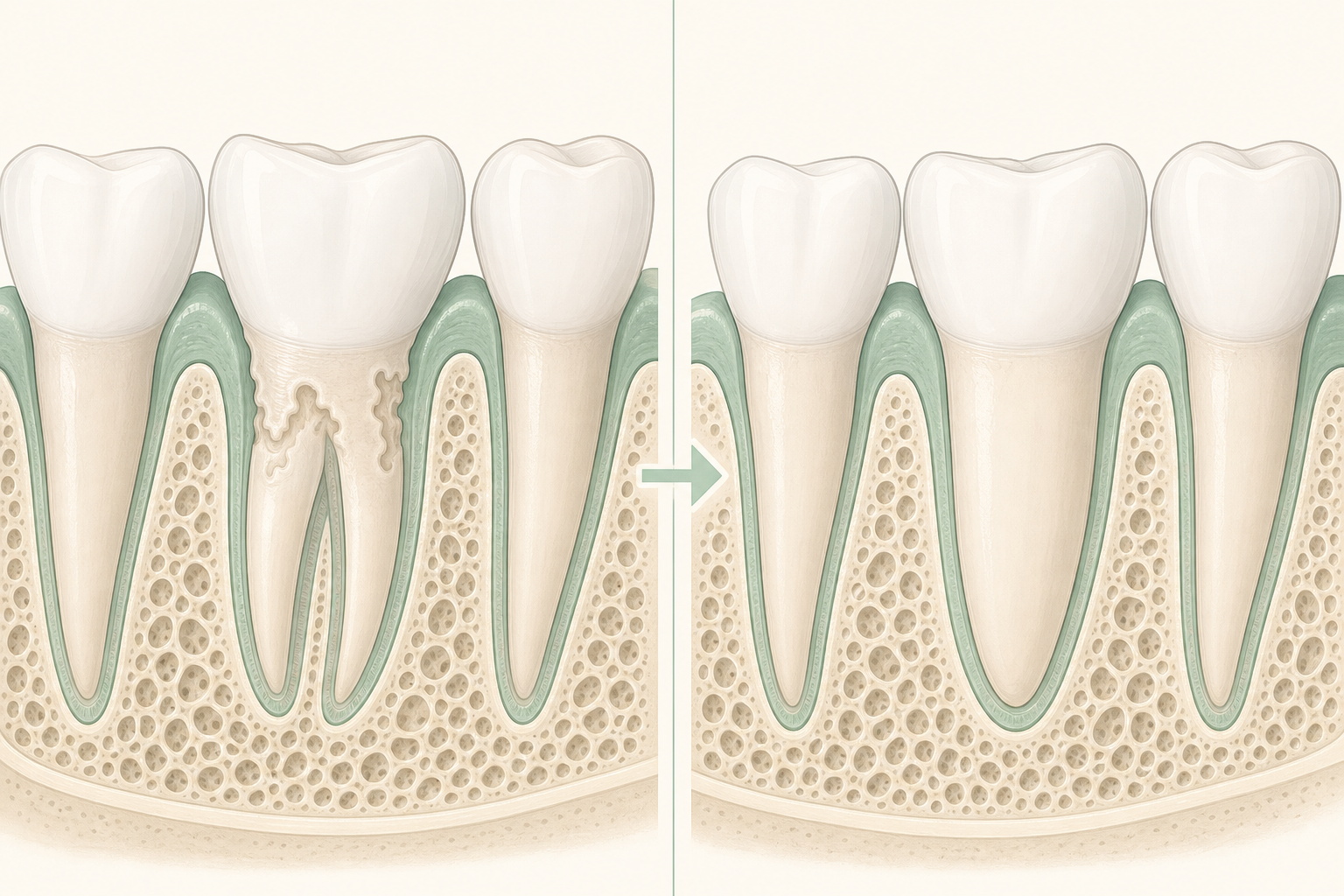
What can tooth resorption feel like?
Many lesions are found on imaging before symptoms appear. Sensitivity or pain can develop when a defect reaches the pulp, and internal resorption may create a pink appearance in the crown.
[2]What causes tooth resorption?
Trauma, inflammation, and pressure from an impacted tooth can be associated with resorption. An impacted maxillary canine can be related to resorption of an adjacent lateral incisor root.
[3]How does resorption progress?
Who is at risk?
An impacted or displaced maxillary canine can place an adjacent lateral incisor at risk. Previous dental trauma and inflammatory changes are also relevant associations.
[3]How is tooth resorption diagnosed?
How is tooth resorption treated?
Treatment targets the resorptive defect and the tissue involved. Internal lesions may need root canal treatment and repair when the tooth remains manageable; extensive loss may make removal necessary.
[3]What affects the cost in Dubai?
What problems can resorption cause?
Progressive resorption can weaken the root and reduce remaining tooth structure. A lesion beside an impacted canine can damage the neighbouring incisor root.
[2]Can resorption be prevented?
Frequently asked questions
Why can resorption be found without toothache?
Early resorption can appear on imaging before the defect reaches the pulp or causes noticeable symptoms.
[2]Who wrote this page
This library is published by Dental Nation, a licensed dental group practising in the United Arab Emirates. Pages are written and overseen by the same clinical team that treats patients in our clinics, and are held to a fixed editorial standard for safety and accuracy.
This page is patient education, not medical advice, and cannot replace an examination. Anything urgent — facial swelling, trauma, uncontrolled bleeding or severe pain — needs a dentist or emergency care now.