Dental Nation
Condition guide

Tooth Position Anomaly

A tooth can erupt, tilt, or remain outside the arch because of limited space, inherited traits, missing teeth, or injury.

[1][2]

The short answer

A tooth-position anomaly means that one or more teeth sit, erupt, or remain angled outside their expected place in the dental arch.

[1][2]
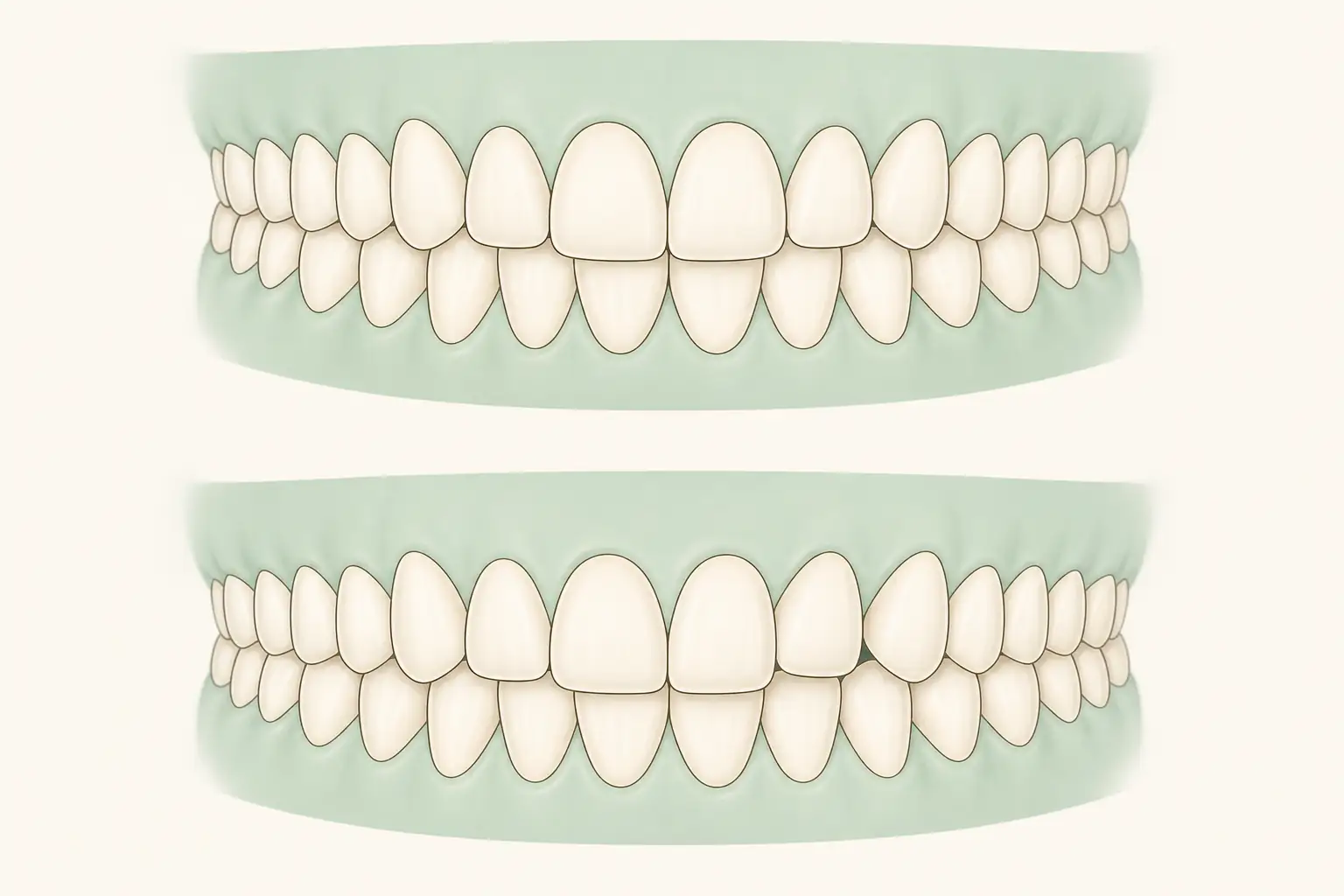
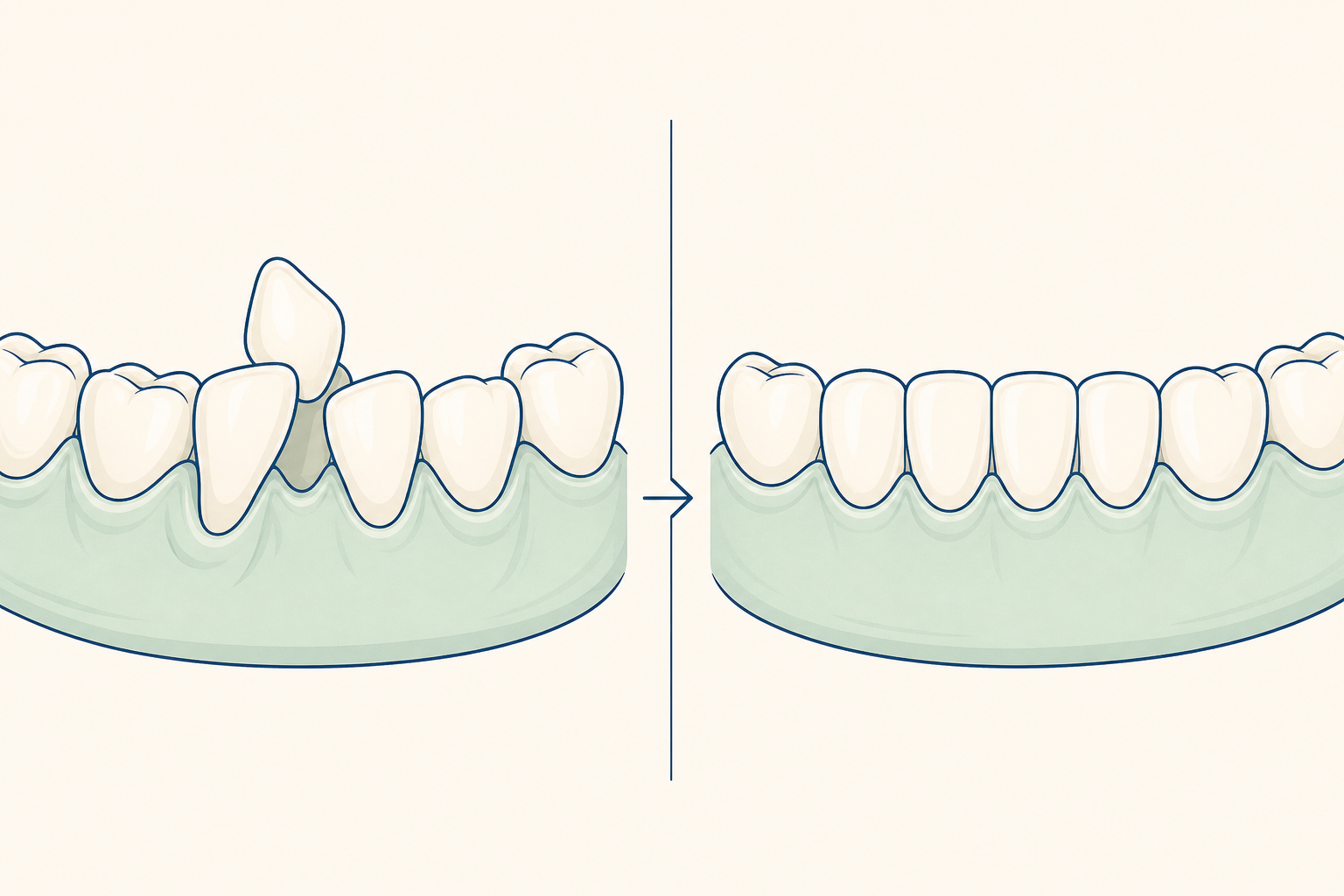
Tooth Position Anomaly dental educational illustration

What the change looks like

Illustrative diagram: Tooth Position Anomaly
Illustration — a representative diagram, not a patient photo.
The DN First Look799 AED
Book The DN First Look

What symptoms can appear?

A tooth may be crowded, rotated, displaced, impacted, or erupt in the wrong part of the arch. The bite can also show an upper or lower jaw relationship that puts teeth well ahead of their opposing teeth.

[1][2]
Signs and clinical focus
Patient questionClinical focus
What may be noticed?A tooth may be rotated, crowded, impacted, displaced, or erupt away from the arch.[1][2]
What should be checked?The tooth position, available space, root development, and bite are assessed together.[1][2]

[1][2]

What can cause it?

Inherited traits, a mismatch between tooth size and available space, missing teeth, trauma, and differences in jaw shape can displace a tooth. Thumb sucking and long-term pacifier use can also contribute to malocclusion.

[1][2]

What stages might a dentist describe?

Tooth position is followed through the primary dentition, mixed dentition, permanent dentition, and early adulthood. In mixed dentition, radiographs can identify whether a tooth is absent, extra, fused, unusually shaped, or developing in an abnormal path.

[1][2]
How findings may be framed
FindingDiscussion
Mixed dentitionEruption paths, space, tooth size and shape, and root development can be checked.[1][2]
Permanent dentitionThe tooth position and its effect on a functional, stable bite can be assessed.[1][2]

[1][2]

What can increase the chance of it?

Crowding, early loss of baby teeth, inadequate arch space, and ectopic eruption increase the chance that a tooth will not enter the arch as expected. Trauma and a missing tooth can also change the available path and space.

[1][2]

How is it diagnosed?

Examination records the tooth positions and bite. Panoramic, periapical, and occlusal radiographs can locate unerupted teeth and show root development, resorption, tooth number, tooth shape, and the relationship to nearby structures.

[1][2]

How is treatment chosen by stage?

Treatment can preserve space after early tooth loss, regain lost space, guide eruption, or use orthodontic tooth movement. In permanent dentition, orthodontic treatment can be considered to establish a stable and functional occlusion.

[1][2]
Treatment discussions
FindingPossible discussion
Early loss or space shortageSpace maintenance or space regaining can be used while teeth are developing.[1][2]
Permanent tooth out of positionOrthodontic tooth movement can be considered for a functional, stable bite.[1][2]

[1][2]

What should I know about costs in Dubai?

The clinical work can include radiographs to locate and assess the tooth, space maintenance or regaining during development, and orthodontic treatment if the tooth must be moved into a functional bite.

[1][2]

What can happen if it is left untreated?

Crowding can trap food where brushing and cleaning between teeth are difficult, increasing plaque buildup, tooth decay, and gingivitis. Malocclusion can also be associated with impacted teeth, jaw problems, damage to opposing teeth, and tooth loss.

[1][2]

Can it be prevented or reduced?

Restoring decayed baby teeth and preserving space after a premature loss can reduce the risk of a later space shortage. Monitoring eruption in the mixed dentition can identify an abnormal path before the permanent dentition is complete.

[1][2]

Frequently asked questions

Can an impacted tooth be found before it appears in the mouth?

Panoramic, periapical, and occlusal radiographs can show an unerupted tooth, its root development, and its position among nearby teeth.

[1][2]