
Tooth Fractures
Pain or sensitivity can follow a broken tooth, while a deeper fracture may involve the pulp and require root canal treatment.
[1][2]The short answer
A tooth fracture can cause pain or sensitivity, and a break involving dentin or pulp may need restoration or root canal treatment.
[2]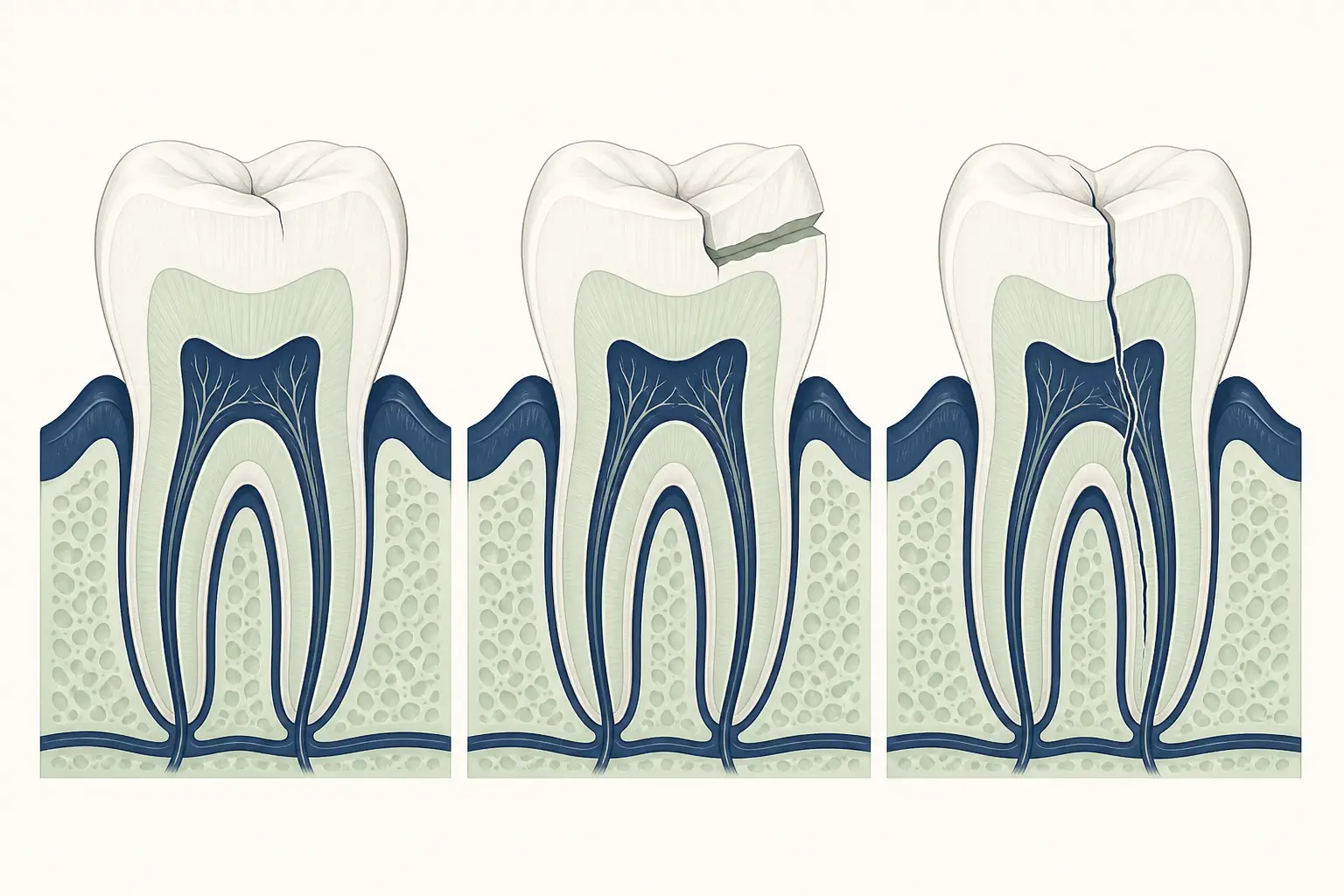
What the change looks like
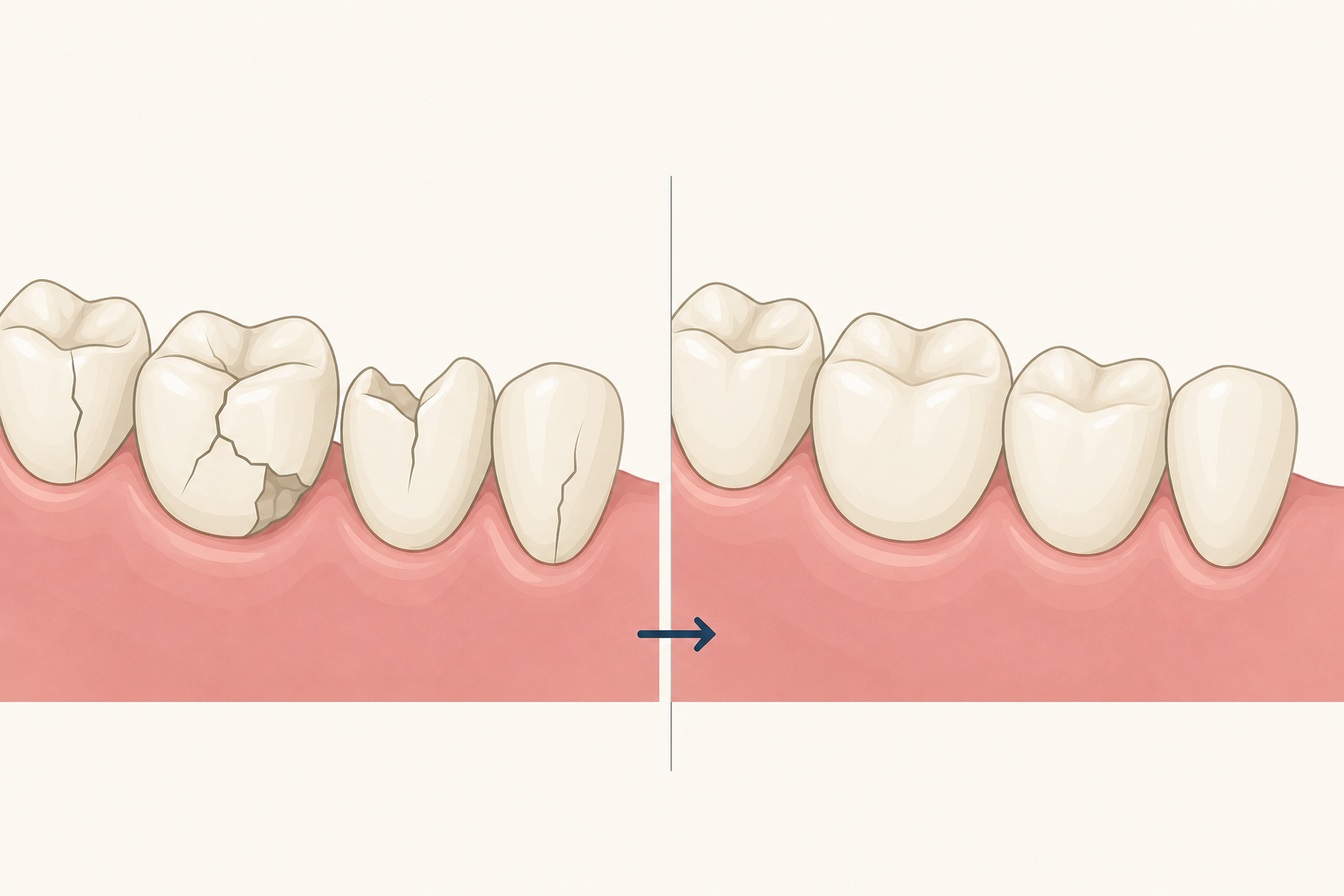
What can a fractured tooth feel like?
What causes tooth fractures?
Falls, sports, road traffic accidents and physical violence can fracture teeth. Dental caries can weaken enamel so that even minor trauma causes a break; increased overjet or lips that do not fully cover the upper incisors raise the risk of upper-incisor injury.
[2]How deep is the fracture?
Who is more likely to fracture a tooth?
Children can fracture primary teeth in falls and collisions. Sports injuries occur more often in teenagers, while violence-related injuries peak between ages 21 and 25. Caries, increased overjet and inadequate lip coverage also make upper incisors more vulnerable.
[2]How is a tooth fracture checked?
How are tooth fractures treated?
Small enamel infractions often need no treatment, although a more severe crack can be etched and sealed with bonding resin. An enamel fragment may be reattached, sharp edges smoothed, or the defect restored with resin composite. A pulp-involved fracture may require root canal treatment.
[1][2]| Finding | Possible care |
|---|---|
| Severe enamel crack | Etching and bonding-resin sealing can prevent bacterial contamination and discolouration.[1][2] |
| Enamel fracture with an available fragment | The fragment may be reattached; smoothing or resin-composite restoration are other options.[1][2] |
What can change the cost of treating a tooth fracture?
What can happen after a tooth fracture?
How can you lower the chance of another fracture?
Custom-made mouthguards can prevent traumatic injuries in contact sports. Good oral hygiene reduces infection risk, and avoiding excessive biting force on the treated tooth helps protect it after care.
[2]Frequently asked questions
Can a tiny crack in enamel be painless?
Yes. An enamel infraction is a microcrack without loss of tooth structure and is usually asymptomatic.
[2]Who wrote this page
This library is published by Dental Nation, a licensed dental group practising in the United Arab Emirates. Pages are written and overseen by the same clinical team that treats patients in our clinics, and are held to a fixed editorial standard for safety and accuracy.
This page is patient education, not medical advice, and cannot replace an examination. Anything urgent — facial swelling, trauma, uncontrolled bleeding or severe pain — needs a dentist or emergency care now.