
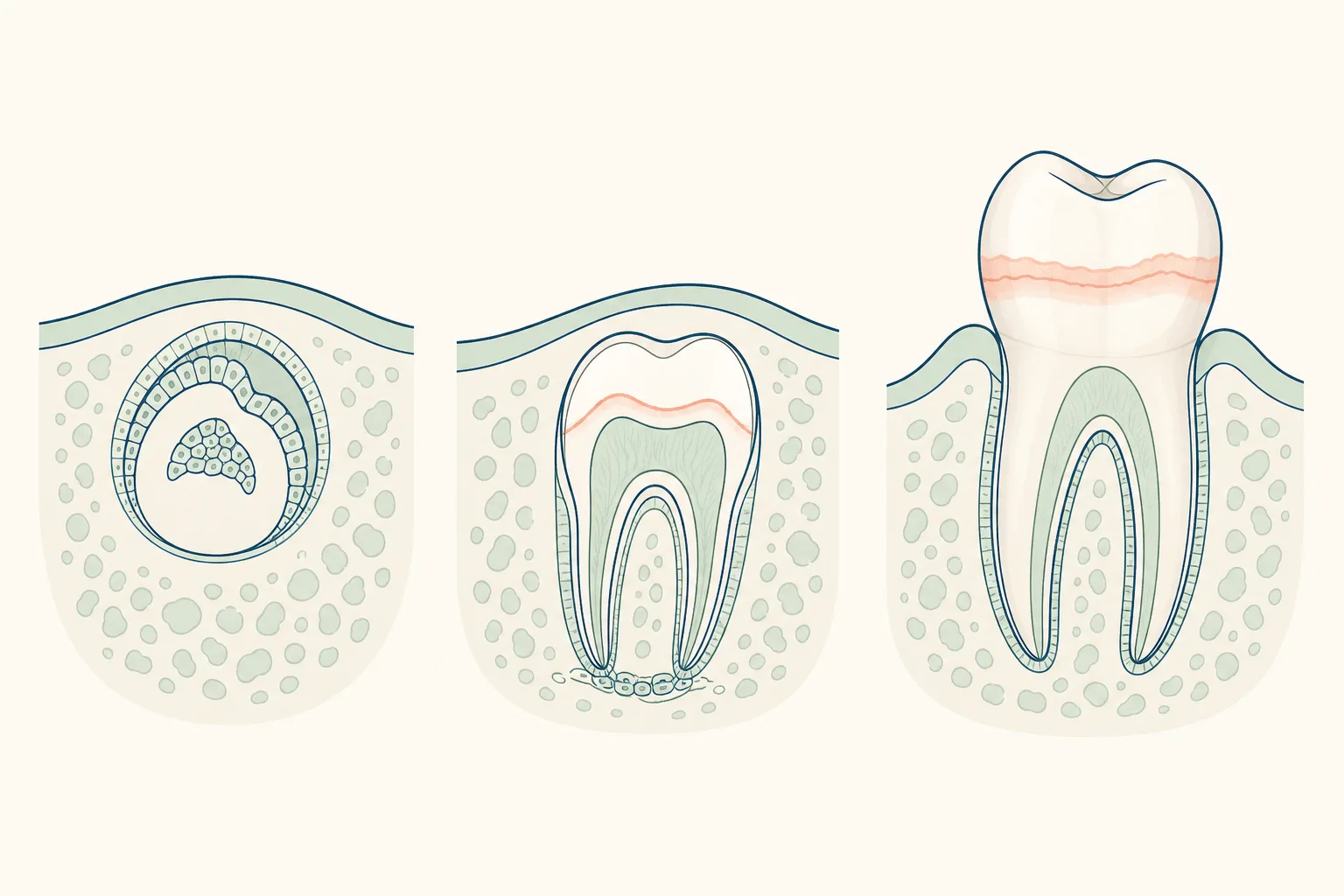
What the change looks like
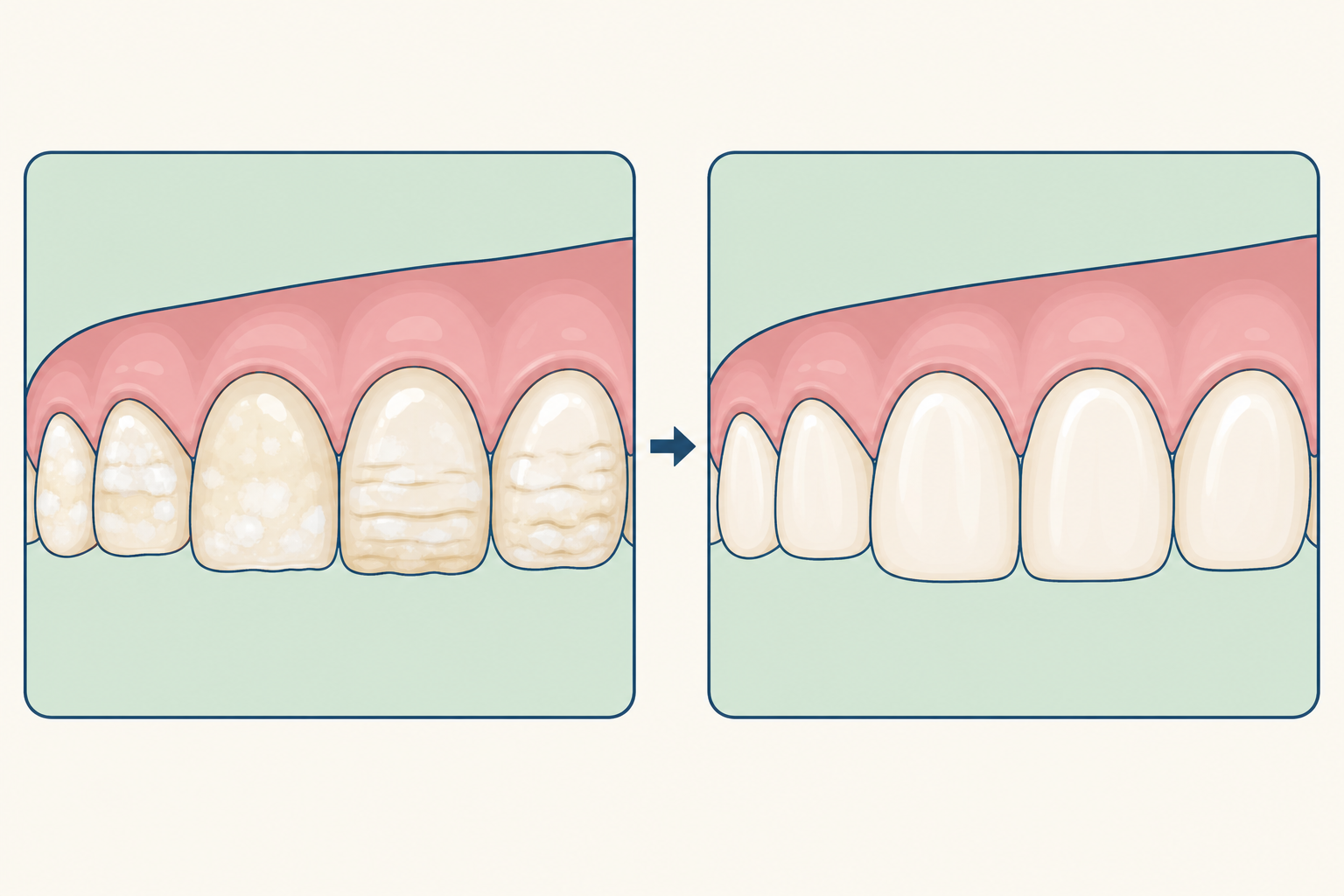
What might you notice?
A tooth formation disturbance can show as an unusual tooth shape, altered colour, pits, grooves, thin enamel, weak surfaces, or a tooth that looks different from its neighbours. The visible finding may be present when the tooth erupts, or it may become clearer as the tooth is used. Symptoms vary with the tissue affected. Some people have no pain and seek an explanation for appearance. Others may have sensitivity, wear, or repeated surface problems. A photograph cannot show the full depth or strength of the tooth, so examination remains useful.
[1]What can cause it?
Tooth structure develops through coordinated stages that form enamel, dentin, and the rest of the tooth. A disruption can affect one tooth or the whole dentition; inherited enamel and dentin disorders arise from genetic changes, while some shape anomalies have genetic and environmental causes.
[1][2]How does it develop?
The useful stages are the developmental timing and the extent of the finding. A change may affect one tooth, a group of teeth, or a broader pattern. It may be limited to the surface or involve deeper structure. These distinctions influence whether the priority is protection, function, appearance, or monitoring.
[1]What should raise concern?
Structural defects can leave a tooth more prone to sensitivity or trauma. Dens invaginatus has a funnel-shaped space that lets debris and bacteria travel deeper into the tooth, increasing the chance of caries.
[1]How is it diagnosed?
Diagnosis combines the tooth history with a visual examination of shape, colour, surface, and structure, allowing a developmental defect to be separated from decay, wear, or a later injury.
[1]What treatment may be discussed?
Treatment follows the defect and the remaining tooth structure. Care may involve monitoring and preventive protection, or restoration when a surface is weak, worn, or difficult to maintain; formation disturbances do not all receive the same treatment.
[1]What should you ask about the cost?
Dubai costs vary with the work required, such as examination, preventive protection, restoration, or replacement of a tooth whose structure is weak.
[1]What can happen if it is left unexplained?
Complications depend on the tissue and teeth involved. A structural anomaly may create sensitivity, surface wear, difficulty cleaning, or a need for restoration. These are reasons to arrange an examination when a tooth is breaking down, painful, or difficult to keep clean.
[1]Can it be prevented?
A developmental defect cannot be removed from enamel or dentin after the tooth has formed. Prevention therefore concerns protecting developing teeth and addressing risks identified in the history. Regular dental care can also identify a problem early, before wear or breakdown adds a second issue.
[1]Frequently asked questions
Is tooth formation disturbance always painful?
Pain is not required for every developmental or eruption finding. New, persistent, or severe pain should be assessed.
[1]Who wrote this page
This library is published by Dental Nation, a licensed dental group practising in the United Arab Emirates. Pages are written and overseen by the same clinical team that treats patients in our clinics, and are held to a fixed editorial standard for safety and accuracy.
This page is patient education, not medical advice, and cannot replace an examination. Anything urgent — facial swelling, trauma, uncontrolled bleeding or severe pain — needs a dentist or emergency care now.