
Tooth Eruption Disturbance
A tooth can be delayed, blocked, or displaced on its way into the mouth, sometimes because another tooth or a physical barrier is in its path.
[2]The short answer
A tooth eruption disturbance occurs when a tooth is delayed, blocked, displaced, or fails to complete its path into the mouth.
[2]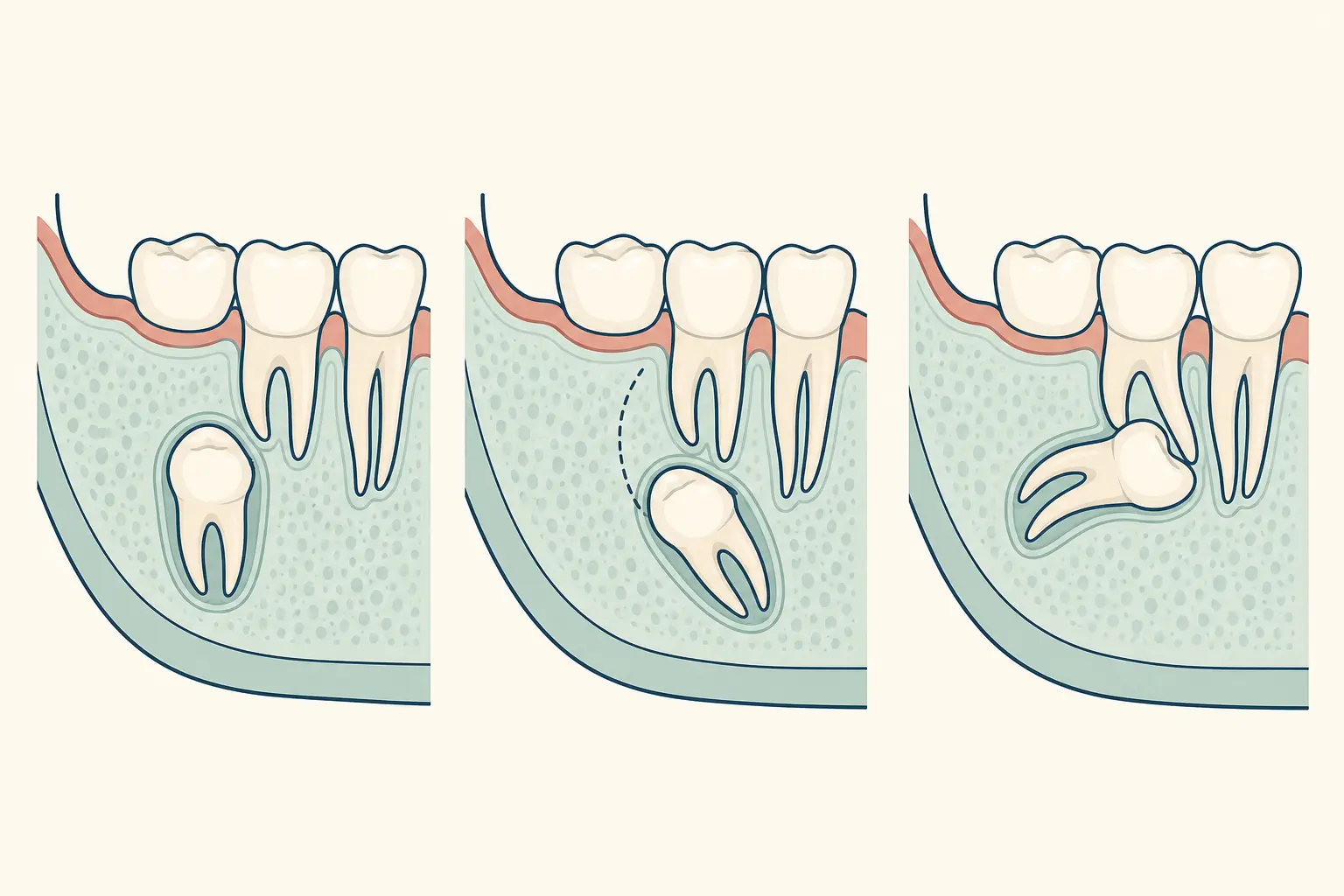
What the change looks like
What might you notice?
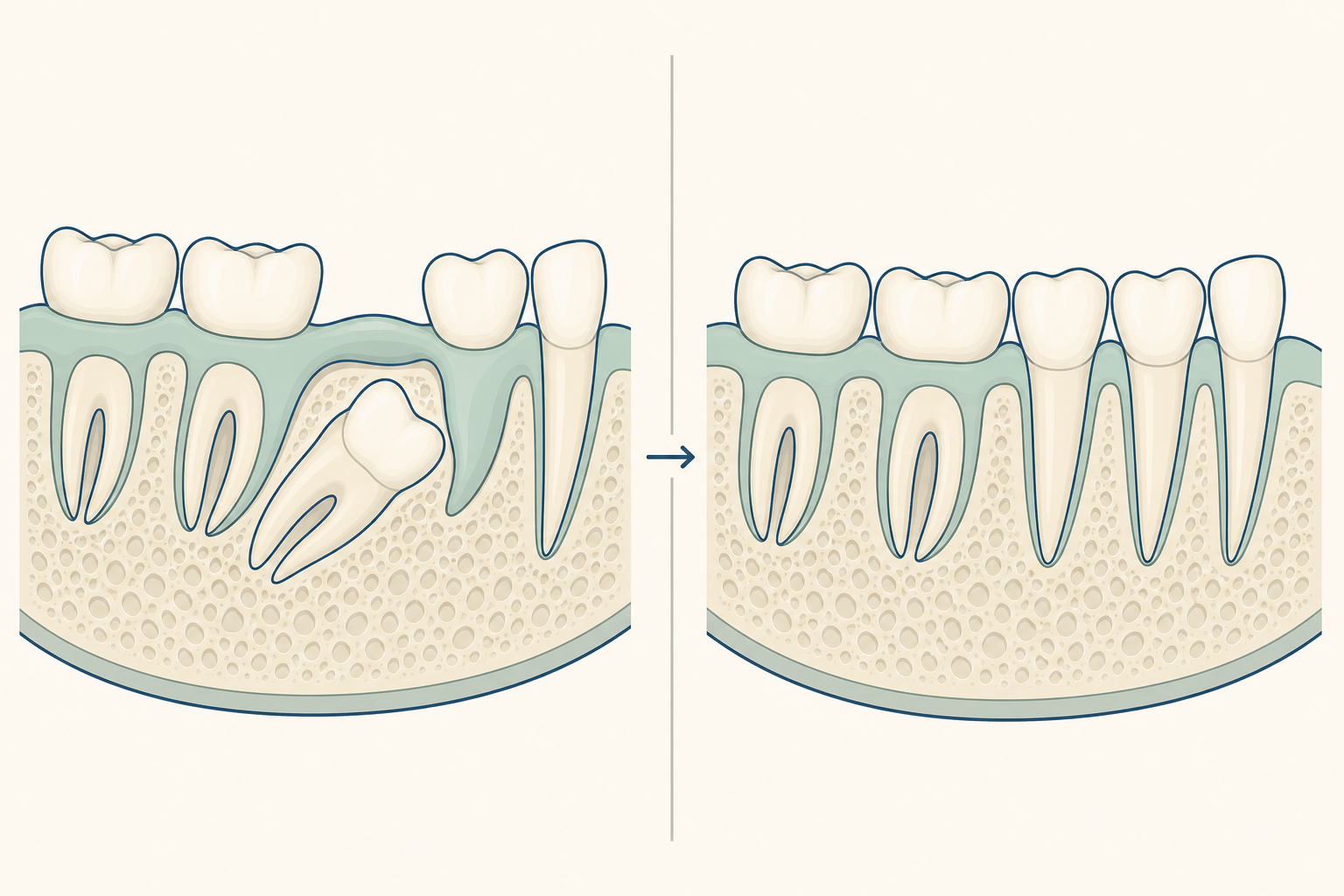
A tooth eruption disturbance may appear as a missing tooth beyond the expected period, a tooth emerging in an unusual position, crowding, or a baby tooth that remains while an adult tooth is not visible. Some children have no pain. Others develop local discomfort, swelling, or difficulty cleaning around the area. The pattern depends on the tooth, its position, and what is blocking or redirecting it. A dental examination and appropriate imaging can show whether the tooth is present and where it lies.
[2]What can cause it?
How does it develop?
The practical stages are observation of the expected tooth, recognition of delay or altered position, and assessment of whether the tooth can erupt or needs help. The exact timing varies by tooth and child. A visible change in position, a retained baby tooth, or a persistent gap may move the situation from observation to investigation.
[2]What should raise concern?
How is it diagnosed?
What treatment may be discussed?
What should you ask about the cost?
What can happen if it is left unexplained?
Can it be prevented?
Many eruption disturbances cannot be prevented because development and tooth position are individual. Regular dental visits during childhood can identify delayed eruption, retained baby teeth, or crowding while options remain clearer. Early review is especially useful when one side is changing and the matching tooth is not.
[1][2][3]Frequently asked questions
Is tooth eruption disturbance always painful?
Pain is not required for every developmental or eruption finding. New, persistent, or severe pain should be assessed.
[2]