
Dental Nation
Condition guide

Tooth Discoloration

Surface stains may improve with cleaning or whitening, while deeper colour changes can need fillings, veneers or crowns.

[1][2]

The short answer

Tooth discoloration may be temporary surface staining or a lasting colour change within one tooth or several teeth.

[1][2]
Tooth Discoloration dental educational illustration

What the change looks like
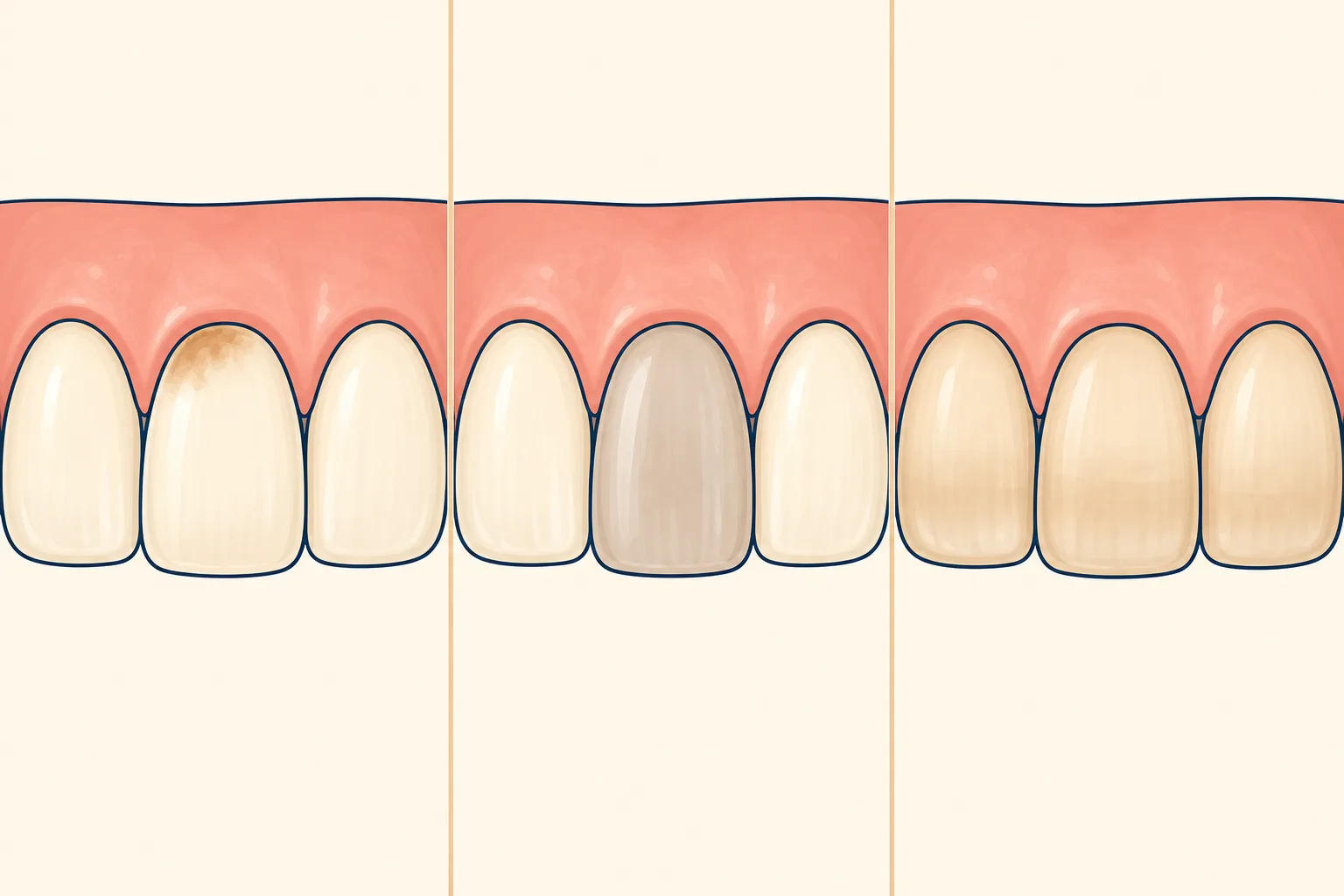
Illustrative diagram: Tooth Discoloration
Illustration — a representative diagram, not a patient photo.
The DN First Look799 AED
Book The DN First Look

What does tooth discoloration look like?

A tooth may become yellow, brown, grey, black, green, blue or orange. The whole tooth can change colour, or the change may be limited to spots, lines or pits.

[1]
Patterns of colour change
PatternWhat can change
Whole toothThe tooth may look yellow, brown, grey or black[1]
Localized marksSpots, lines or pits can have a different colour[1]

[1]

Why do teeth change colour?

Coffee, tea, tobacco and some medicines can stain teeth. Ageing can make the enamel thinner and allow the yellow dentin beneath it to show through; injury, infection and some inherited conditions can also change tooth colour.

[1][2]

How can the colour change develop?

Surface staining can build up from coloured foods, drinks and tobacco. A colour change can also begin inside a tooth after trauma, tooth decay or infection, so a single dark tooth has a different cause from general yellowing.

[1][2]
Where colour change begins
SourceExample
On the surfaceCoffee, tea, tobacco or coloured foods[1][2]
Inside the toothInjury, decay or infection[1][2]

[1][2]

What makes staining more likely?

Frequent exposure to coffee, tea, tobacco and other strongly coloured products can stain enamel. Some medicines, including tetracycline taken while teeth are forming, can cause deeper colour changes.

[1][2]

How is the cause found?

The pattern matters: a dentist looks at whether one tooth or several teeth have changed, whether the colour is on the surface or within the tooth, and whether there has been injury, decay, infection or medicine exposure.

[1]

What treatments can lighten teeth?

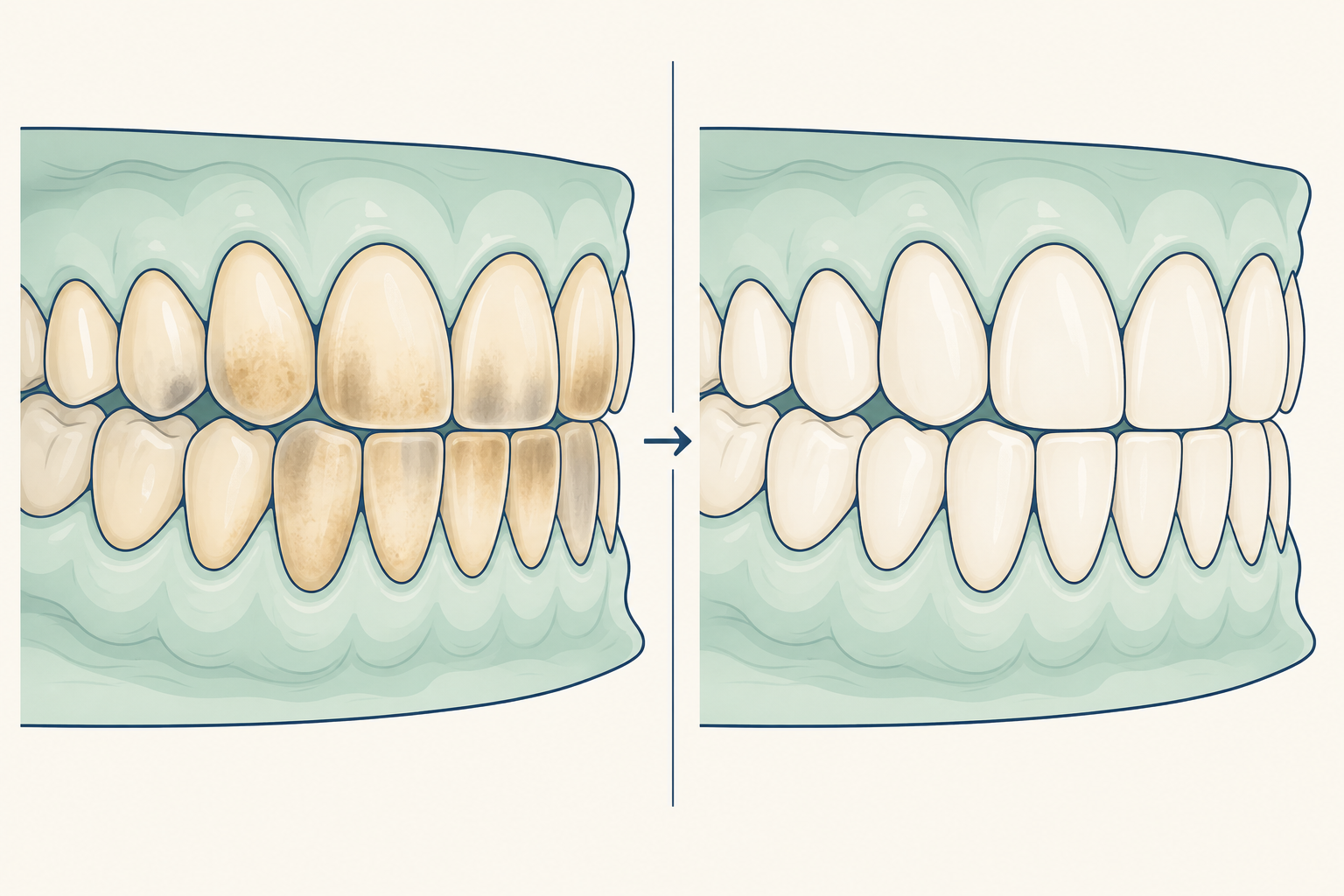
Professional whitening uses peroxide products to lighten natural tooth colour. It will not change the colour of crowns, veneers or fillings, and whitening is not appropriate when a tooth is dark because of decay, infection or an injury that needs treatment.

[1][2]
What whitening can and cannot change
SituationExpected result
Natural tooth colourPeroxide whitening can lighten it[1][2]
Crowns, veneers or fillingsTheir colour does not change with whitening[1][2]

[1][2]

What determines the cost in Dubai?

The cause of the colour change shapes the care needed. A surface stain may be approached differently from a dark tooth caused by decay, infection or trauma, and whitening does not alter the colour of existing crowns, veneers or fillings.

[1][2]

Can whitening cause problems?

Whitening can make teeth sensitive for a short time and can irritate gums if the peroxide contacts them. It should not be used to mask a tooth with decay, infection or injury, because those problems need their own care.

[1][2]

How can new stains be reduced?

Reducing tobacco use and limiting foods and drinks that stain teeth can reduce surface staining. Regular brushing and cleaning remove plaque and surface deposits, while dental restorations keep their original colour after whitening.

[2]

Frequently asked questions

Why has one tooth turned grey or dark?

A single dark tooth can change colour after injury, decay or infection inside the tooth, rather than from the surface stains that affect several teeth.

[1][2]