
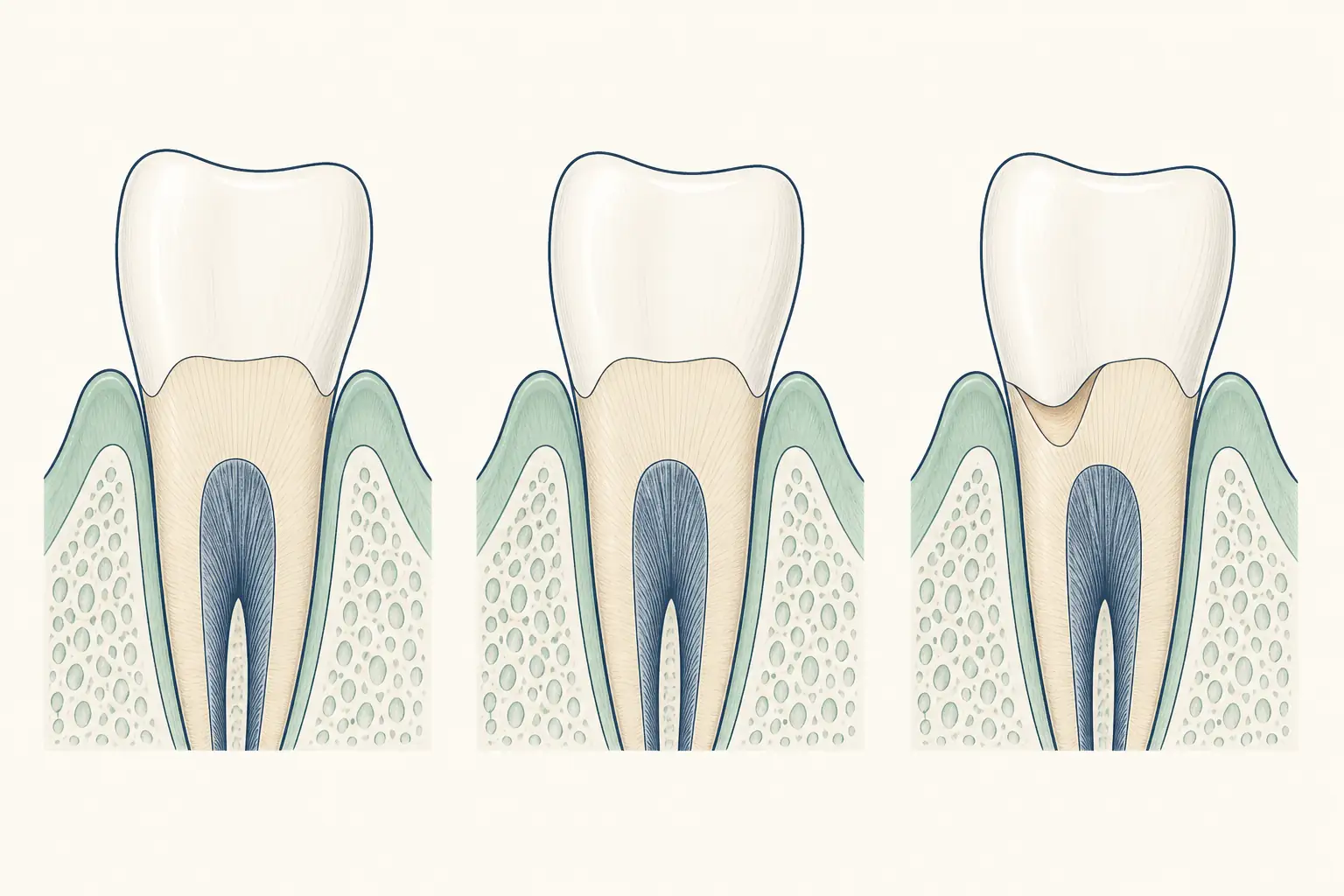
What the change looks like
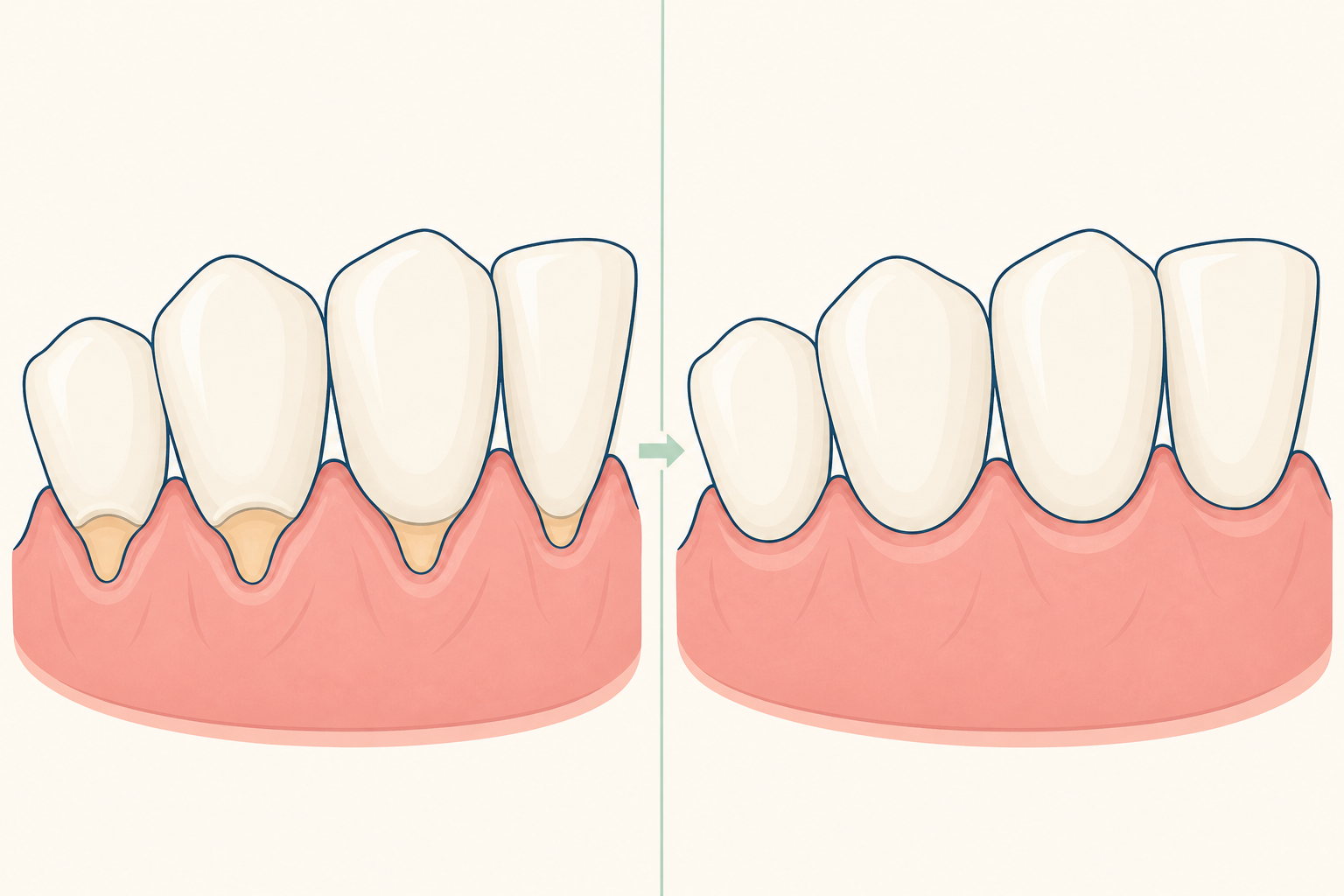
What symptoms can it cause?
| Situation | What it means for the patient | Question to ask |
|---|---|---|
| What you notice | Possible significance | Useful detail to record[2][3] |
| Appearance or sensation | Shows where the finding is affecting daily life | When it began and what changes it[2][3] |
| Change in cleaning or eating | May indicate a functional effect | Whether it is getting easier or harder[2][3] |
What causes it?
How does it change over time?
Abrasion is cumulative loss of mineralized tooth structure. A notch near the cervical area can become more noticeable as physical friction continues.
[2]| Situation | What it means for the patient | Question to ask |
|---|---|---|
| Earlier change | The finding is limited or subtle | Assessment can establish a baseline[2] |
| More established change | The pattern is easier to see or feel | The cause and extent guide the plan[2] |
| More extensive change | Function, comfort, or cleaning may be affected | Prompt review helps define options[2] |
Who is more likely to notice it?
How is it diagnosed?
How is it treated at each stage?
Care targets the source of friction first. Restorative intervention may be considered for advanced lesions, dentine sensitivity or pain, or when function and appearance need restoration.
[2][3]| Situation | What it means for the patient | Question to ask |
|---|---|---|
| Finding confirmed | The plan follows the examination and cause | Ask what each line of care addresses[2][3] |
| Cause addressed | The contributing exposure or process is managed | Ask how progress will be checked[2][3] |
| Ongoing review | The result is checked against symptoms and function | Keep the follow-up instructions[2][3] |
What should you ask about the cost in Dubai?
What can happen if it is left alone?
How can you reduce further damage?
Frequently asked questions
What should I do about Tooth Abrasion?
People may notice tooth-surface wear caused by repeated outside friction. The location and shape of the worn area can help distinguish it from wear caused by tooth-to-tooth contact or chemical loss. The visible change can be mild at first, while discomfort, bleeding, sensitivity, or a change in function may make it more obvious. Symptoms alone do not identify the cause, so the dentist will relate what you noticed to the location, pattern, and history. A short note about when it began and what makes it worse can make the appointment more useful.
[2]