
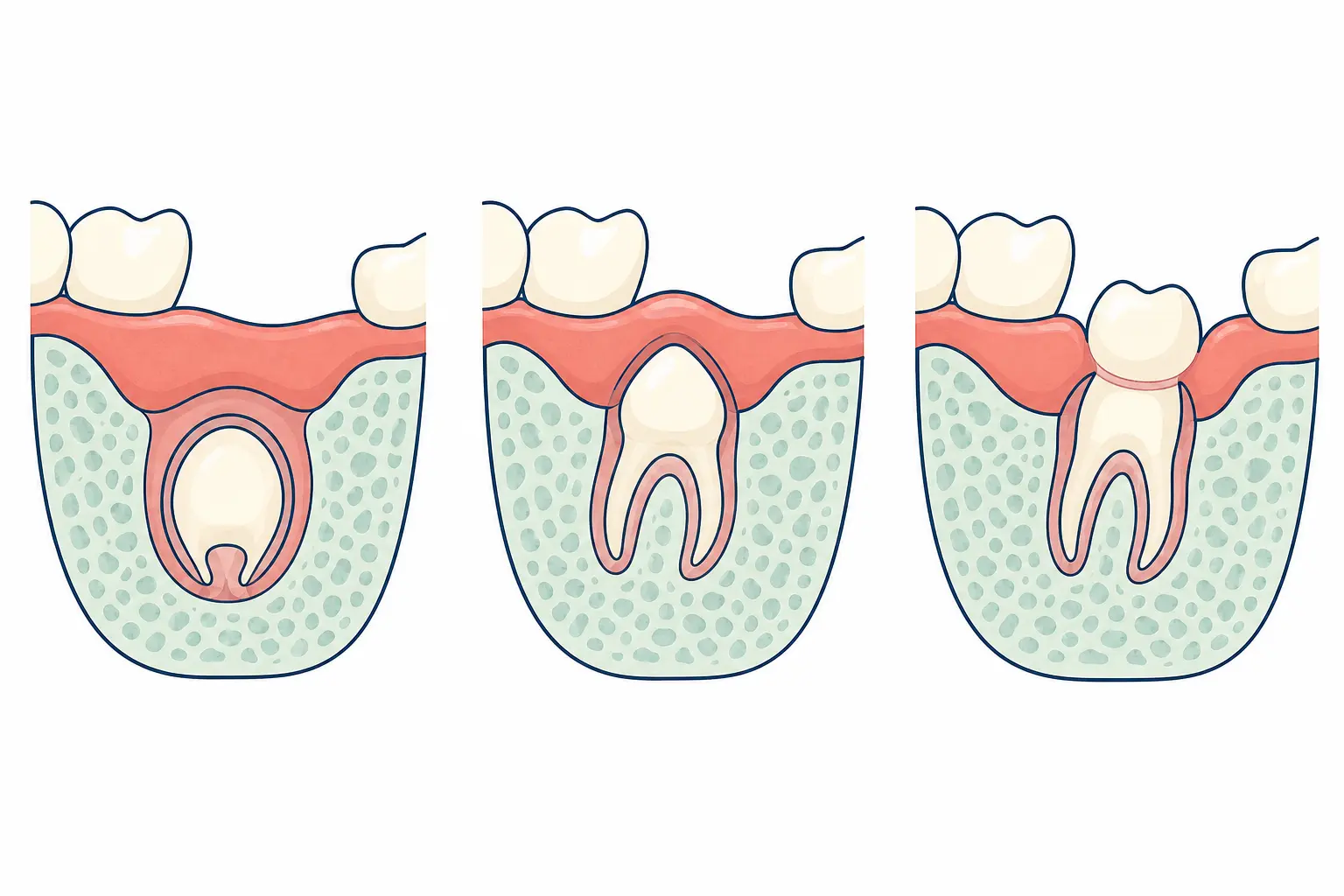
What the change looks like
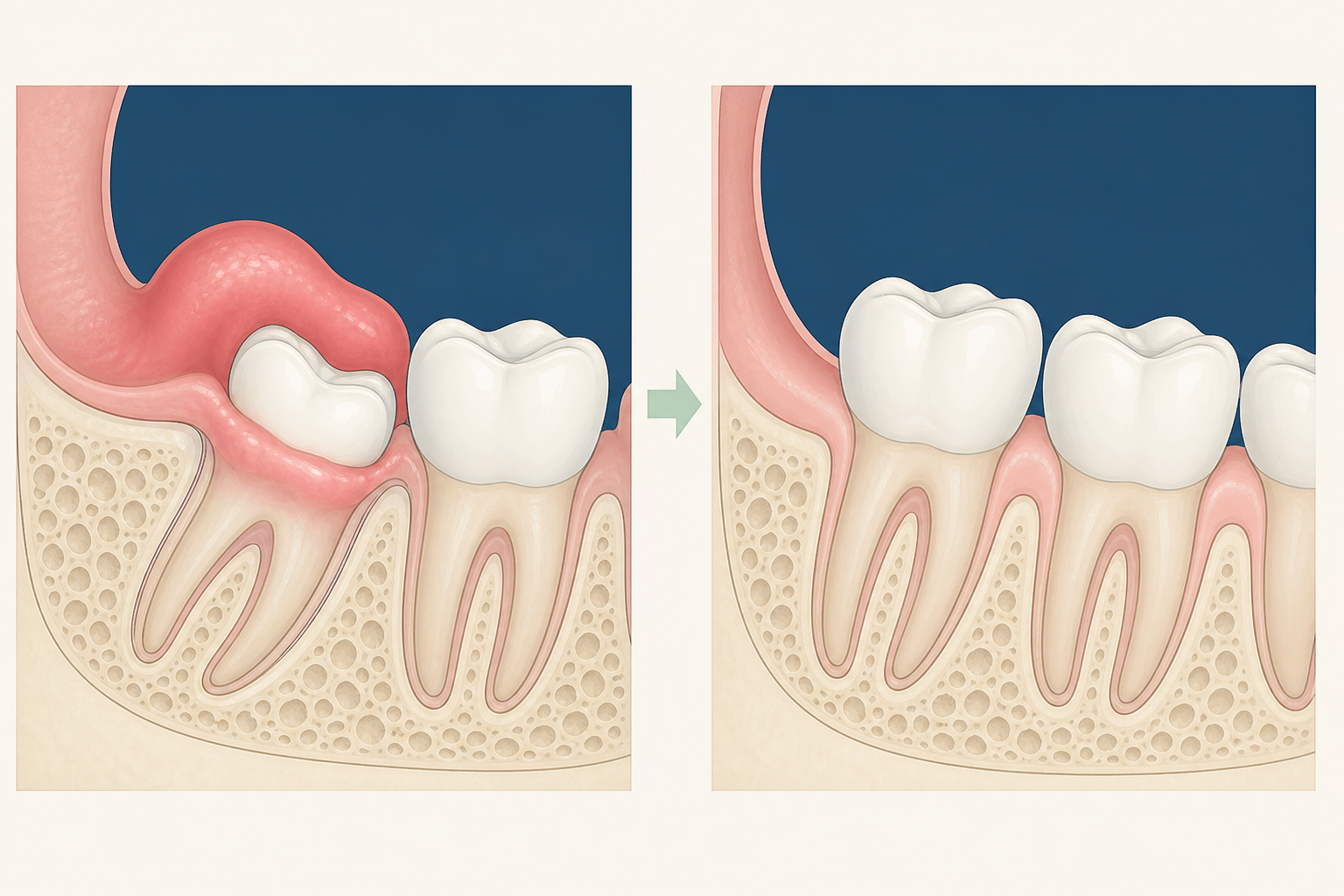
What might you notice?
Reported teething symptoms can include gum discomfort, drooling, irritability, disturbed sleep, and a desire to bite. The systematic review found that symptoms attributed to teething are variable, and a child should not have every illness explained by tooth eruption. Fever, diarrhoea, marked lethargy, breathing difficulty, or a child who looks unwell needs a separate medical assessment. A parent’s observation of timing is useful, but timing alone does not prove that every symptom is caused by teething.
[3][4]What can cause it?
Teething occurs as primary teeth develop and erupt through the gum. The eruption process can make the gum locally tender. The evidence distinguishes the eruption process from unrelated illness, so a symptom that is severe, persistent, or unusual should not be assigned to teething without assessment.
[5]How does it develop?
Teething is usually discussed by the tooth that is emerging and the short period around eruption. The gum may look swollen or feel tender before the tooth appears, then settle as the tooth comes through. There is no single symptom pattern or fixed timetable that explains every child’s experience.
[5]What should raise concern?
The main risk is misreading a more serious illness as teething. The systematic review supports caution because reported symptoms vary and are often nonspecific. Parents should pay attention to the child’s general condition and seek medical advice for marked or persistent illness rather than relying on a teething explanation.
[3][4]How is it diagnosed?
What treatment may be discussed?
What should you ask about the cost?
What can happen if it is left unexplained?
The complication is often delayed recognition of another cause when a child’s symptoms are automatically labelled teething. Local gum tenderness can be uncomfortable, but significant systemic symptoms deserve their own assessment. This distinction protects the child while still acknowledging that eruption may be uncomfortable.
[3][4]Can it be prevented?
Teething cannot be prevented because it is part of normal tooth eruption. Prevention means reducing avoidable risks around comfort measures and keeping routine dental and medical advice appropriate to the child. Persistent symptoms should be reviewed instead of managed indefinitely as teething.
[2][3][4]