Dental Nation
Condition guide

Stomatitis

Stomatitis can produce open, painful mouth sores from irritation, infection, medicines, or other illnesses, with treatment guided by the cause.

[2]

The short answer

Stomatitis can cause open, painful mouth sores, and treatment ranges from soothing the ulcer to addressing infection or another cause.

[2]
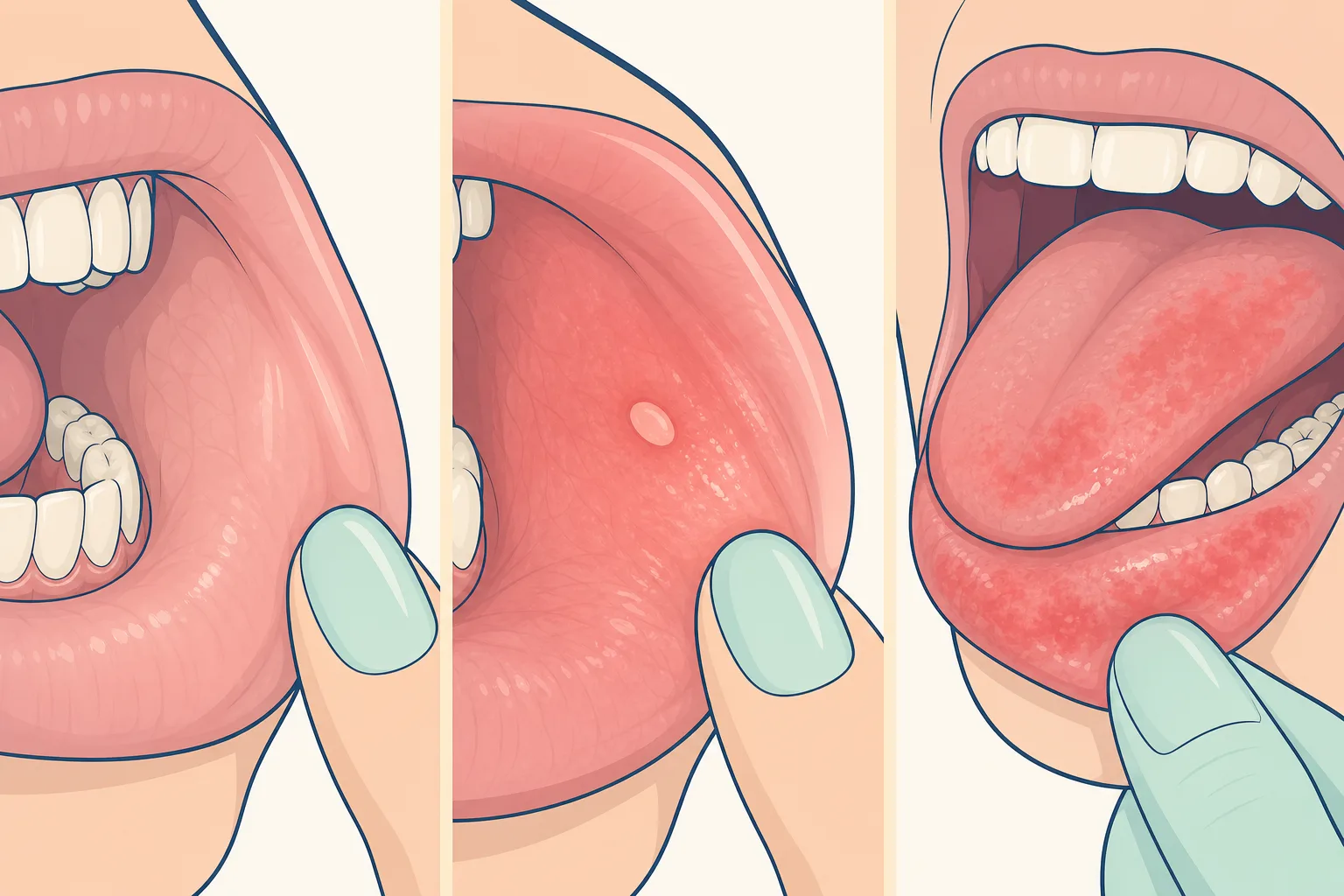
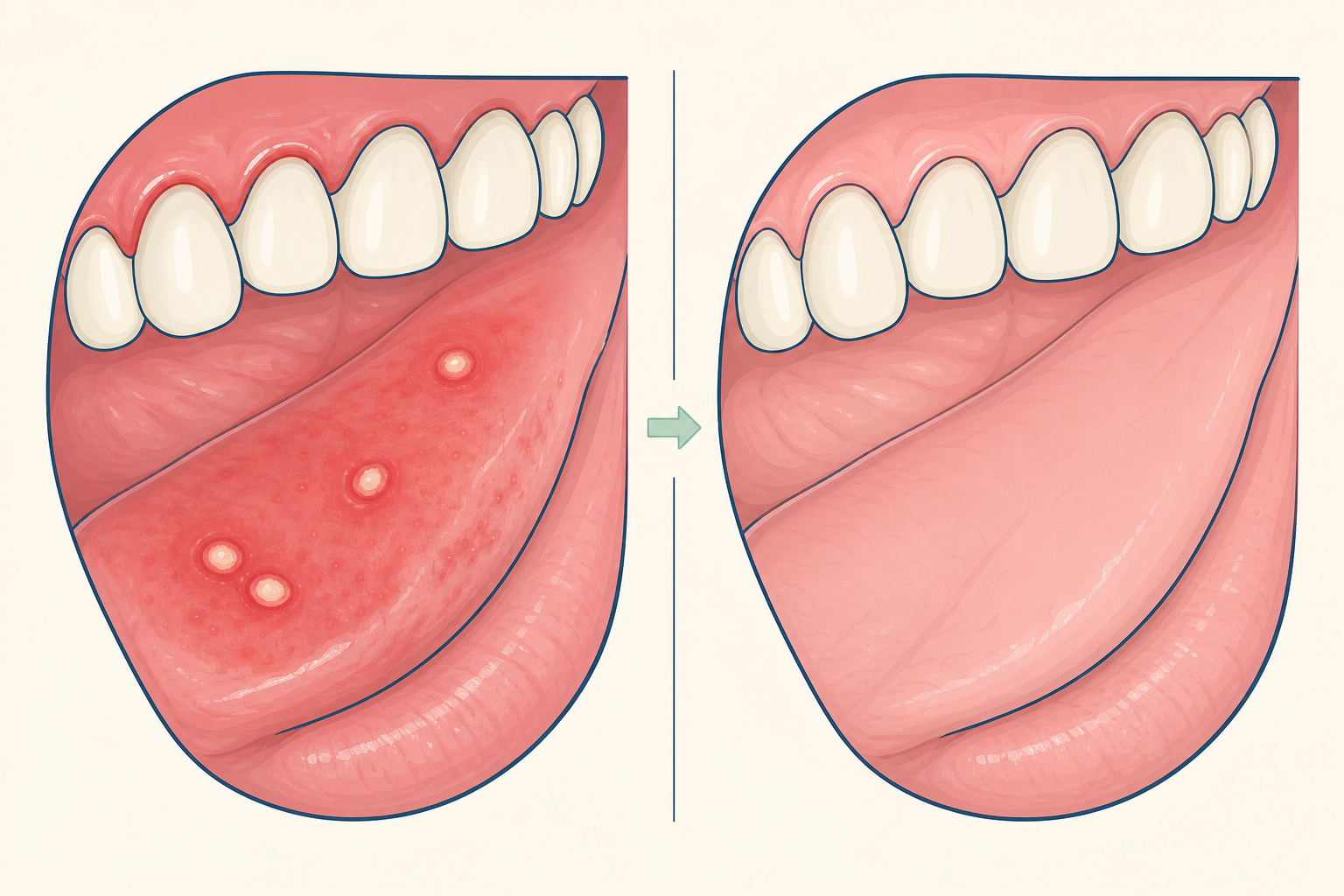
Stomatitis dental educational illustration

What the change looks like

Illustrative diagram: Stomatitis
Illustration — a representative diagram, not a patient photo.
The DN First Look799 AED
Book The DN First Look

What symptoms can mouth inflammation cause?

Details that help describe mouth inflammation
What you noticeWhy it is useful to report
Sore or burning mouthIt helps describe the degree and location of oral discomfort.[2]
White, red, or ulcerated areaThe appearance can guide the oral examination and possible causes.[2]

[2]

What can cause stomatitis?

Stomatitis can have different causes, including infection, irritation, medication-related mucosal injury, or another inflammatory process. The same symptom can occur with more than one cause. An examination is needed to decide which explanation fits the oral findings and history.

[1][2]

How can the mouth changes develop?

Stomatitis may appear as one open sore or several painful lesions. Cold sores often start with tingling or burning and form blisters before crusting, whereas canker sores are not contagious and may have a pale or yellow centre with a red rim.

[2]
Changes to note before the appointment
PatternQuestion to prepare
New mouth sorenessWhen did it begin, and what areas are affected?[2]
Persistent or spreading areasHave the appearance, pain, or ability to eat changed over time?[2]

[2]

When should you arrange prompt care?

A sore lasting longer than two weeks, large white patches, fever, rash, drooling or difficulty swallowing needs prompt attention. A mouth ulcer that does not heal can be the first sign of some cancers.

[2]

How is stomatitis assessed?

The mouth and tongue are examined closely, with questions about symptoms, medical history and medicines. The site of the sore, its appearance and whether it began after a medicine are useful diagnostic details.

[1][2]

How is treatment selected?

Treatment can numb painful areas with lidocaine, use antiviral medicine for herpes sores, apply steroid gel, reduce inflammation with a paste, or use chlorhexidine mouthwash. Treating a known cause and avoiding hot or spicy food can ease ulcer discomfort.

[1][2]
Questions that connect care with the cause
Discussion pointQuestion to ask
Cause identifiedWhich finding is this treatment intended to address?[1][2]
Cause uncertainWhat assessment is needed before treatment is selected?[1][2]

[1][2]

What should a visit quote explain?

Treatment can range from medicine rubbed directly on an ulcer to antiviral treatment for herpes sores. The mouth examination identifies whether a sore has a cause that needs targeted treatment.

[1][2]

What if mouth inflammation is left untreated?

Mouth ulcers can be linked to infection, oral thrush, leukoplakia, oral lichen planus or oral cancer. Persistent ulcers need attention because some cancers first appear as a mouth ulcer that does not heal.

[2]

How can another episode be prevented?

Brush twice a day, floss daily and keep regular dental cleanings. Avoid very hot foods and drinks, use a soft-bristle toothbrush, and address a sharp tooth, broken tooth or poorly fitting denture that irritates the mouth.

[1][2]

Frequently asked questions

Can stomatitis have different causes?

Yes. Assessment considers the appearance, symptoms, history, and possible infection, irritation, or mucosal injury.

[1][2]