
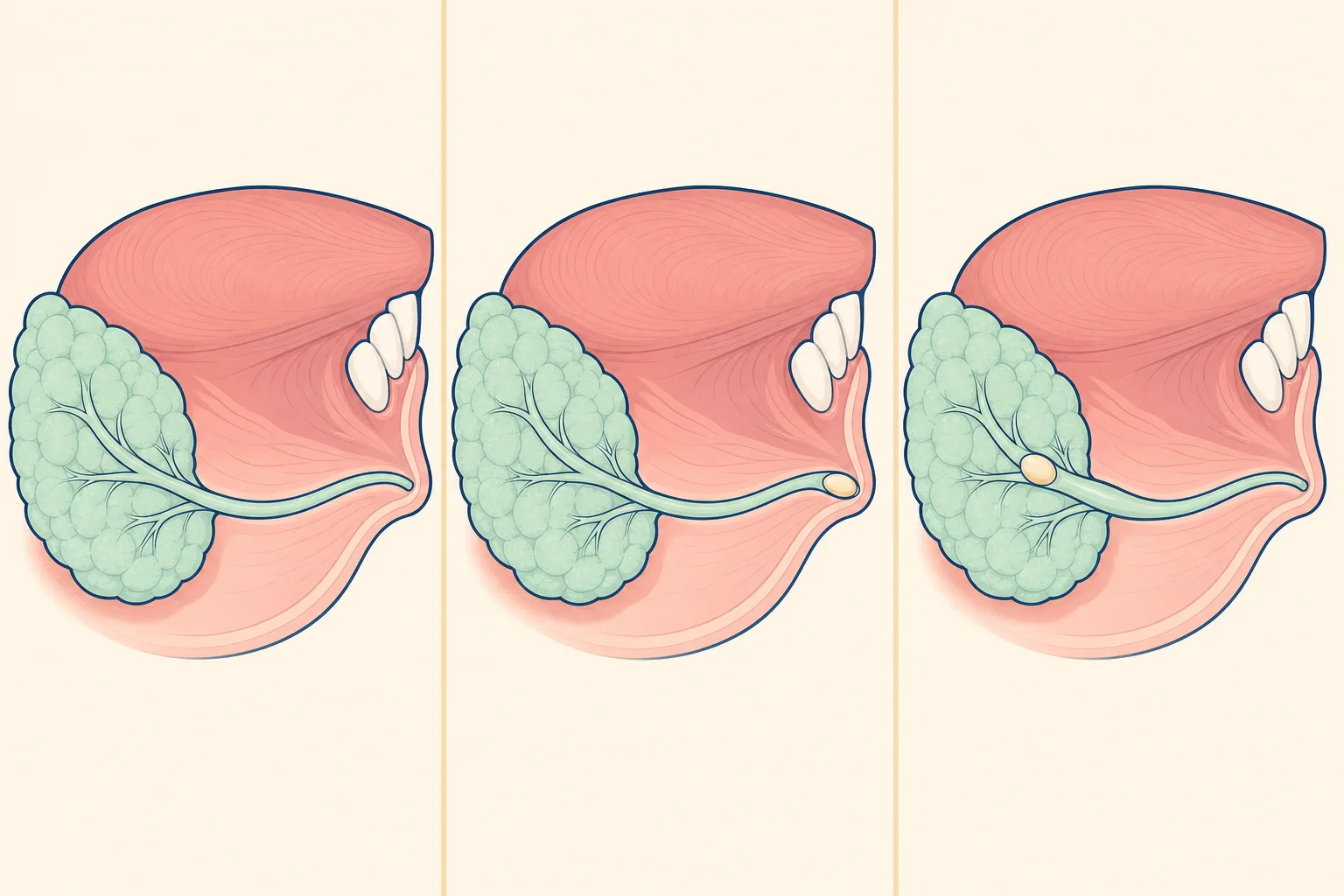
What the change looks like
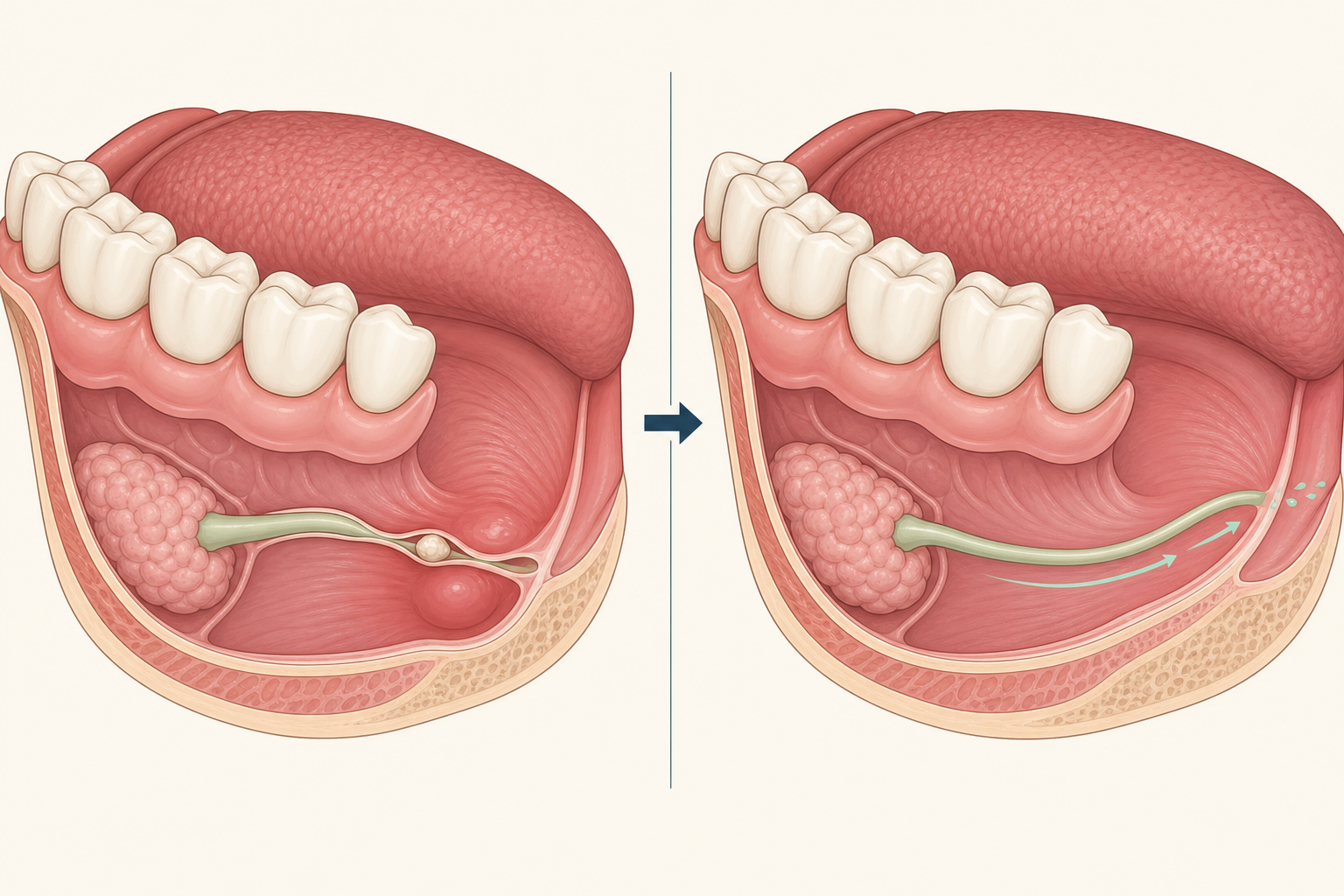
What does a salivary stone feel like?
The swelling may settle between meals, then return when saliva production increases. Some people notice a tender area under the jaw or in the floor of the mouth, a dry mouth, or an unpleasant taste. Redness, fever, or drainage can occur when infection develops in the blocked gland.
[1][2]| What you notice | Why it needs attention |
|---|---|
| Pain or swelling that appears during meals | A stone can obstruct saliva flow as the gland produces saliva.[1][2] |
| Fever, redness, drainage, or feeling unwell | These symptoms can occur when the blocked gland becomes infected.[1][2] |
Why do salivary stones form?
A salivary stone forms when mineral material collects within a salivary duct. Reduced saliva flow can contribute. Dehydration, medicines that reduce saliva, and conditions that affect the gland may be relevant to the history a clinician takes. Stones commonly occur in the duct of the submandibular gland, which sits beneath the jaw.
[1][2]How can a blockage change over time?
Salivary stones do not use a formal patient stage scale. The pattern can still change. A partial blockage may cause brief meal-time swelling. A more persistent blockage can bring repeated pain and swelling, and infection may develop in the gland. The symptom pattern and examination findings help guide the next step.
[1][2]Who may be more likely to get a salivary stone?
Factors that reduce saliva flow may raise the chance of a stone. Dehydration and medicines that cause dry mouth are examples. Tell the clinician about previous stones, recurrent gland swelling, and medicines or health conditions that affect saliva. That history can help make sense of repeated symptoms.
[1][2]How is a salivary stone diagnosed?
What treatment may be needed?
Small stones may pass with measures that encourage saliva flow, fluids, gentle massage, and suitable pain relief. A stone that does not pass may need removal through the mouth or a procedure for the duct. When infection is present, it needs clinical treatment as well as relief of the blockage. The treatment choice depends on the stone and the gland involved.
[1][2]| Situation | Possible care |
|---|---|
| A small stone with manageable symptoms | Fluids, saliva stimulation, gentle massage, and follow-up may help the stone pass.[1][2] |
| A stone remains or infection is present | A clinician may remove the stone, treat the duct, and treat the infection.[1][2] |
What should you ask about cost in Dubai?
Ask what assessment is needed to locate the stone and whether the treatment plan includes imaging, stone removal, follow-up, or care for infection. The clinical plan can differ when a stone is easy to reach compared with one that needs a duct procedure. A written plan can make the proposed care easier to discuss.
[1][2]What can happen if a blocked gland is left untreated?
A blocked salivary duct can cause repeated pain and swelling. Infection may develop in the gland and can bring fever, redness, drainage, or feeling unwell. Prompt assessment is appropriate if swelling is worsening or infection symptoms appear. Trouble swallowing or breathing needs urgent medical attention.
[1][2]Can salivary stones be prevented?
Hydration and regular mouth care may support normal saliva flow. If dry mouth or stones keep returning, discuss medicines and possible contributing health conditions with a clinician. Prevention cannot guarantee that a stone will not recur, so repeated swelling around meals still deserves assessment.
[1][2]Frequently asked questions
Who wrote this page
This library is published by Dental Nation, a licensed dental group practising in the United Arab Emirates. Pages are written and overseen by the same clinical team that treats patients in our clinics, and are held to a fixed editorial standard for safety and accuracy.
This page is patient education, not medical advice, and cannot replace an examination. Anything urgent — facial swelling, trauma, uncontrolled bleeding or severe pain — needs a dentist or emergency care now.