
Salivary Gland Infection
Painful cheek or jaw swelling, fever, dry mouth, and bad-tasting drainage can signal a salivary gland infection.
[2][1]The short answer
A salivary gland infection causes painful swelling in the cheek or jaw and may bring fever, dry mouth, pus, or a bad taste in the mouth.
[2][1]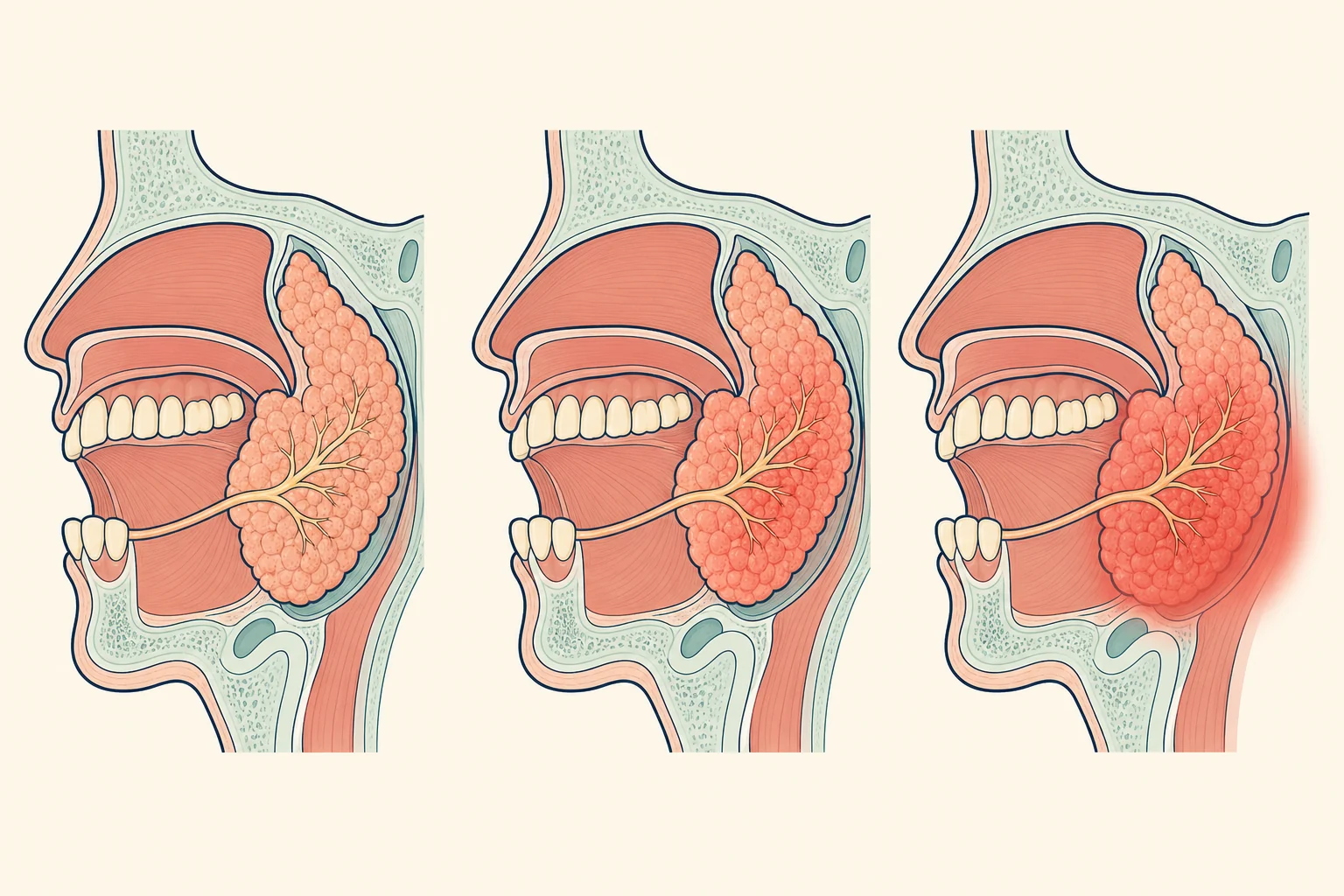
What the change looks like
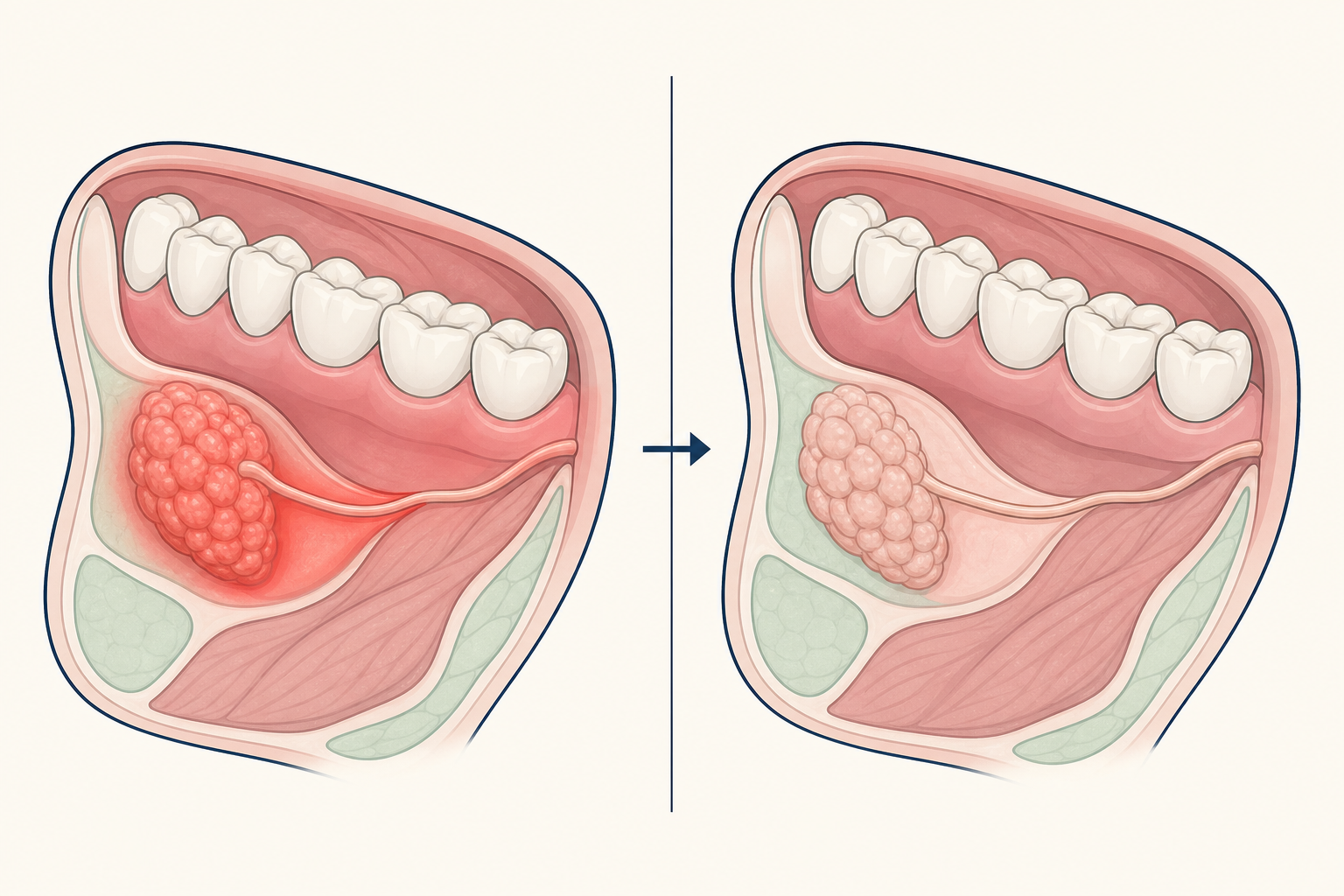
What does a salivary gland infection feel like?
What causes sialadenitis?
How can the infection progress?
Who has a higher chance of salivary gland infection?
How is the infection diagnosed?
What treatment may be needed?
What care may be needed for a salivary gland infection?
What makes this infection urgent?
How can you lower the risk of another infection?
Good oral hygiene may prevent some bacterial salivary gland infections. Brushing and flossing twice a day, drinking water, and using sugar-free lemon drops to increase saliva flow are listed self-care measures.
[1]Frequently asked questions
Who wrote this page
This library is published by Dental Nation, a licensed dental group practising in the United Arab Emirates. Pages are written and overseen by the same clinical team that treats patients in our clinics, and are held to a fixed editorial standard for safety and accuracy.
This page is patient education, not medical advice, and cannot replace an examination. Anything urgent — facial swelling, trauma, uncontrolled bleeding or severe pain — needs a dentist or emergency care now.