
Salivary Secretion Disorder
Saliva disorders affect production or flow, with too much, too little, or obstructed saliva causing different mouth symptoms.
[1]The short answer
Saliva disorders can involve excessive or reduced secretion, and obstruction can make the flow pattern change around meals.
[1]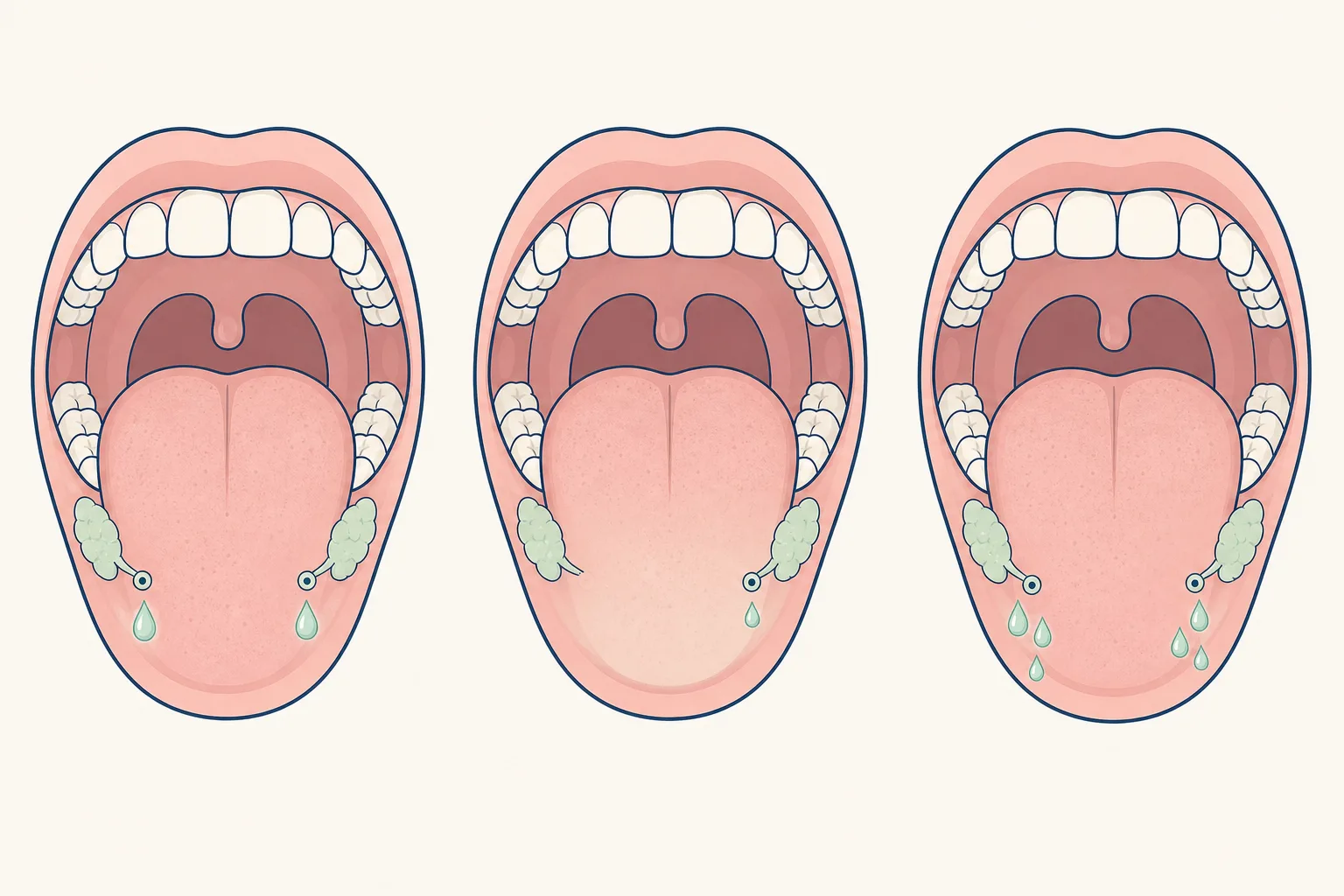
What the change looks like
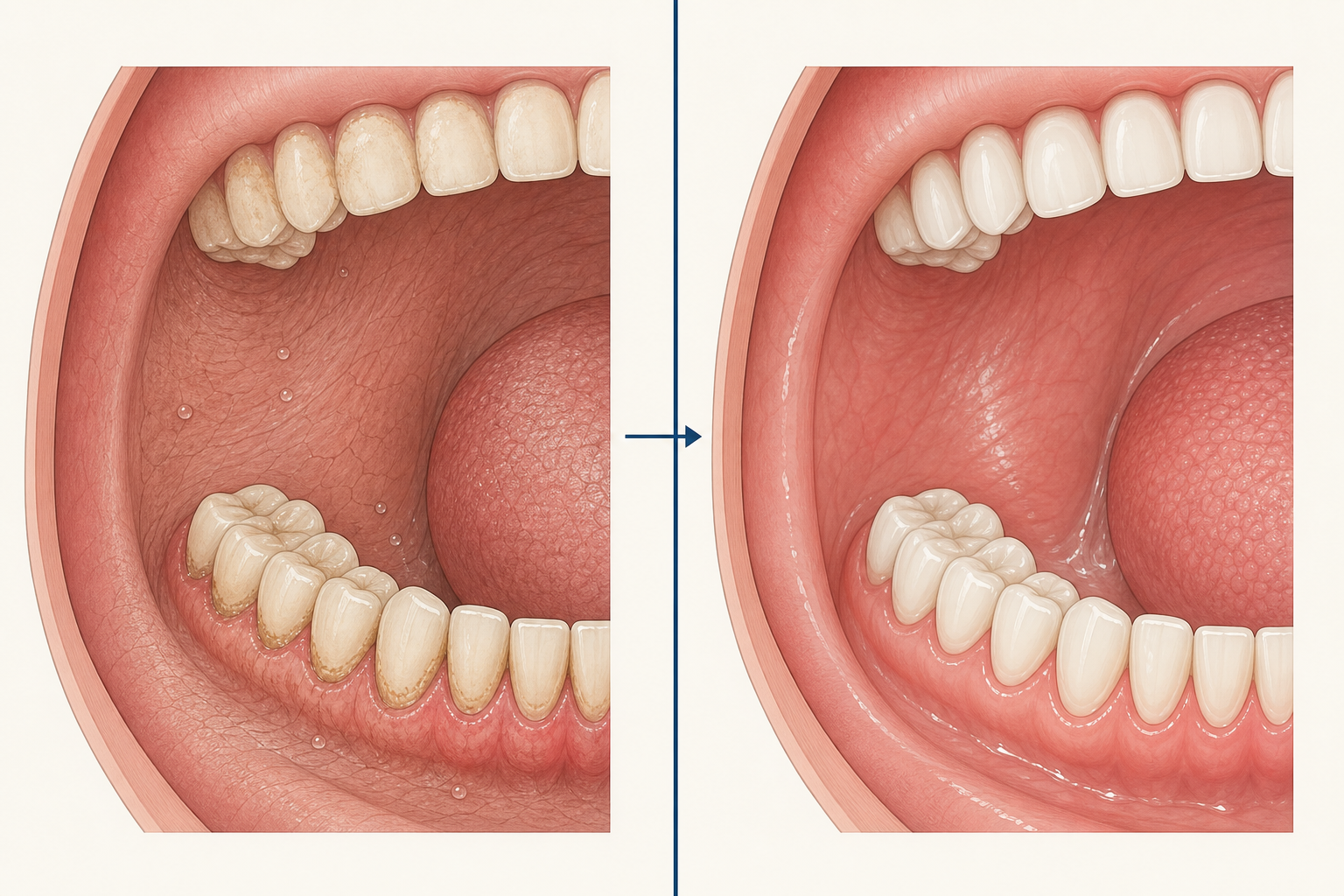
What changes might you notice?
What can affect saliva?
Dry mouth can arise despite adequate salivary flow, from reduced flow, or from altered saliva. Autoimmune disease, head and neck irradiation, surgical trauma and medicines can all disrupt secretion.
[1]How can the pattern change?
A secretion disorder can mean too little saliva, too much saliva, or difficulty clearing saliva from the mouth. Excess saliva can result from increased gland stimulation or reduced muscle coordination for swallowing.
[1]When should you seek prompt assessment?
Reduced saliva weakens buffering, antimicrobial activity, taste, digestion and tissue repair. It raises the risk of tooth decay and bacterial or fungal mouth infections.
[1]How is the cause assessed?
Sialometry measures stimulated and unstimulated salivary flow. CT or MRI may be used when a salivary-gland growth is suspected, followed by biopsy if imaging identifies a suspicious lesion.
[1]How is treatment chosen?
Care targets the cause of the secretion change, such as an autoimmune condition, medication effect, obstruction or infection. Treating the cause also addresses the oral effects of reduced or excessive saliva.
[1]What should a visit quote explain?
Flow measurement, salivary-gland imaging and biopsy are different diagnostic steps. CT or MRI is used when a gland lesion is suspected, while sialometry measures saliva production.
[1]What can happen without assessment?
A persistent or worsening saliva-related problem may leave an infection, inflammation, obstruction, or another local cause unaddressed. Increasing pain, swelling, or difficulty swallowing needs timely clinical attention because those changes can alter the urgency and the treatment approach.
[1]What may help prevent another episode?
Protecting salivary function protects the mouth's natural buffering and antimicrobial activity. Avoiding a cause that reduces saliva, when possible, limits the oral effects of dry mouth.
[1]Frequently asked questions
Can symptoms alone identify a salivary secretion disorder?
Symptoms help describe the problem, but assessment is needed to identify the cause and choose care.
[1]Who wrote this page
This library is published by Dental Nation, a licensed dental group practising in the United Arab Emirates. Pages are written and overseen by the same clinical team that treats patients in our clinics, and are held to a fixed editorial standard for safety and accuracy.
This page is patient education, not medical advice, and cannot replace an examination. Anything urgent — facial swelling, trauma, uncontrolled bleeding or severe pain — needs a dentist or emergency care now.