
Salivary Gland Fistula
A salivary gland fistula is an abnormal saliva pathway; its pattern and nearby swelling help determine the next clinical step.
[1]The short answer
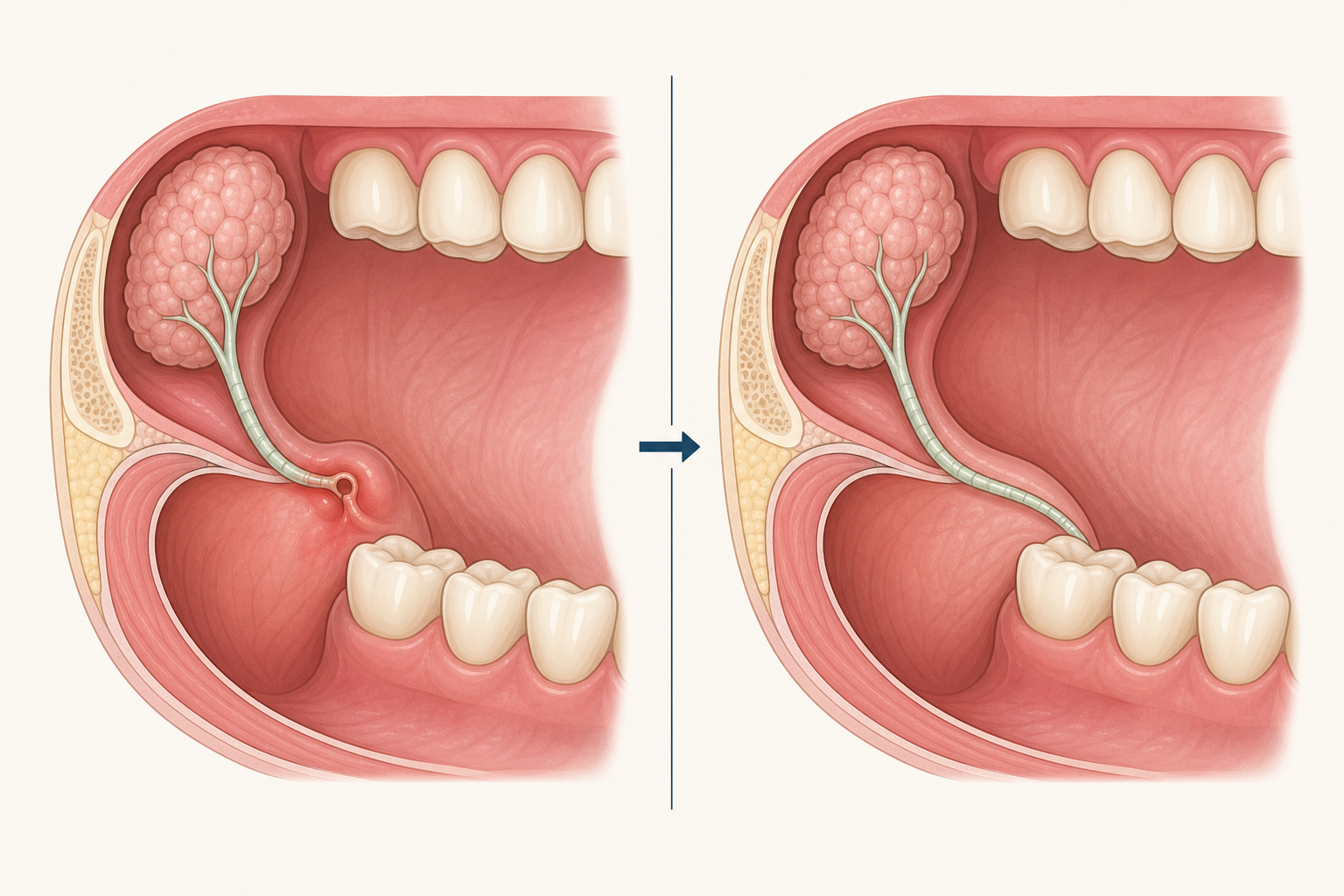
A salivary gland fistula is an abnormal passage that can alter saliva flow and follow damage or inflammation near a gland.
[1]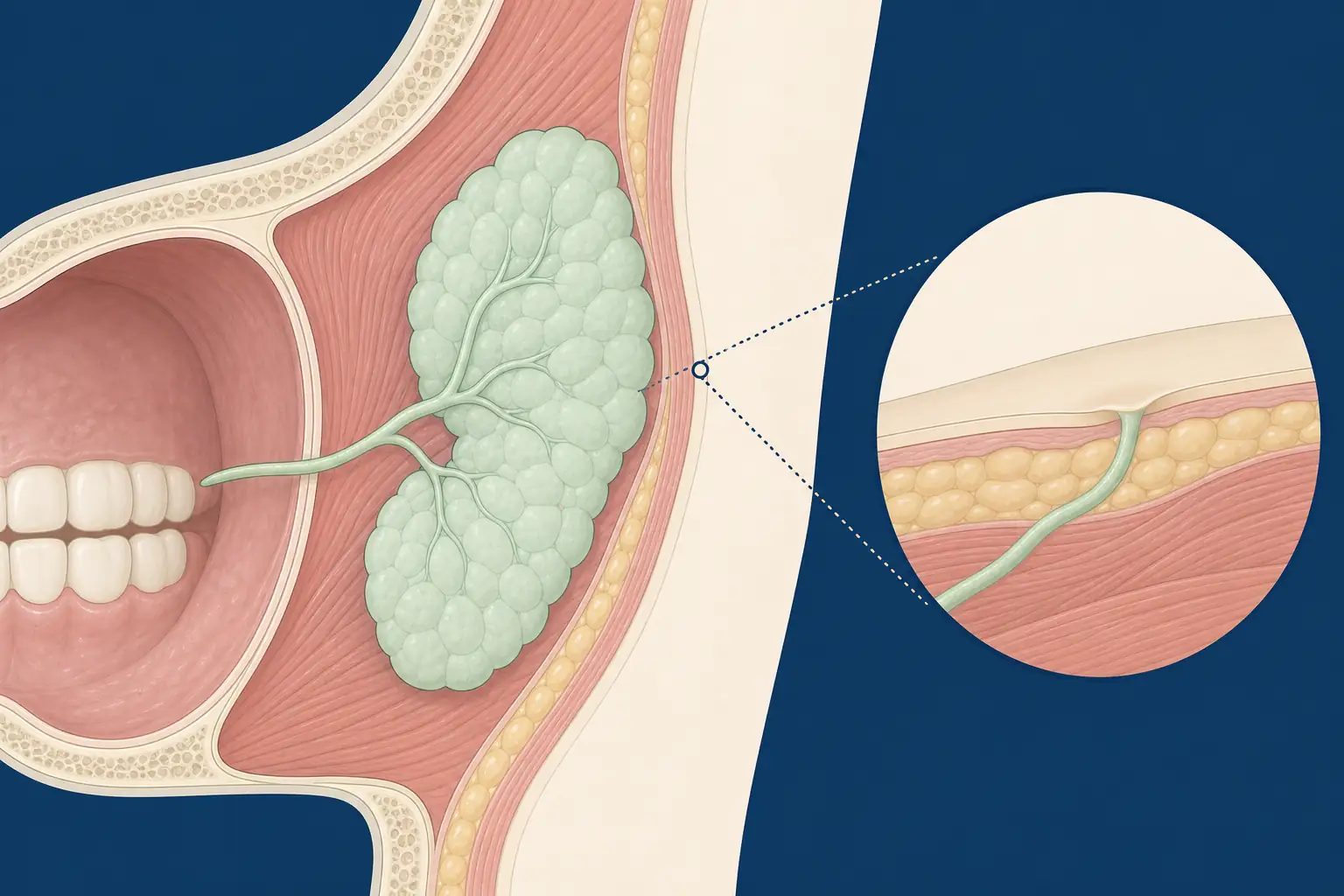
What the change looks like
What symptoms can it cause?
What can cause it?
Salivary flow can be altered by duct obstruction, inflammation, infection, or surgical trauma near a gland. A blocked duct can cause swelling because saliva cannot pass normally into the mouth.
[1]How does it change over time?
The course of Salivary Gland Fistula is described by what is happening now, whether the finding is spreading or recurring, and whether nearby tissues are becoming involved. These stages are a practical way to organise questions, not a substitute for diagnosis.
[1]Who may need closer attention?
Rapid pain and swelling point to acute salivary inflammation. Fever, headache, malaise and muscle aches can accompany viral salivary inflammation, while infection can spread through tissues of the neck.
[1]How is it diagnosed?
Useful details include how long swelling has lasted, whether it is linked to meals, the number of glands affected, pain, foul taste and constitutional symptoms. Ultrasound can demonstrate a stone larger than 1 mm or an abscess cavity.
[1]What treatment may be considered?
Broad-spectrum antibiotics are used for salivary infection. When a stone blocks a salivary duct, interventional sialendoscopy or direct surgery can remove it; an abscess needs incision and drainage.
[1]What should I ask about the visit cost?
Imaging can identify a stone, a blocked duct or an abscess cavity. Treatment may include antibiotics, a duct procedure, stone removal, or drainage according to the finding.
[1]What can happen if it is left alone?
Salivary infection can form an abscess and spread along fascial planes in the neck. Chronic inflammation can relapse, while reduced saliva leaves teeth less protected from acid erosion.
[1]Can it be prevented?
Good oral hygiene and hydration are part of salivary-gland care. Gland massage may continue after acute tenderness subsides, and avoiding medicines that reduce saliva can help preserve flow.
[1]Frequently asked questions
How is Salivary Gland Fistula diagnosed?
A clinician uses the history and focused examination to assess the finding and decide whether further testing is needed.
[1]