
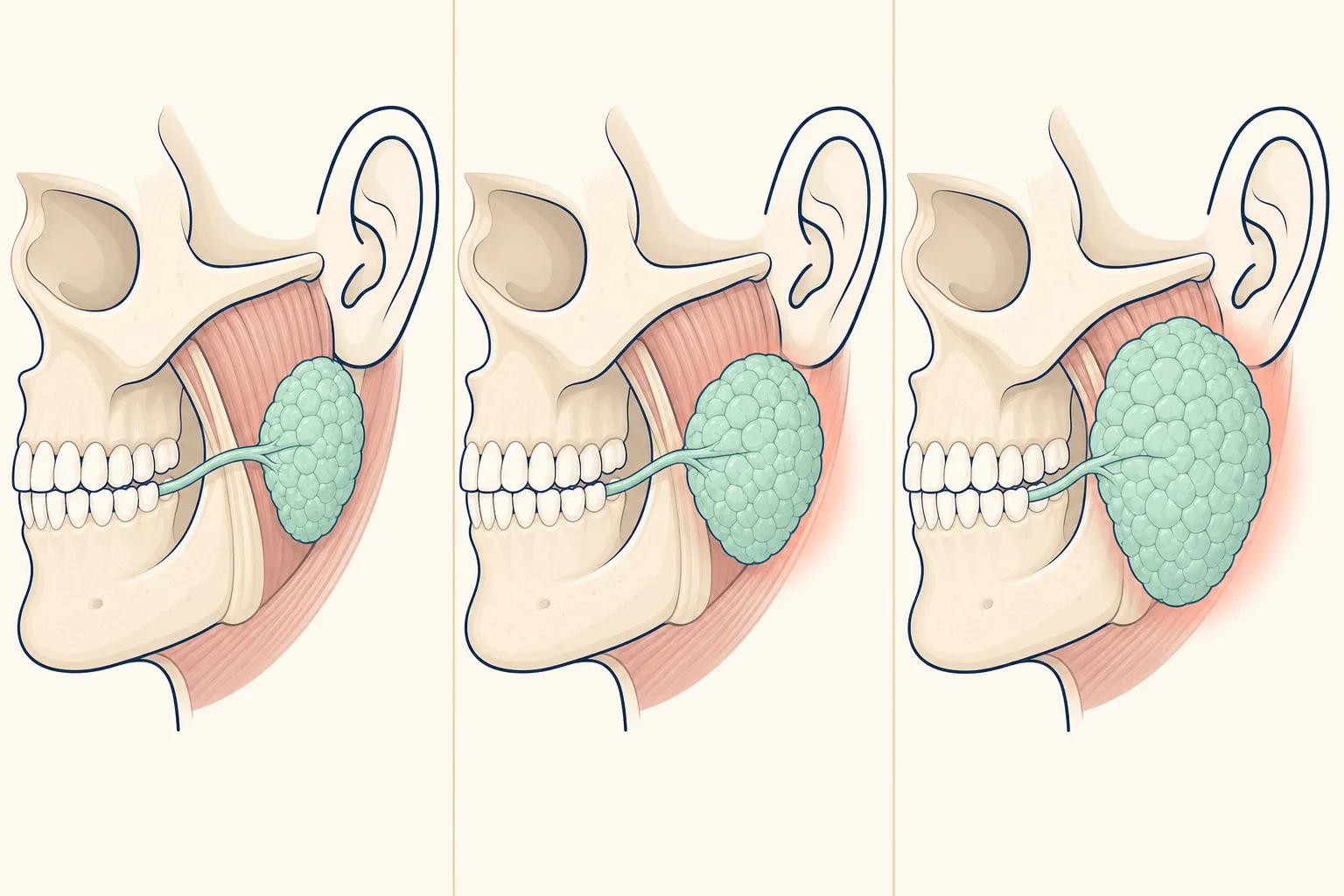
What the change looks like
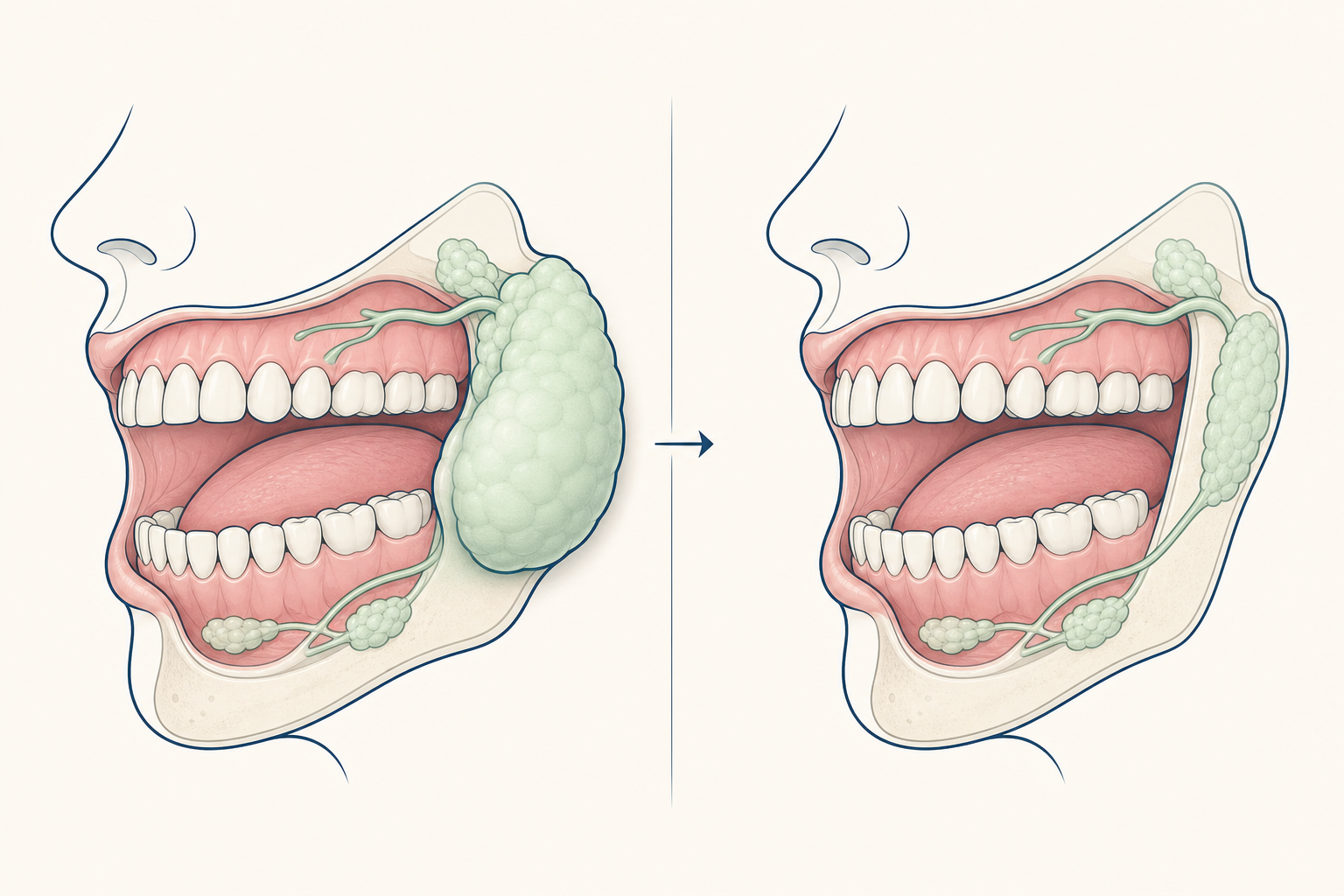
What might I notice?
What can cause this?
Enlargement can have more than one cause, including inflammation or a problem affecting saliva flow.
[1]How does the clinical picture change?
The pattern may be occasional, persistent, or changing. The clinician records the location, extent, and effect on function so that the next decision is based on the finding rather than symptoms alone.
[1]When should I be more concerned?
Swelling with fever, increasing pain, redness, pus, or difficulty opening the mouth can indicate an active problem.
[1]How is the cause checked?
Diagnosis begins with the site of swelling, symptoms, mouth examination, and medical history. Imaging may be used to look at the gland and saliva flow.
[1]How is treatment chosen?
Treatment depends on the cause found. The clinician may treat infection or arrange a procedure or referral when blockage or another gland problem is suspected.
[1]What should I ask about costs in Dubai?
The route depends on whether the enlargement is inflammatory, obstructive, or a painless metabolic swelling.
[1]When is urgent care needed?
Swelling with fever, increasing pain, redness, pus, or difficulty opening the mouth can indicate an active problem. Seek prompt care for a rapidly changing symptom or any urgent warning sign described above.
[1]What can I do now?
Good oral care, hydration, and early assessment of recurrent swelling or pain with meals can help identify a developing problem.
[1]Frequently asked questions
Can I diagnose salivary gland enlargement from symptoms alone?
Symptoms help the clinician, but examination and any appropriate tests are needed to identify the cause and decide on care.
[1]