
Salivary Gland Abscess
A salivary gland abscess can spread through nearby neck spaces, so swelling and infection need prompt assessment and drainage when indicated.
[1]The short answer
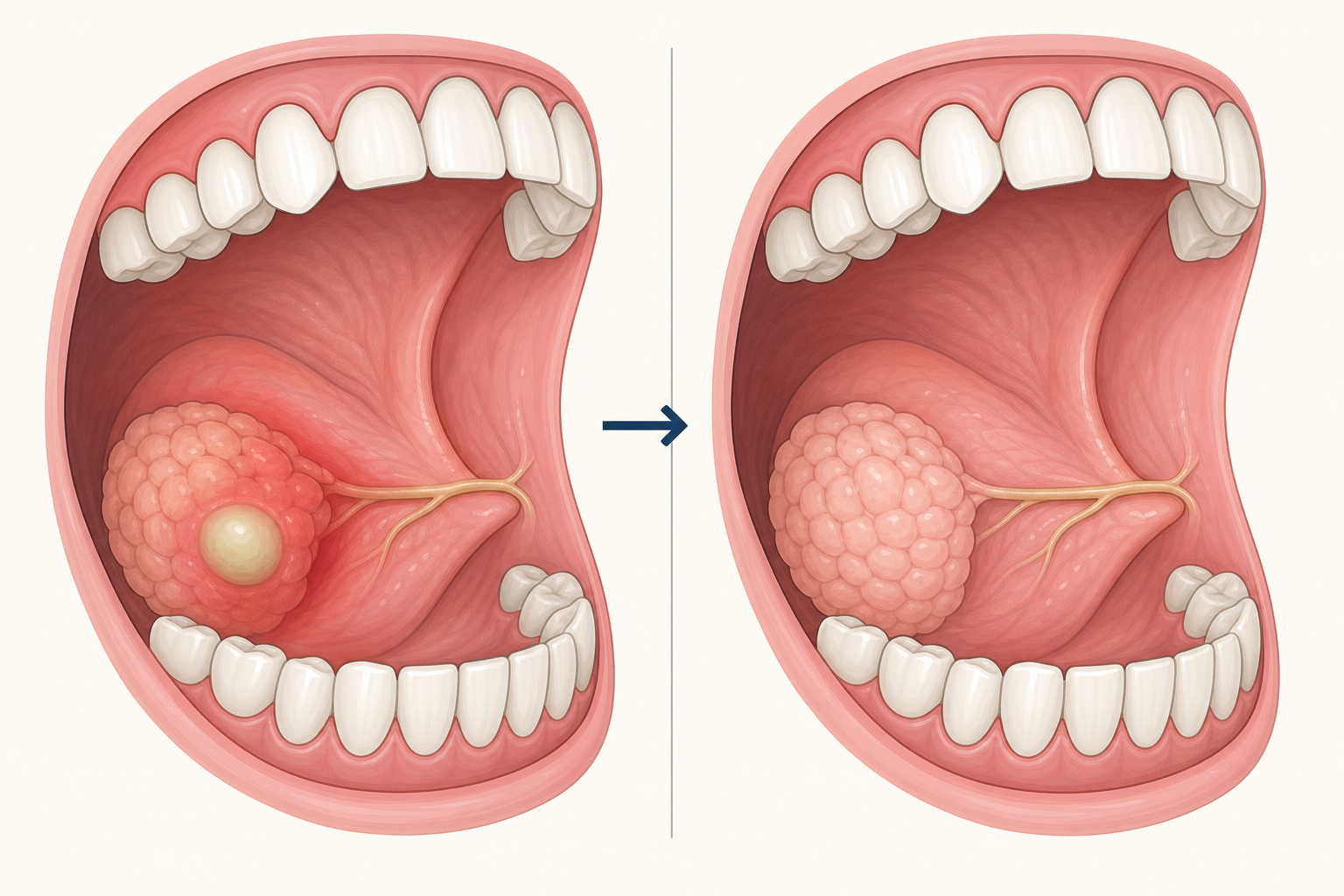
A salivary gland abscess is a pocket of infection for which surgical incision and drainage may be required.
[1]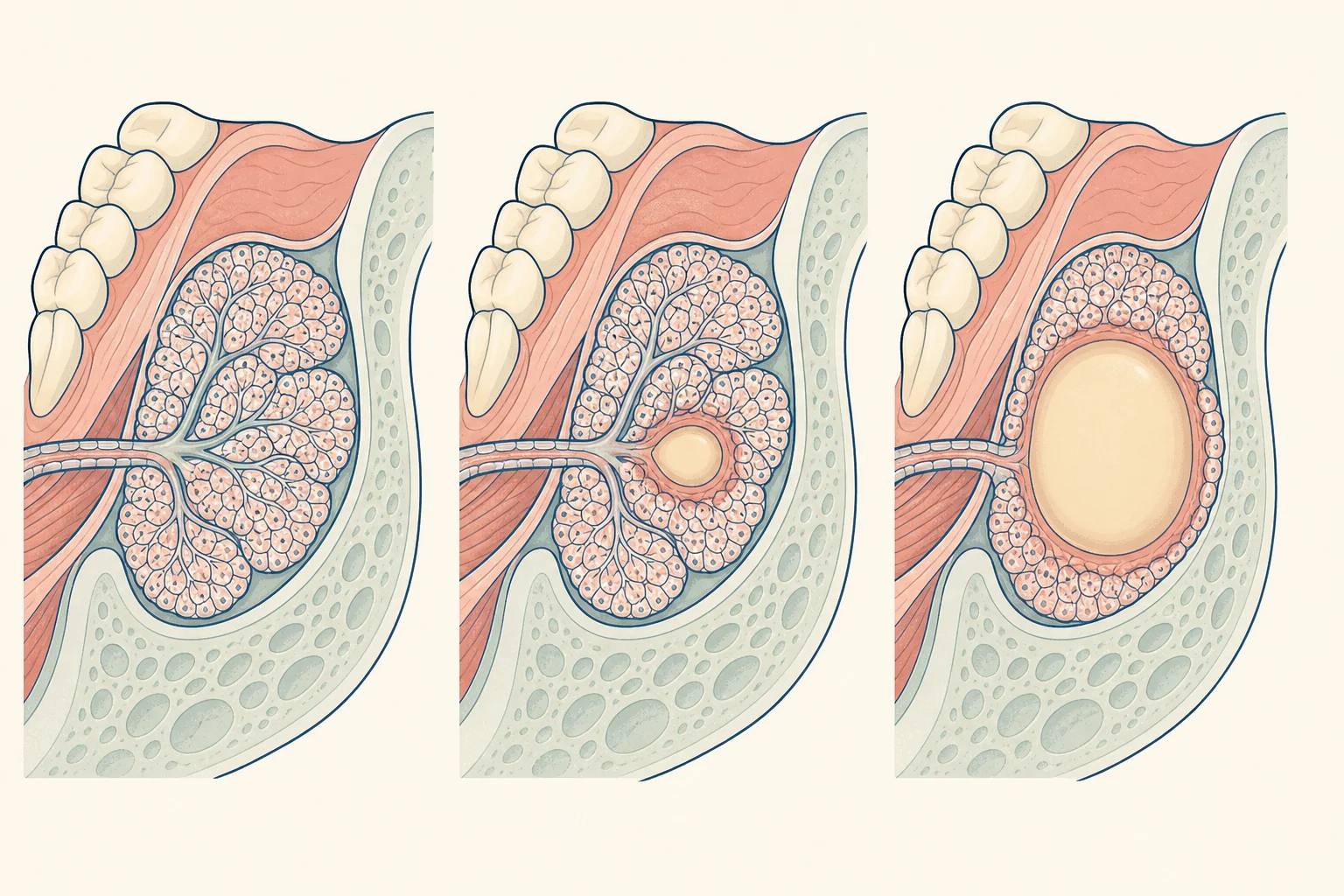
What the change looks like
What symptoms can it cause?
What can cause it?
A salivary gland abscess can develop when salivary infection progresses. Salivary stasis, bacterial infection from the mouth, and a blocked duct from a stone can all be part of that pathway.
[1]How does it change over time?
The course of Salivary Gland Abscess is described by what is happening now, whether the finding is spreading or recurring, and whether nearby tissues are becoming involved. These stages are a practical way to organise questions, not a substitute for diagnosis.
[1]Who may need closer attention?
An abscess can spread along the fascial planes of the neck. Increasing swelling, fever, trouble opening the mouth, or difficulty swallowing can occur when infection involves nearby tissues.
[1]How is it diagnosed?
The evaluation records the duration of swelling, pain, foul taste, meal-related symptoms and constitutional symptoms. Ultrasound can show a salivary stone or an abscess cavity, while CT may be used when symptoms are severe.
[1]What treatment may be considered?
An abscess requires surgical incision and drainage. Infection is treated with broad-spectrum antibiotics, while a salivary stone may be removed by interventional sialendoscopy or direct surgery.
[1]What should I ask about the visit cost?
Ultrasound may identify a stone or abscess cavity, and CT may be used for severe presentations. Drainage and stone removal are separate clinical procedures when they are needed.
[1]What can happen if it is left alone?
Infection can extend through neck fascial planes, and recurrent sialadenitis can cause repeated episodes. Reduced salivary function also reduces protection against acid erosion and can promote dental decay.
[1]Can it be prevented?
Hydration and oral hygiene support salivary health. After acute tenderness settles, repeated massage of the submandibular gland can be ongoing care; anticholinergic medicines and diuretics can reduce salivary flow.
[1]Frequently asked questions
How is Salivary Gland Abscess diagnosed?
A clinician uses the history and focused examination to assess the finding and decide whether further testing is needed.
[1]Who wrote this page
This library is published by Dental Nation, a licensed dental group practising in the United Arab Emirates. Pages are written and overseen by the same clinical team that treats patients in our clinics, and are held to a fixed editorial standard for safety and accuracy.
This page is patient education, not medical advice, and cannot replace an examination. Anything urgent — facial swelling, trauma, uncontrolled bleeding or severe pain — needs a dentist or emergency care now.