
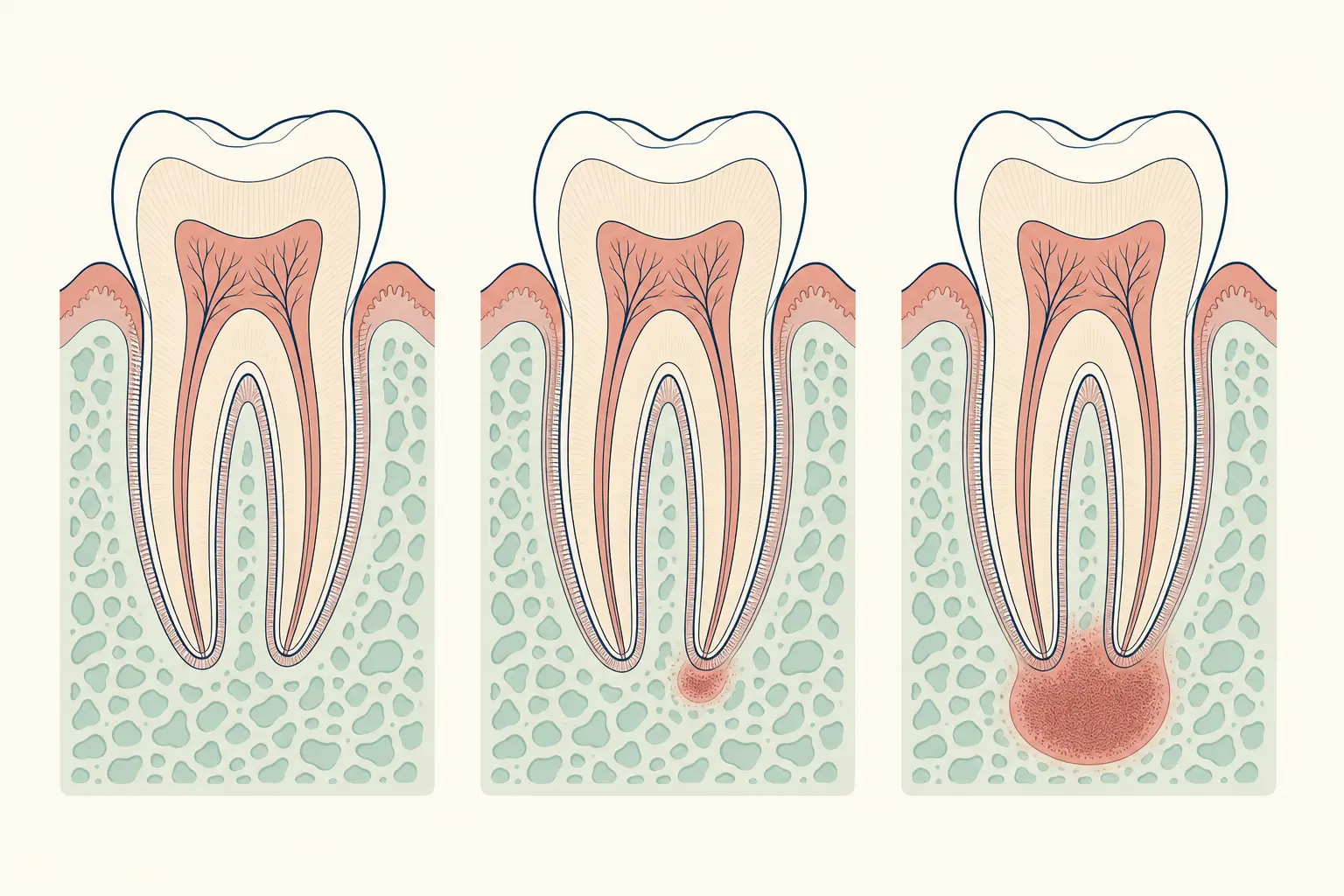
What the change looks like
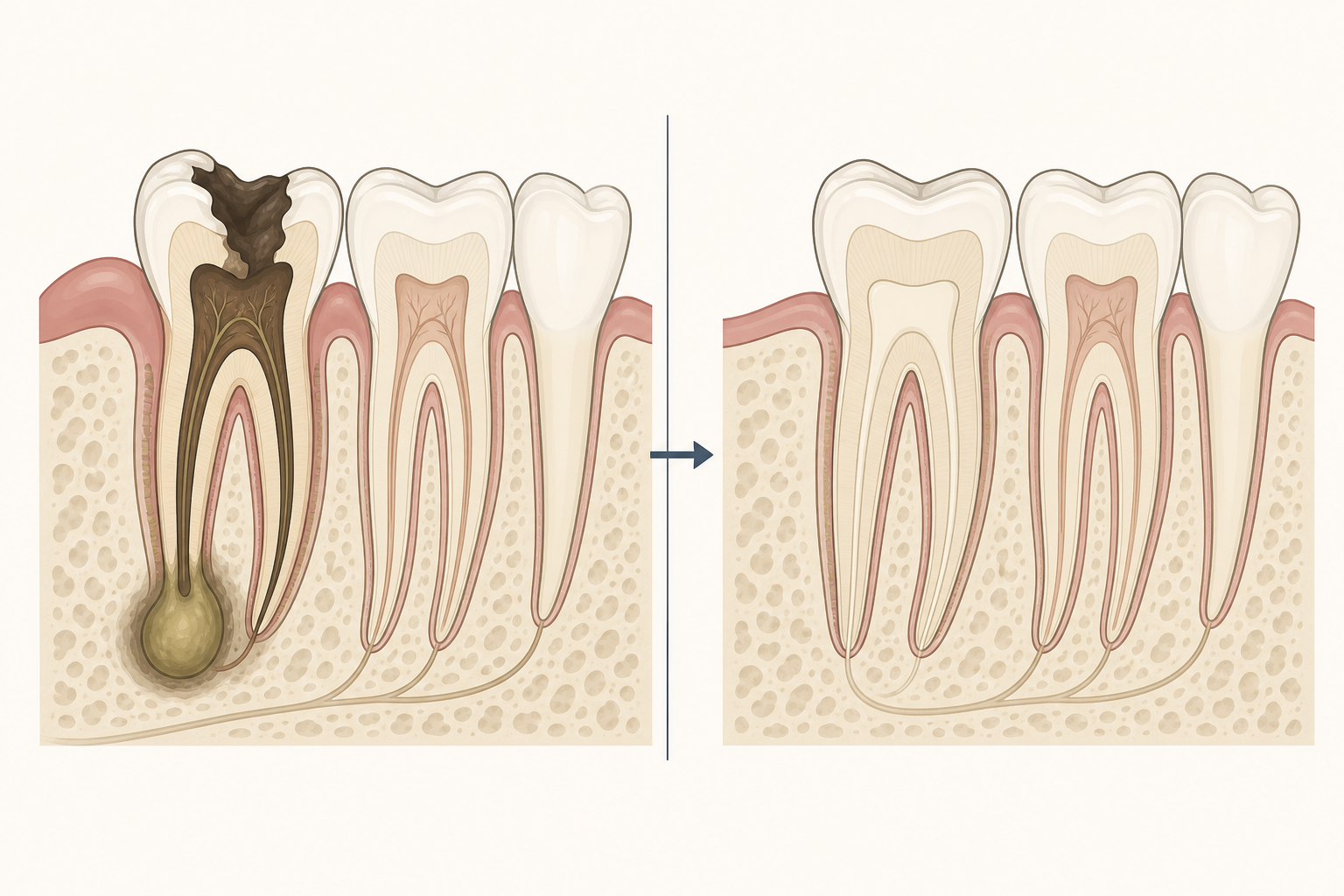
What are the symptoms of a root infection?
Pain can occur when biting or chewing, and the tooth may feel tender to tapping. Swelling beside the tooth, a draining sinus, or a bad taste can accompany the infection. Some chronic infections produce few or no symptoms until they flare.
[1]What causes apical periodontitis?
Bacteria can reach the pulp through deep decay, a crack, or previous damage. When the pulp dies, infection can pass through the root canal opening and inflame the tissues around the root tip.
[1]How does a root infection develop?
The process can move from pulpal inflammation to pulp necrosis, then to inflammation around the root. An acute flare may bring pain and swelling, whereas a chronic lesion may remain quiet while inflammation persists.
[1]When does a root infection need urgent attention?
How is apical periodontitis found?
Assessment combines the history of pain with examination of the tooth, tapping or biting tests, inspection for swelling, and dental radiographs. X-rays can reveal changes around the root that cannot be seen directly.
[1]How is a root infection treated?
What changes the treatment cost in Dubai?
What happens if apical periodontitis is untreated?
How can root infections be prevented?
Daily plaque control and prompt treatment of decay reduce the chance that bacteria will reach the pulp. Protecting a damaged tooth and completing planned dental treatment also reduces routes into the root canal.
[1]Frequently asked questions
Can a root infection have no pain?
Yes. Chronic apical disease can remain quiet, while a flare may later cause tenderness, swelling, or biting pain.
[1]