
Retained Dental Root
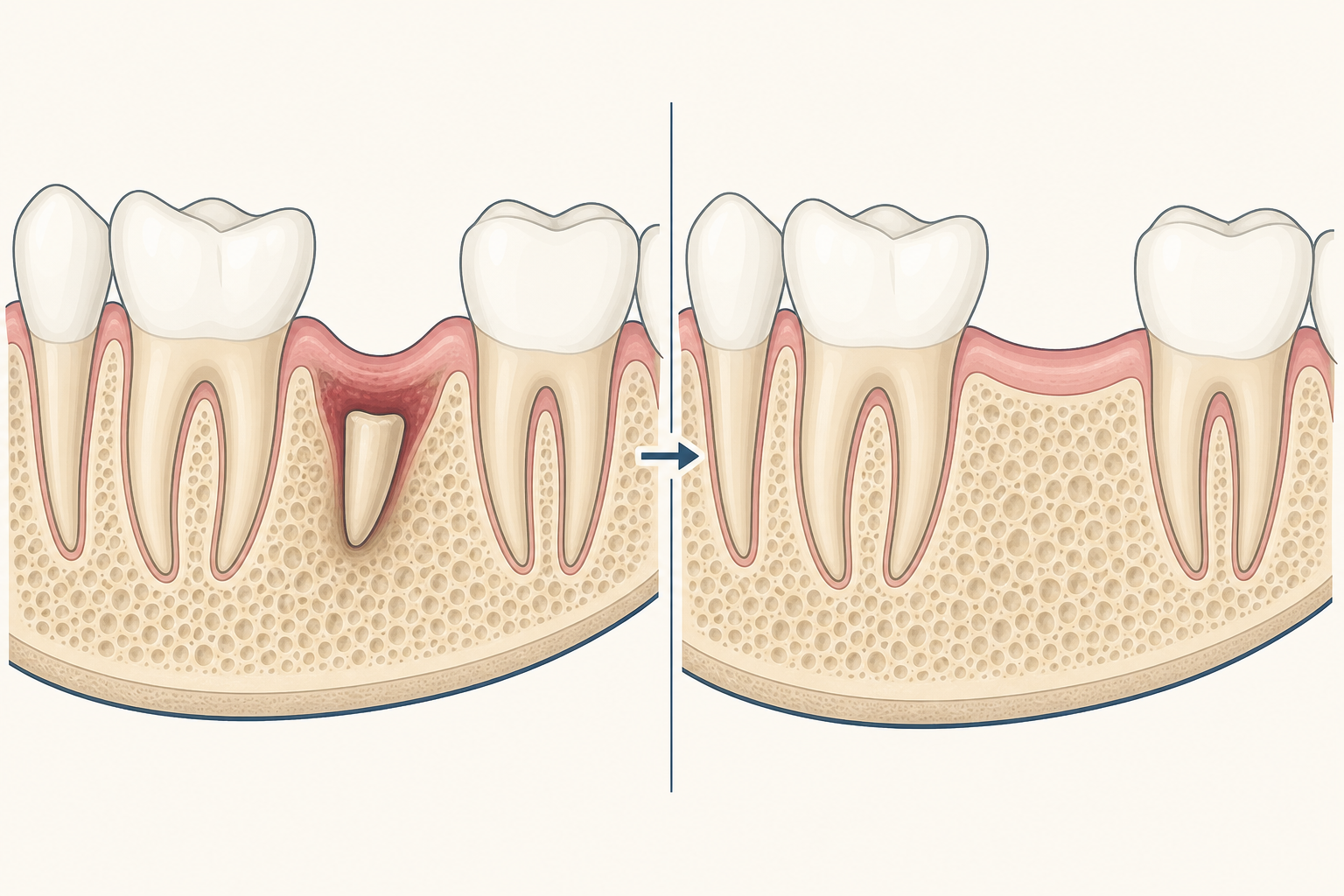
A root fragment left after extraction or fracture can cause infection or block a future implant or prosthesis.
[1][2]The short answer
A retained dental root is a fragment left after extraction or fracture that can cause pain, infection, or obstruct a replacement tooth.
[2]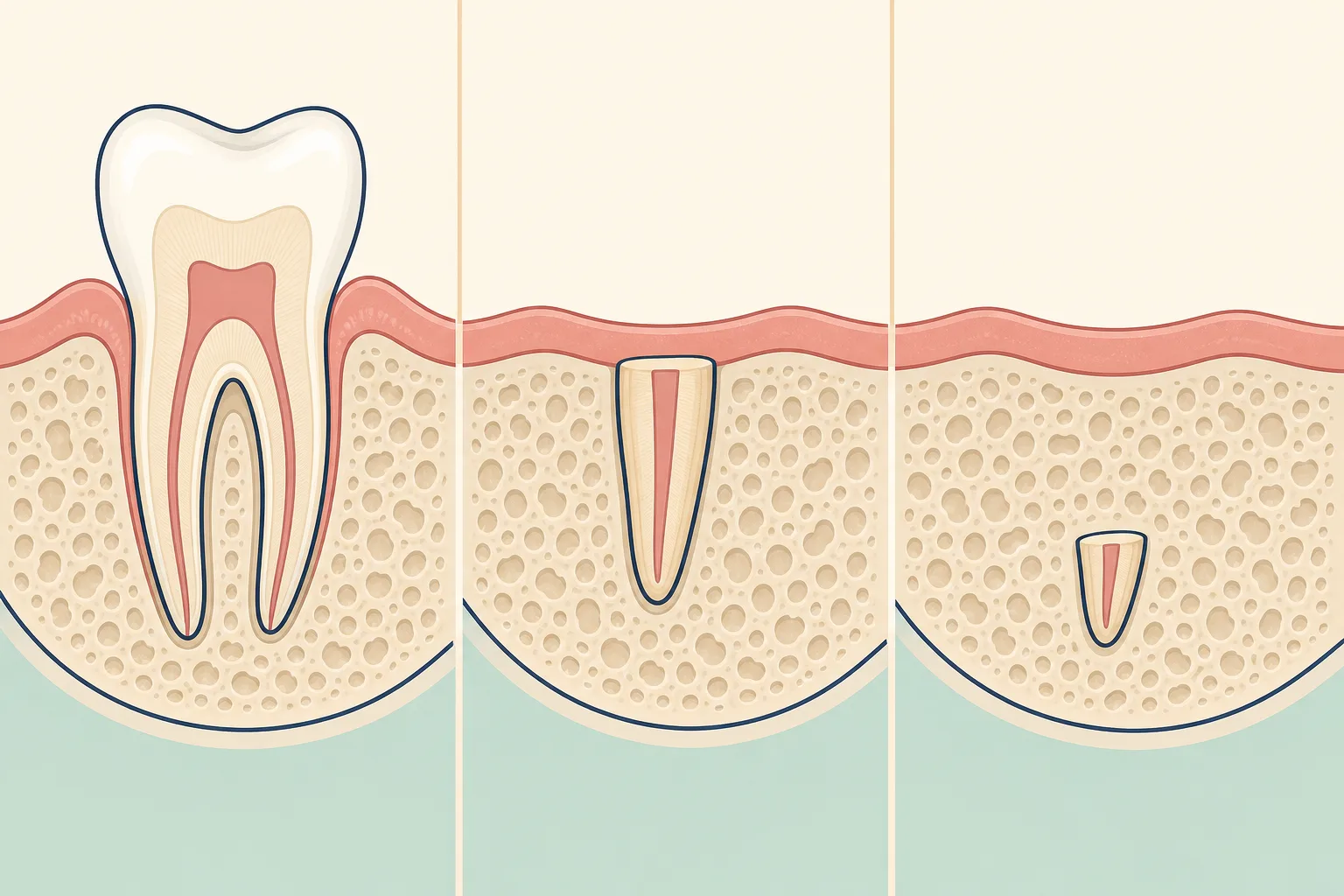
What the change looks like
What symptoms can a retained root cause?
How does a root become retained?
Most retained roots follow an extraction when a fragment was left deliberately or unintentionally. Facial trauma can also fracture a tooth and leave the root in place.
[2]What makes removal simple or surgical?
Root mobility, decay at the site, surrounding periodontal tissues and adjacent teeth are assessed before removal. Those findings and imaging guide the instruments and technique used.
[2]When is removal considered even without symptoms?
An otherwise painless fragment may be removed before head and neck radiation, before medicines linked with jaw osteonecrosis, or when future access to care will be limited. A planned implant or prosthesis can also make removal relevant.
[2]How is a retained root diagnosed?
The mouth and surgical site are examined, then radiographs are reviewed. CBCT can define the fragment's position and its relationship to nearby structures more precisely.
[2]How is it removed?
Removal of a retained root tip is commonly an outpatient surgical procedure. Root shape and nearby anatomy determine whether a non-surgical approach is possible or a surgical extraction is needed.
[2]What affects the cost?
The planned work can include radiographs or CBCT and may require a surgical rather than a non-surgical extraction. Root shape, position and nearby anatomy determine the approach.
[2]What are the risks of root extraction?
A fragment can be left in place when removal risks damage to adjacent teeth or neurovascular structures. Extraction can displace fragments into nearby spaces, fracture supporting bone, or create an opening into the maxillary sinus.
[2]Can a retained root be prevented?
After a fractured tooth or extraction, examination and radiographs identify a remaining root fragment. That assessment is relevant before an implant, prosthesis, head and neck radiation, or medicines linked with jaw osteonecrosis.
[2]Frequently asked questions
Can a retained root be present without tooth pain?
Yes. A retained root can be asymptomatic, yet removal may be considered before an implant, prosthesis, radiation treatment, or certain medicines.
[2]