
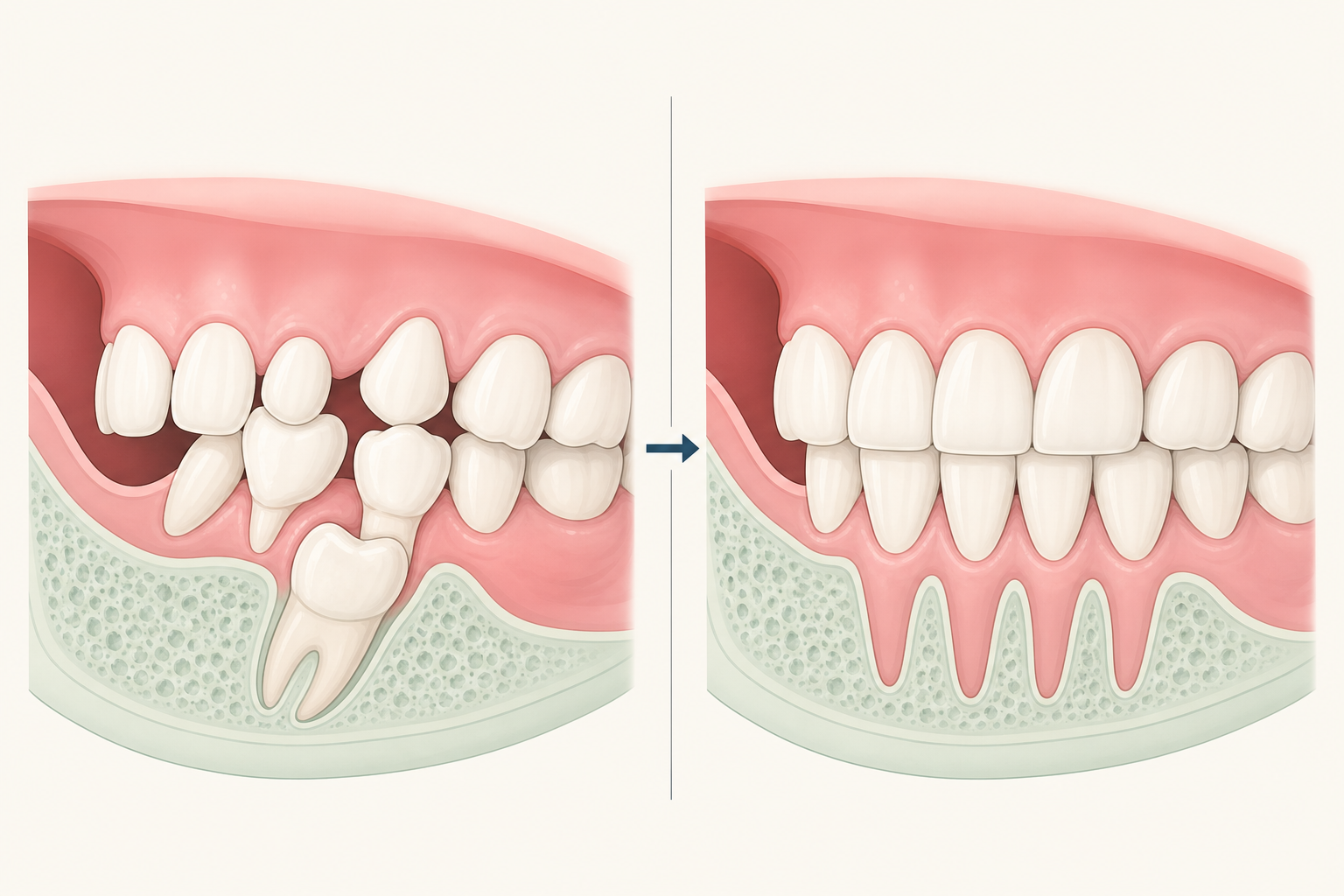
What the change looks like
The DN First Look799 AED
Book The DN First LookHow can you spot a retained baby tooth?
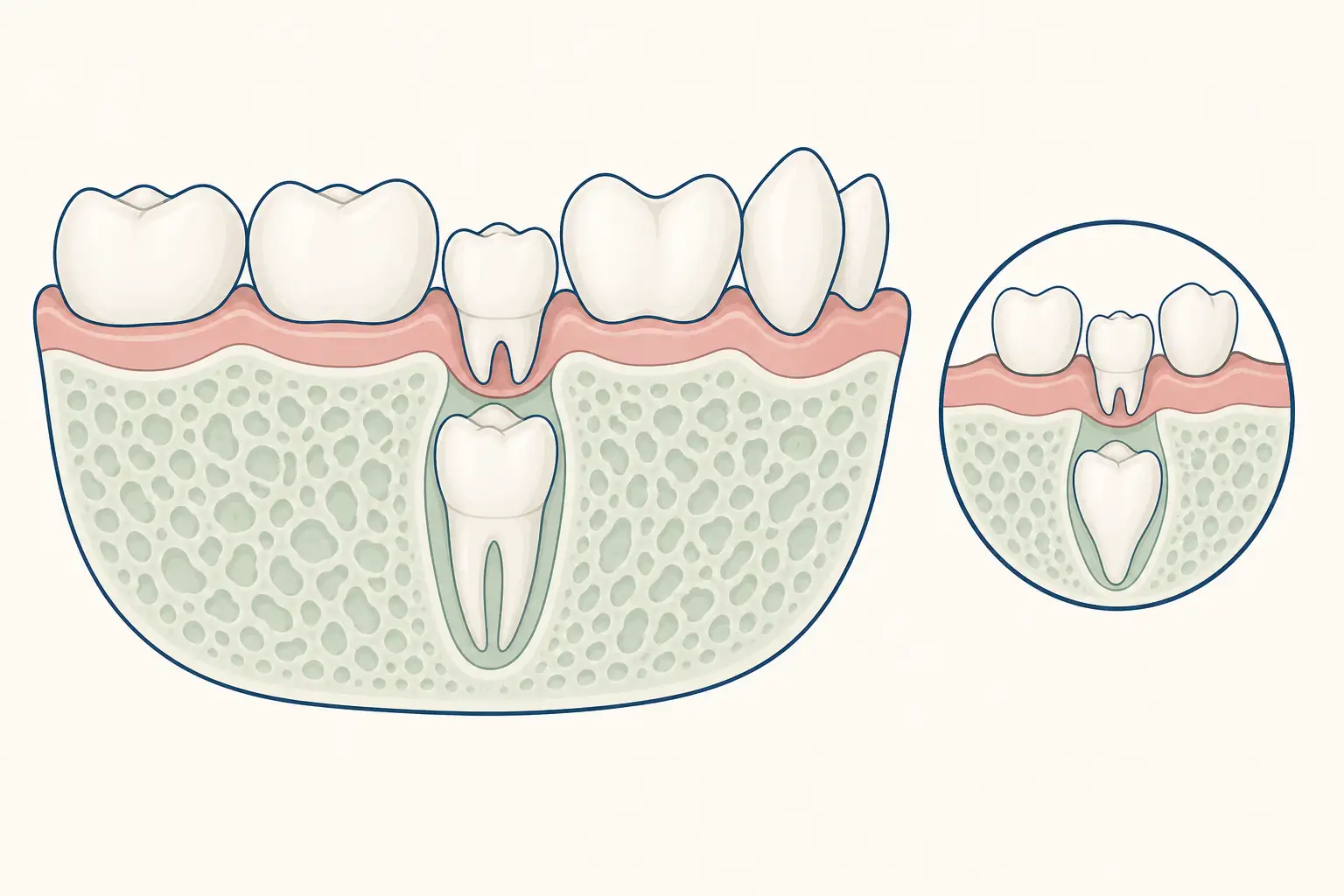
A retained baby tooth may be noticed because it is still present while an adult tooth is delayed, appears behind it, or is emerging in an unusual position. Some children have no discomfort, so the tooth pattern itself can prompt an assessment.
[1][2]| Clinical question | What this can mean |
|---|---|
| What is assessed? | A retained baby tooth may be noticed because it is still present while an adult tooth is delayed, appears behind it, or is emerging in an unusual position. Some children have no discomfort, so the tooth pattern itself can prompt an assessment.[1][2] |
| What guides the next step? | The pattern can be a baby tooth with no visible permanent successor, a successor erupting beside it, or a permanent tooth that is displaced.[1][2] |
Why might a baby tooth stay in place?
What eruption pattern is present?
The pattern may be an intact baby tooth with no visible successor, a baby tooth beside an erupting permanent tooth, or a baby tooth with a permanent tooth that is displaced. Each pattern needs its own examination.
[1][2]| Clinical question | What this can mean |
|---|---|
| What is assessed? | The pattern may be an intact baby tooth with no visible successor, a baby tooth beside an erupting permanent tooth, or a baby tooth with a permanent tooth that is displaced. Each pattern needs its own examination.[1][2] |
| What guides the next step? | A permanent tooth may be delayed, erupt behind the baby tooth, or take an unusual position while the baby tooth remains.[1][2] |
When can a retained baby tooth affect eruption?
How is a retained baby tooth checked?
What can be done with a retained baby tooth?
Management may involve observation, removal of a retained tooth, or treatment that helps guide the permanent tooth. The plan depends on the developing dentition and the reason for the delay.
[1][2]| Clinical question | What this can mean |
|---|---|
| What is assessed? | Management may involve observation, removal of a retained tooth, or treatment that helps guide the permanent tooth. The plan depends on the developing dentition and the reason for the delay.[1][2] |
| What guides the next step? | Care can include watching the eruption pattern, removing the baby tooth, or guiding the permanent tooth when it is displaced.[1][2] |