
Recurrent Aphthous Ulcers
Minor canker sores often heal within two weeks without scarring, while major ulcers can take six weeks and scar.
[1]The short answer
Recurrent aphthous ulcers are painful canker sores on the mouth lining; minor ulcers usually heal within two weeks without scarring.
[1]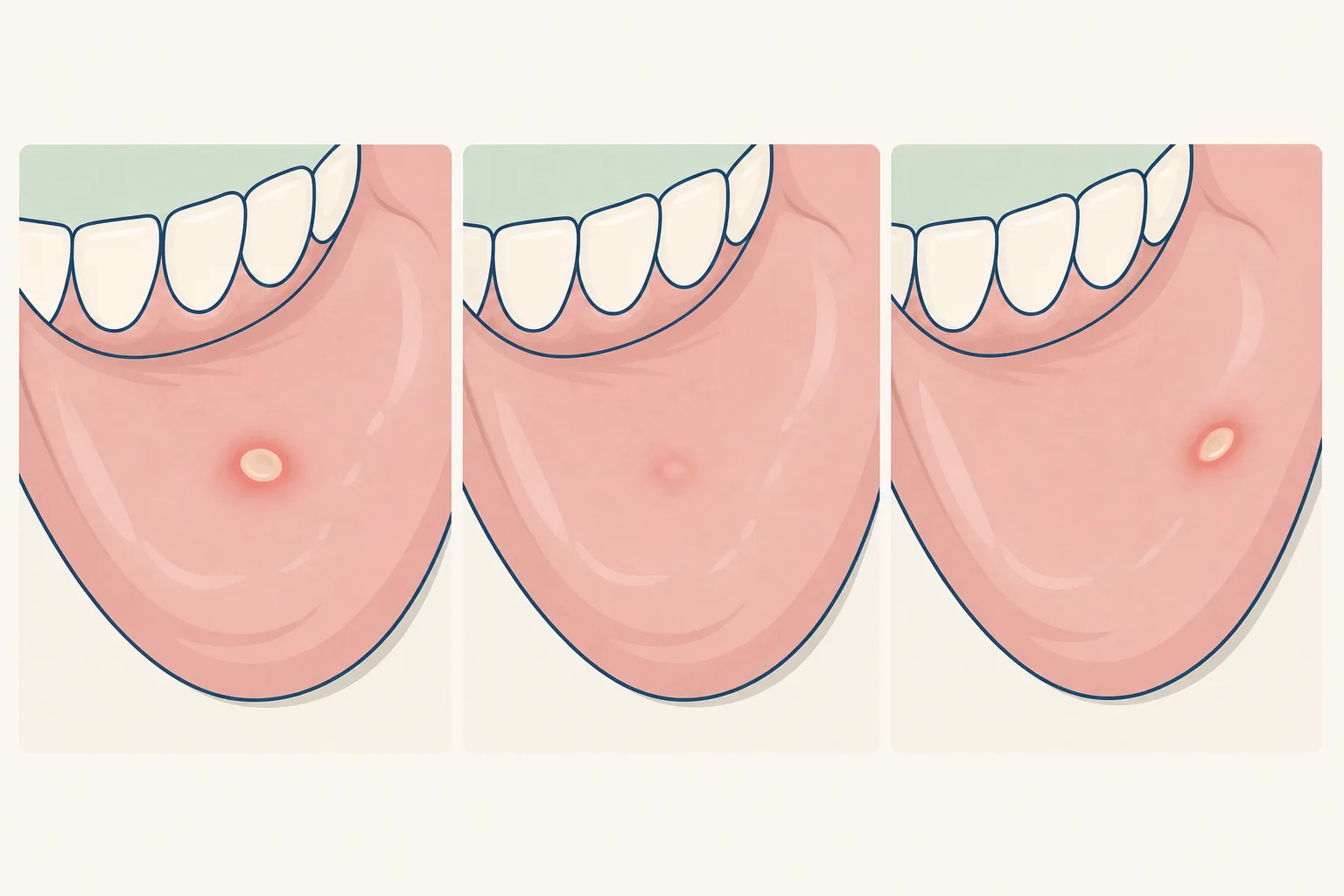
What the change looks like
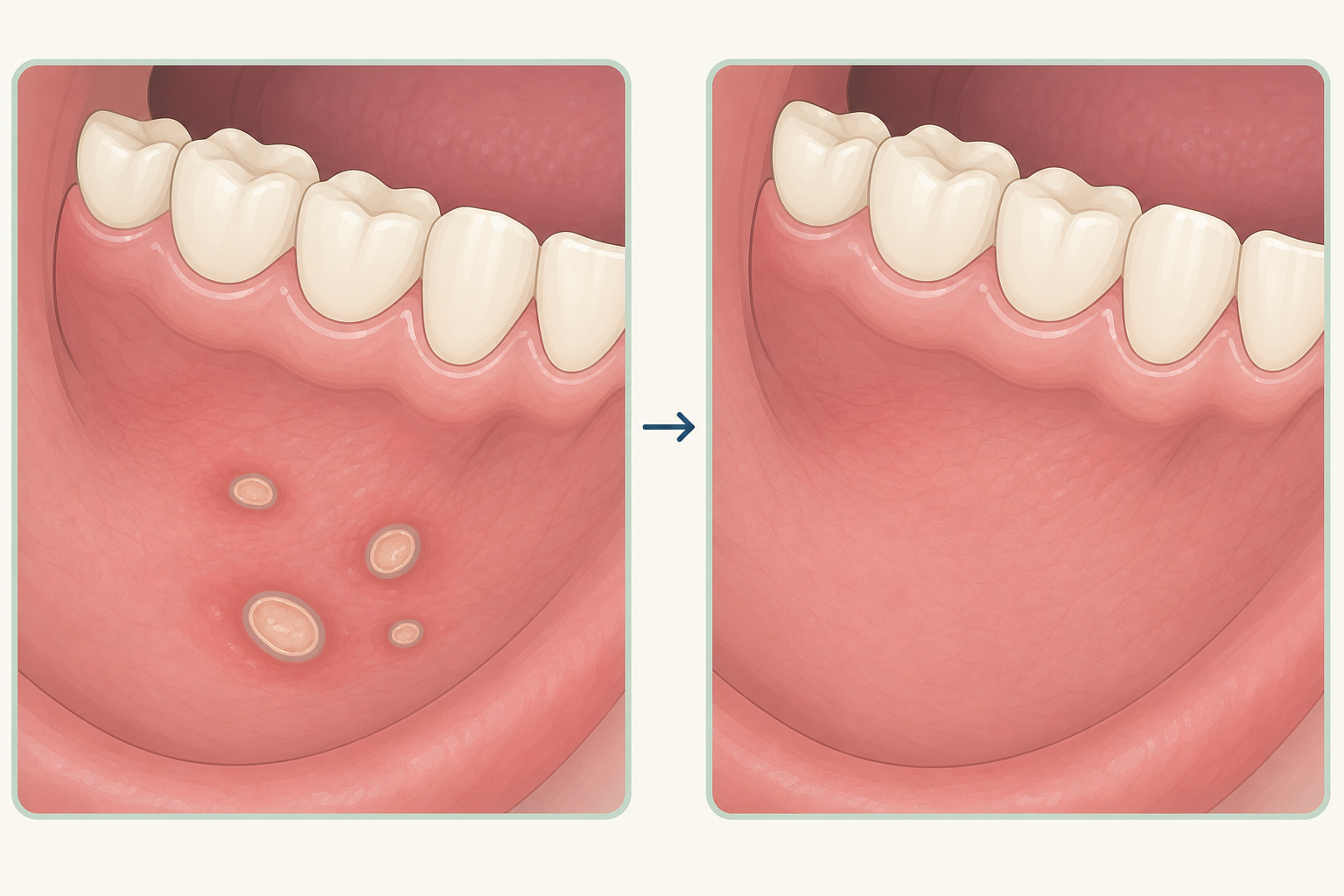
What do recurrent ulcers feel and look like?
Why can ulcers keep coming back?
Local trauma, stress, smoking cessation, anaemia and low haematin levels are linked with recurrent ulcers. Crohn's disease, ulcerative colitis and coeliac disease are also associated with oral aphthous ulcers.
[1]How can an episode be described?
Minor ulcers measure about 2 to 3 mm and last one to two weeks. Major ulcers persist longer, can take six weeks to heal, and may leave scars; herpetiform ulcers can resolve within a month.
[1]Which changes need closer attention?
Sudden recurrent ulcers in adulthood need other causes excluded, including Behçet disease, nutritional deficiency and inflammatory bowel disease. Atypically severe ulcers can occur with HIV infection.
[1]How are recurrent ulcers assessed?
Recurrent aphthous stomatitis is diagnosed clinically while other recurrent ulcer causes are excluded. Blood count, red-cell folate, ferritin and vitamin B12 testing can identify anaemia, nutritional deficiency or gastrointestinal disease.
[1]How is care selected for an episode?
Topical corticosteroids are first-line treatment. Milder episodes may also use NSAIDs, benzydamine mouthwash or chlorhexidine mouthwash; short systemic steroid courses are reserved for more severe disease.
[1]What should a visit quote make clear?
Testing can include a blood count, red-cell folate, ferritin and vitamin B12 levels when recurrent ulcers need assessment for deficiency or gastrointestinal disease.
[1]What happens when ulcers are severe or persistent?
Major aphthous ulcers can heal with scarring after six weeks. Severe ulcers can signal associated conditions such as Behçet disease, while recurrent episodes may cause significant pain and difficulty eating.
[1]Can future episodes be reduced?
Controlling identified predisposing factors helps reduce future episodes. Local trauma, stress, anaemia and haematin deficiency are factors linked with recurring ulcers.
[1]Frequently asked questions
When should recurring mouth ulcers be assessed?
Assessment is appropriate when the ulcer pattern changes, symptoms are severe, or sores persist or recur often.
[1]Who wrote this page
This library is published by Dental Nation, a licensed dental group practising in the United Arab Emirates. Pages are written and overseen by the same clinical team that treats patients in our clinics, and are held to a fixed editorial standard for safety and accuracy.
This page is patient education, not medical advice, and cannot replace an examination. Anything urgent — facial swelling, trauma, uncontrolled bleeding or severe pain — needs a dentist or emergency care now.